Shibuya and Harajuku sit shoulder to shoulder on the western edge of central Tokyo, and together they form the most exciting square kilometer in Japan for first-time visitors. One station to the next, in just two minutes on the Yamanote Line, you move from the famous scramble crossing under giant neon billboards to the leafy front gate of Meiji Shrine and the youth-fashion mayhem of Takeshita Street. This guide explains exactly how to spend a day (or two) here without getting overwhelmed, what to eat, where to shop, what to skip, how to save money, and how to make the experience feel less like a tourist checklist and more like a real Tokyo afternoon.
If this is your first trip to Japan, treat Shibuya and Harajuku as your gentle on-ramp. The signage is mostly bilingual, the trains are dense and reliable, the staff at major stores expect international shoppers, and the worst that can happen is you end up with a bag full of crepes and a phone full of crossing-light photos. Let us begin.
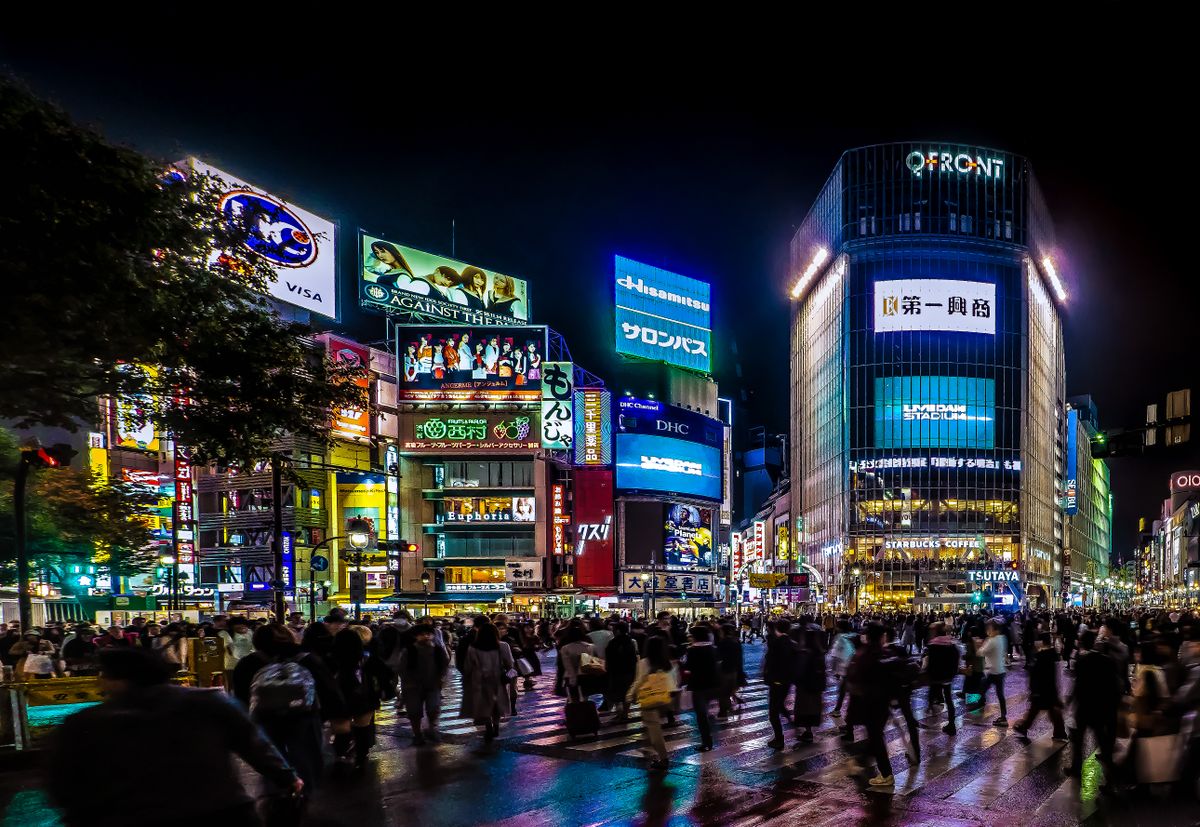
Why Shibuya and Harajuku Belong Together
Shibuya (渋谷) and Harajuku (原宿) are technically two separate neighborhoods, but they are connected by a single 1.2-kilometer stretch of shop-lined streets that you can walk in about twenty minutes. Most first-timers do them on the same day, and that is the right call. Shibuya is loud, vertical, neon, and adult — it is the Times Square comparison everyone makes, except more orderly and with significantly better food. Harajuku, just one stop north, is younger, weirder, more pedestrian, and built around fashion subcultures, crepes, and the calmest forested shrine in central Tokyo.
Together they show you the full personality of west-central Tokyo: the consumer engine room, the youth-culture incubator, and the spiritual quiet pocket — all within walking distance. If you only have one day in Tokyo, this is the area I send people to. For a deeper look at how this neighborhood fits into the wider city, see our complete Tokyo guide, and for help fitting it into a wider trip, the destinations overview is a good next read.
Quick Geography
Picture the area as three vertical strips running south to north along the Yamanote Line tracks. At the south end sits Shibuya Station, surrounded by the scramble crossing, Hachiko, the big department stores, and the entrance to Center Gai and Dogenzaka. Walk fifteen minutes north along Meiji-dori and you arrive at the gentle slope of Cat Street, an alternative shopping spine that runs almost the entire way to Harajuku. At the north end is Harajuku Station, with Takeshita Street pointing east and the giant wooded entrance to Meiji Shrine pointing west. Omotesando — the wide tree-lined Champs-Élysées of Tokyo — runs east from Harajuku Station and joins back up with Shibuya via Cat Street.
How to Get Here and Get Around
Shibuya and Harajuku are absurdly well-connected. Almost every Tokyo visitor uses one or both stations daily without realising it. Shibuya Station is served by the JR Yamanote Line, JR Saikyo Line, JR Shonan-Shinjuku Line, Tokyo Metro Ginza, Hanzomon, and Fukutoshin Lines, the Tokyu Toyoko Line down to Yokohama, and the Tokyu Den-en-toshi Line. Harajuku Station is a JR Yamanote Line stop, and Meiji-jingumae Station next door is on the Tokyo Metro Chiyoda and Fukutoshin Lines.
The easiest move for first-time visitors: load an IC card (Suica or Pasmo, or the Welcome Suica which is designed for tourists) on your phone or as a physical card, and tap in and out. A single ride between major Tokyo neighborhoods is roughly ¥150–¥220 (about US$1.00–$1.50). The Yamanote Line, which loops central Tokyo, runs every two to three minutes from around 4:45 a.m. to just past midnight. From Shibuya to Harajuku is one stop — about ¥150 (US$1) and two minutes — but honestly, if the weather is decent, walk it. You will see more.
If you are arriving from Narita or Haneda airport with luggage, the smartest move is to send your bags ahead to your hotel via takkyubin and travel light. Even better, book a private airport transfer so you can land, breathe, and arrive at your hotel without subway gymnastics. Book airport transfer with NearMe →
One thing every visitor needs from minute one: working mobile data. Free Wi-Fi in stations exists but is patchy and time-limited, and Shibuya’s narrow alleys are not where you want to fumble with an offline map. A prepaid Japan eSIM is the cheapest, fastest fix — it activates the moment you land. Get your Japan eSIM (Stay connected from day 1) →
Shibuya: What to Actually Do
Shibuya is built for wandering. The trap is to spend ninety minutes filming the crossing from six different angles, declare yourself done, and miss everything that makes the neighborhood actually fun. Here is a sensible order.
1. Shibuya Scramble Crossing
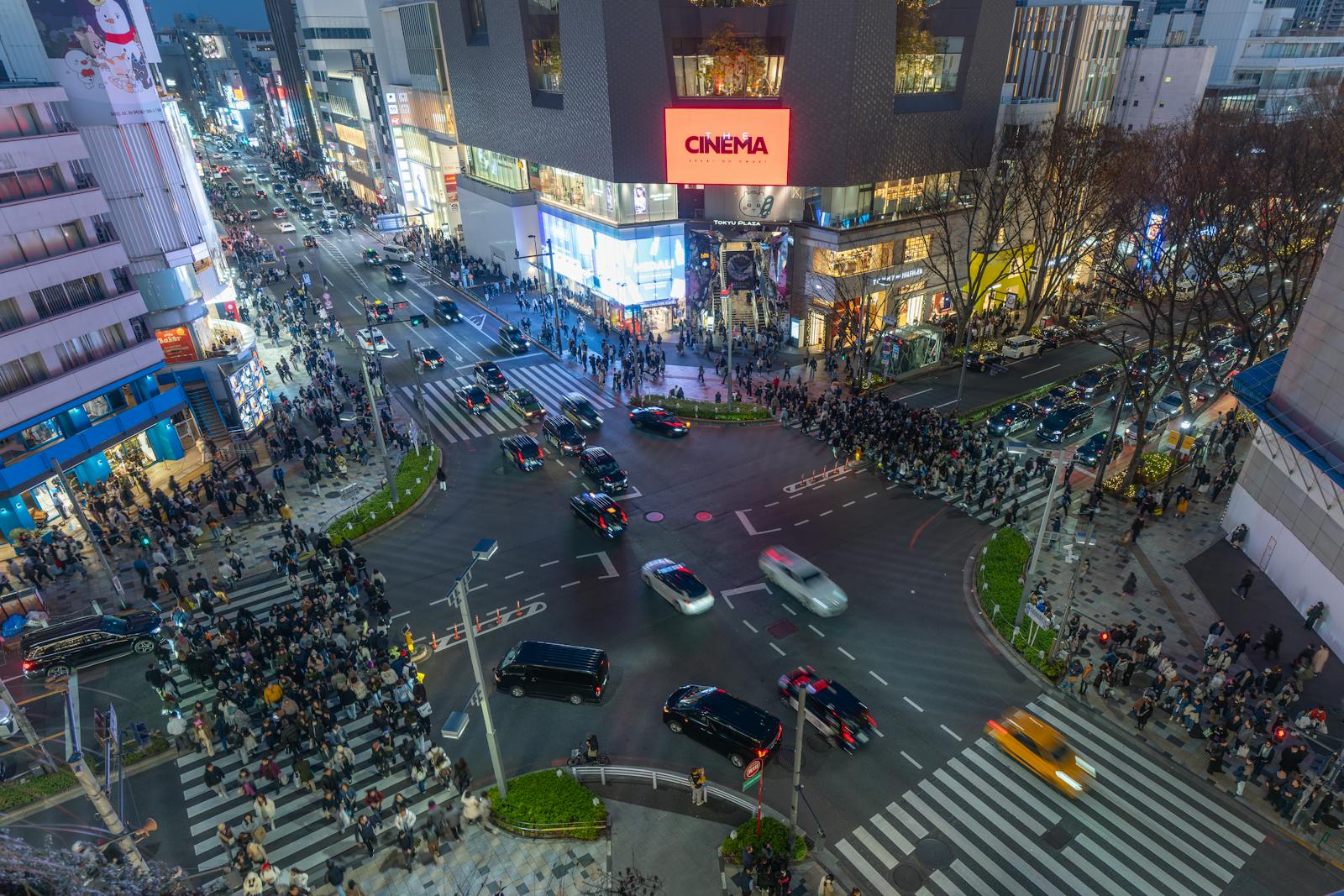
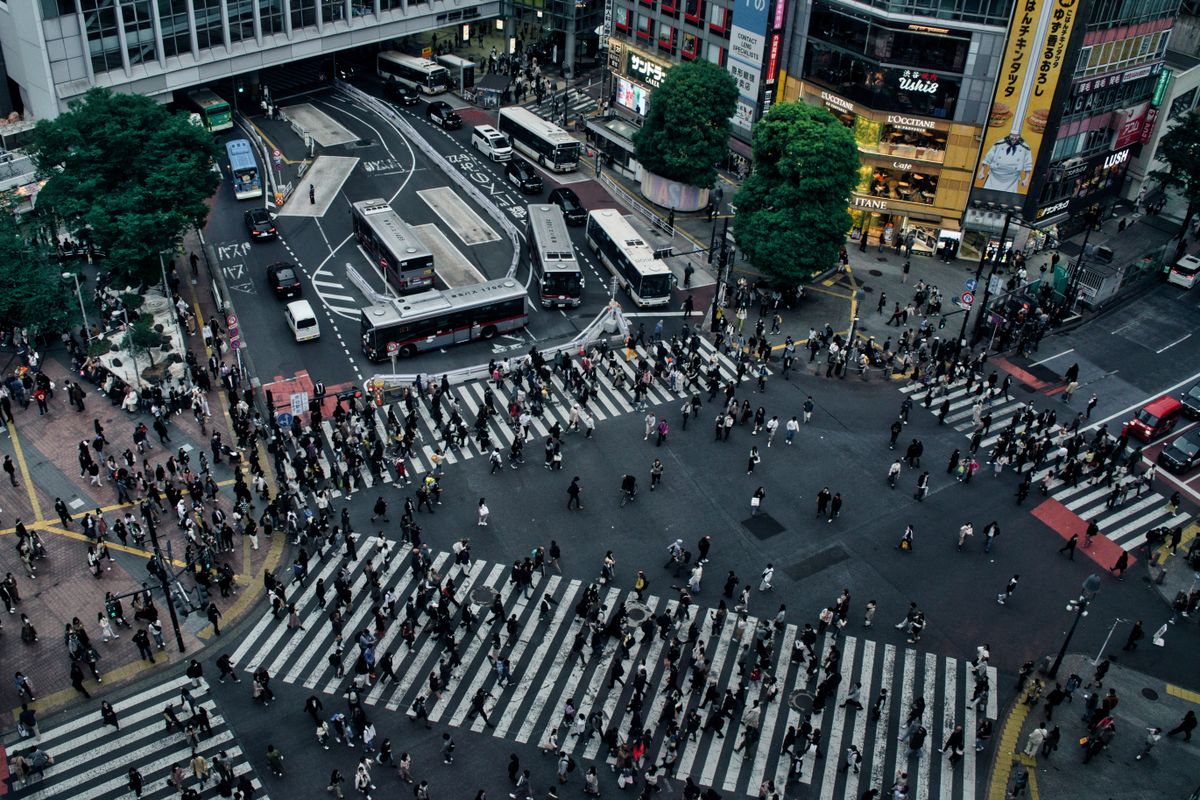
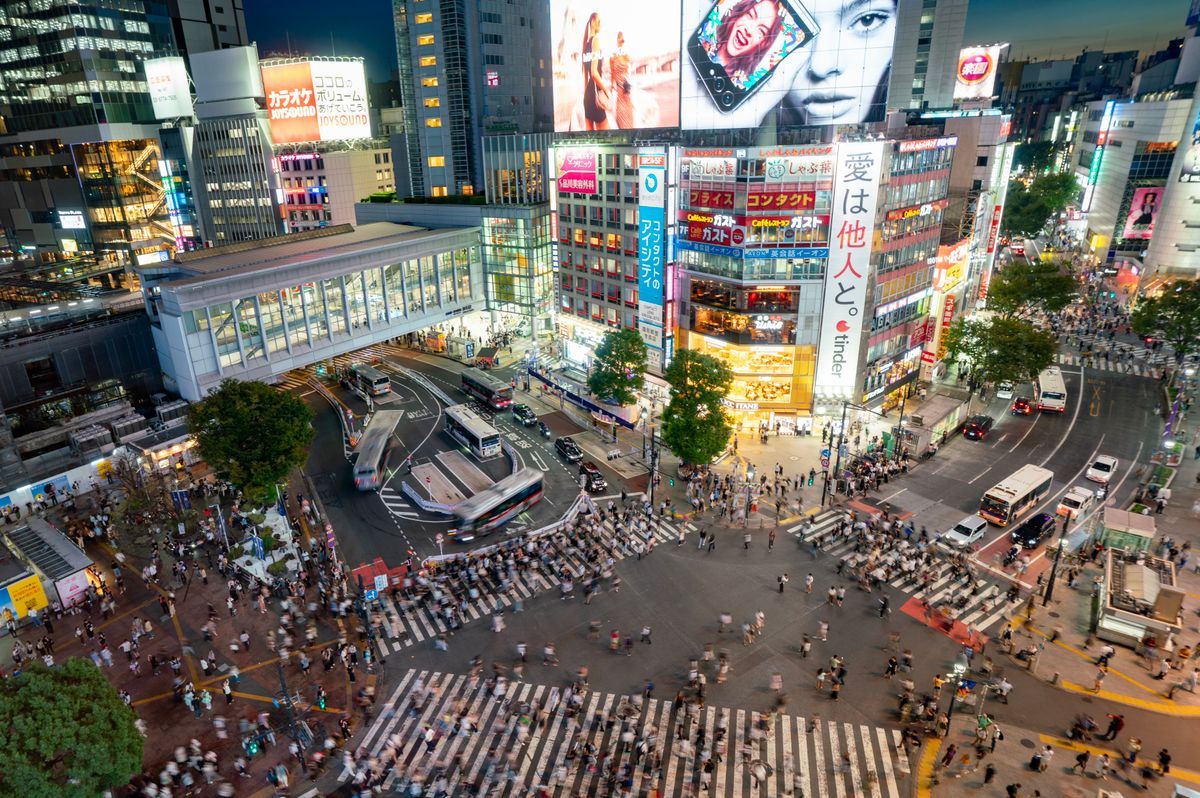
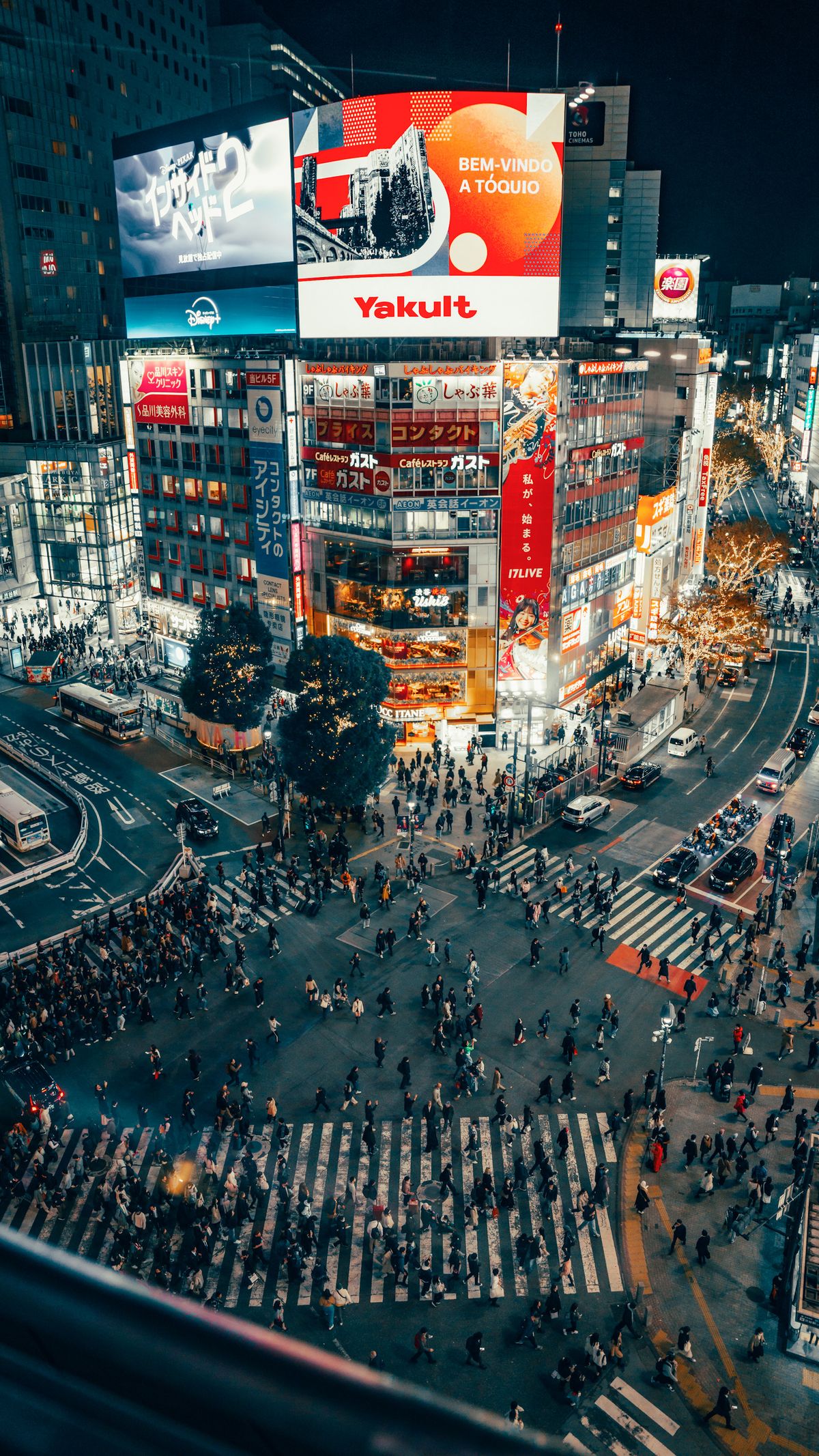
You have seen it in every Tokyo film ever made. Up to three thousand people cross at once, in five directions, every two minutes during peak times. It is genuinely as orderly and as photogenic as the videos suggest. The best free viewing spots are: the second-floor windows of Starbucks Shibuya Tsutaya (busy, expect a queue, buy a drink), the pedestrian deck above the Shibuya Mark City exit, and the upper floors of the Shibuya Scramble Square mall.
For a paid panoramic view, head straight to the top of Shibuya Sky on the 46th floor of Shibuya Scramble Square. Tickets are ¥2,500 (about US$17) if booked online in advance and ¥3,000 (about US$20) on the day. The open-air rooftop deck looks directly down on the crossing, with Tokyo Tower, Mt. Fuji (on clear winter mornings), Tokyo Skytree, and the entire city sprawl all visible. Book the slot 45 minutes before sunset for the magic-hour photo every traveler wants. Tickets sell out — buy ahead.
2. Hachiko Statue
The small bronze dog outside the north exit of Shibuya Station is the most famous meeting spot in Tokyo. Hachiko was an Akita dog who waited at this very station for his owner, Professor Ueno, every day for nearly ten years after the professor had died. The statue was unveiled in 1934, melted down for the war effort, and recast in 1948. It has been waiting ever since. There is always a small queue for the photo — be polite, take your two seconds, and move on.
3. Center Gai and Dogenzaka
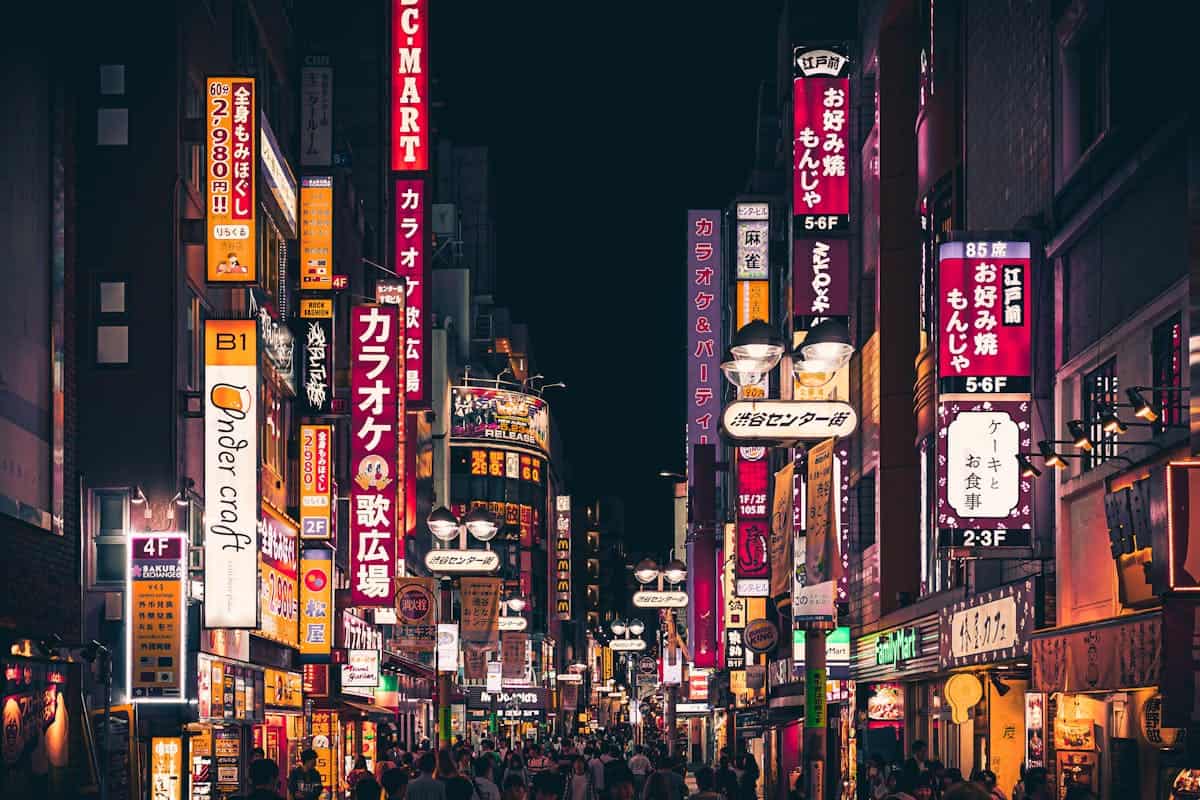
Center Gai (センター街) is the busy pedestrian street that punches off the crossing toward Tower Records. It is the heart of Shibuya’s young, late-night, slightly chaotic energy — game centers, cheap restaurants, fast fashion, karaoke. Dogenzaka, the steep street climbing west, is where you find the love hotel district (the most architecturally adventurous accommodation in Japan, but not where you stay your first night), live houses, jazz cafes, and the legendary Shibuya 109 mall.
4. Shibuya Parco and Shibuya Scramble Square
These are the two department stores worth your time. Parco contains an entire floor devoted to Nintendo, a Pokémon Center, a Capcom Store, a Jump Shop, and Pokémon-themed snacks. Scramble Square has Shibuya Sky, plus high-quality souvenirs in the basement and excellent depachika food halls. Tokyu Hands (now called Hands) inside the Scramble Square area is the single best souvenir stop in Tokyo for genuinely useful things: clever stationery, kitchen tools, beauty products, slippers, and packaging that turns junk into a gift.
5. Miyashita Park
A rooftop park on top of a four-story shopping complex, sandwiched between Shibuya and Harajuku. The roof has a skate park, beach volleyball court, climbing wall, lawn, and a long covered food street. The best slot is sunset, drink in hand, watching the city light up below you while skaters circle behind. Free to enter. It is the most underrated thing you can do in central Tokyo.
Where to Eat in Shibuya
Shibuya is one of Tokyo’s strongest food neighborhoods because it pulls visitors from every income bracket. You can eat a satisfying meal for ¥500 (US$3.50) or ¥50,000 (US$340) within the same block.
Budget (¥500–¥1,500 / US$3.50–$10)
Ichiran (one block off the crossing, basement level on Spain-zaka): the famous solo-booth tonkotsu ramen. Order at the vending machine, fill out the paper form, slurp at your private wooden cubicle. About ¥1,180 (US$8) for the standard bowl plus toppings.
Uobei Sushi: ¥110-per-plate conveyor sushi via touchscreen and bullet-train delivery. The kids will lose their minds. Bring an empty stomach.
Standing Sushi Numazu Uogashizushi: counter-only stand-up sushi in the basement of Shibuya Mark City. Cheap, fast, and the rice is properly seasoned.
Mid (¥2,000–¥5,000 / US$14–$35)
Sushi no Midori: the queue at lunch tells you everything. Maguro-zukushi sets at around ¥2,500 (US$17). Worth the wait — and the wait is shorter at 2:30 p.m. than at noon.
Gyukatsu Motomura: deep-fried wagyu cutlets, sliced rare, that you finish cooking on your own personal hot stone. Lunch around ¥2,000 (US$14).
Kushikatsu Tanaka: Osaka-style deep-fried skewers, one sauce, communal dipping rules (no double-dipping). Beer-friendly.
Splurge (¥10,000+ / US$70+)
Yakiniku Jumbo Shirokane: arguably the best yakiniku experience in Tokyo, around ¥15,000–¥20,000 per person (US$100–$140). Reserve six weeks ahead.
Sushi Saito sister restaurants: several three-Michelin-star alumni run more accessible counters in the Shibuya/Aoyama corridor.
Walking from Shibuya to Harajuku via Cat Street
This is the single best walk in central Tokyo for first-timers and almost no one recommends it. From Miyashita Park, walk north along Meiji-dori for about three minutes, then turn left into the pedestrianised Cat Street. The traffic vanishes. The street narrows. You pass independent vintage shops, sneaker dealers, tiny cafes, A Bathing Ape, Patagonia, Supreme, secondhand watch dealers, and small art galleries. Twenty minutes later you pop out at the foot of Omotesando, with Harajuku Station to your left and Omotesando Hills to your right. Do this walk in the late afternoon for the best light and the calmest crowds.
Harajuku: What to Actually Do
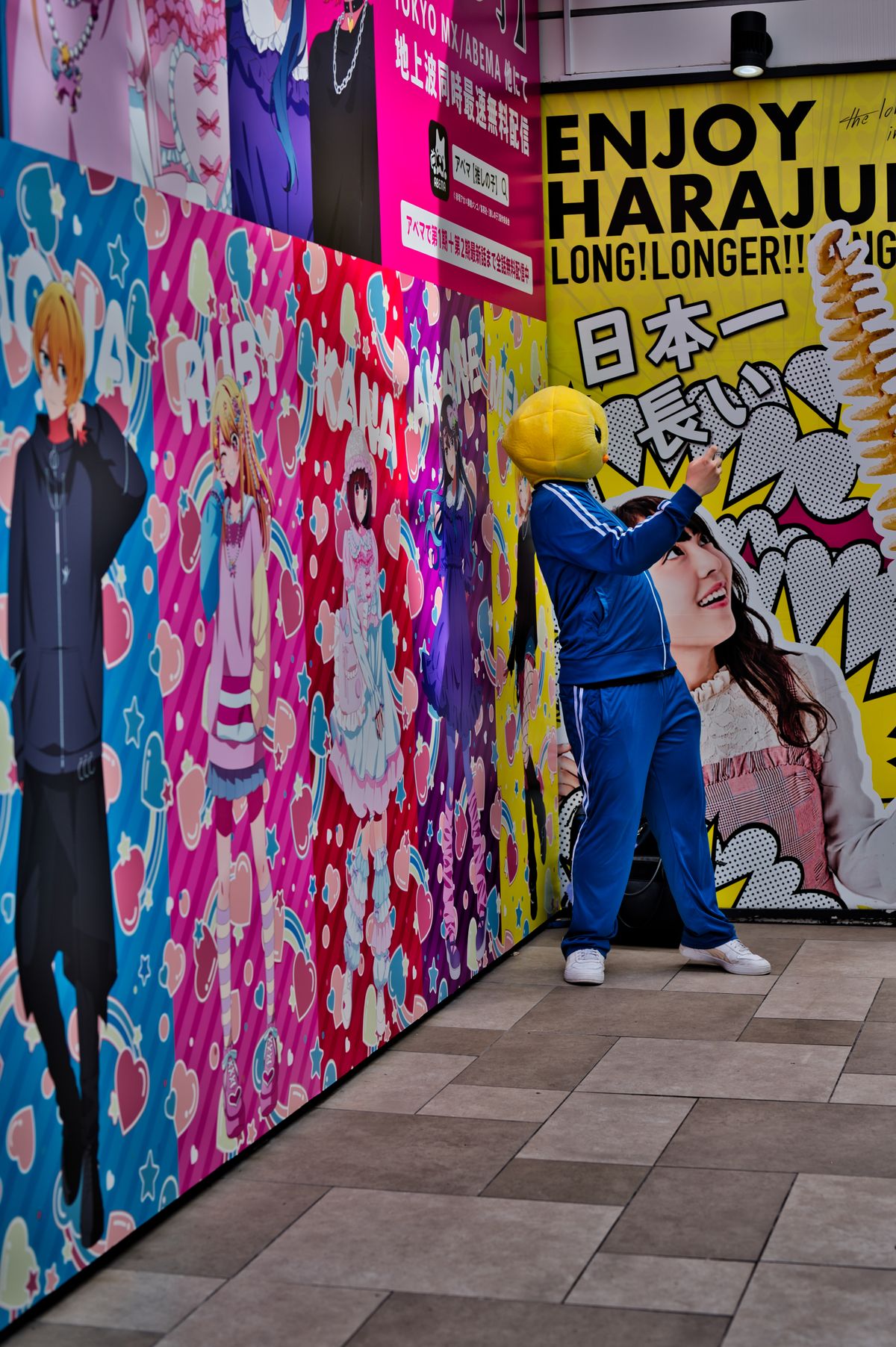
Harajuku has three distinct moods: kawaii chaos on Takeshita Street, grown-up luxury on Omotesando, and forested silence at Meiji Shrine. Do them in that order.
1. Takeshita Street
The 400-meter pedestrian strip that runs east from Harajuku Station is the spiritual home of Tokyo teen culture. It is loud, crowded, painted in pastel, and gloriously over the top. Expect: rainbow cotton candy the size of your head, character cafes, photo-print booths, kitsch souvenir stores, claw machines, and crepes with whole strawberries the size of a fist.
Standouts: Marion Crepes (the original, founded in 1976 — get the strawberry custard for ¥600 / US$4), Daiso (the giant 100-yen store at the eastern end, perfect for cheap souvenirs), and Calbee Plus, which sells freshly-fried versions of Japan’s most famous potato snacks.
Avoid Takeshita on weekend afternoons unless you actually like being part of a slow-moving crowd. Mornings, before 11 a.m., and Wednesday afternoons are dramatically quieter.
2. Meiji Shrine (Meiji Jingu)
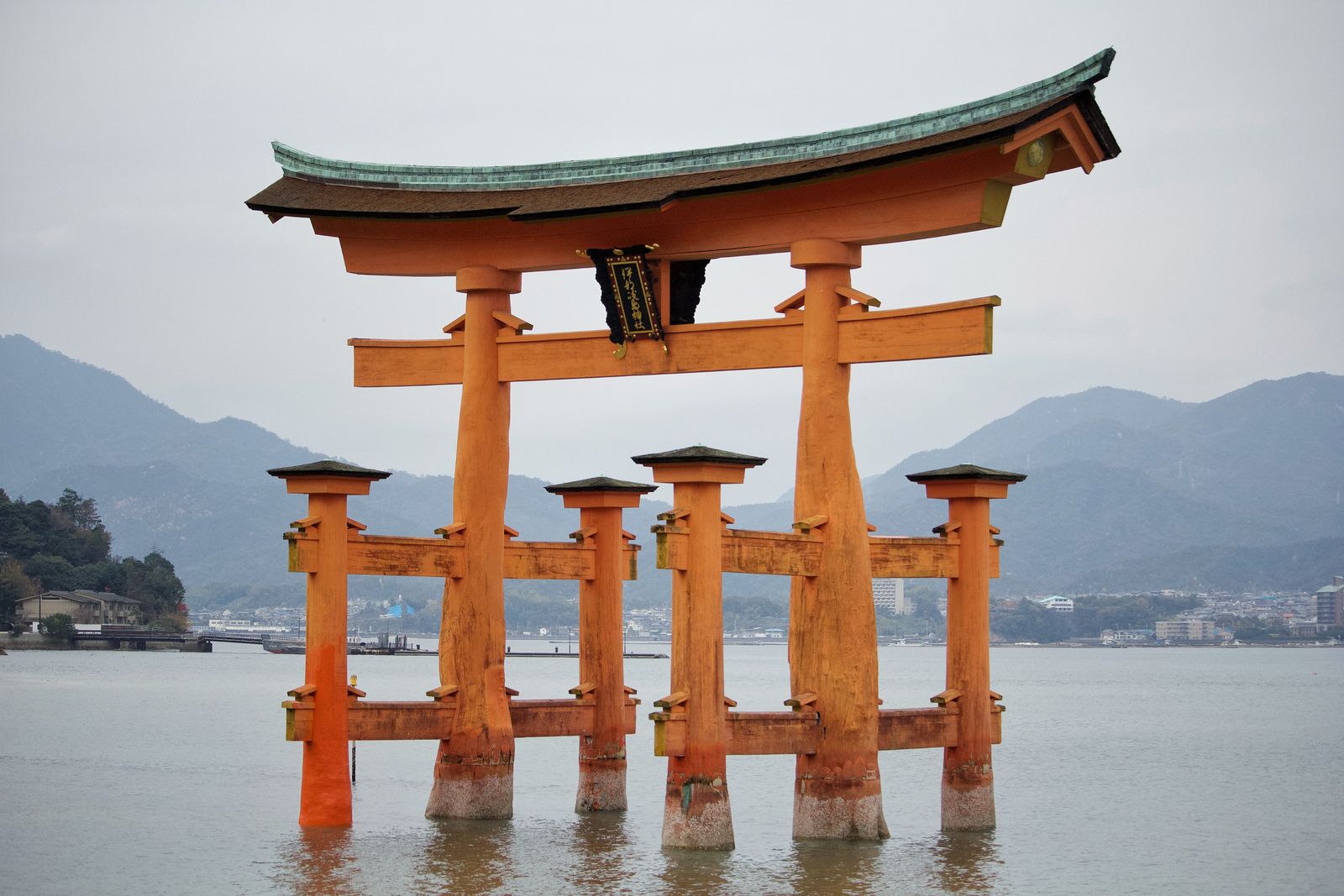
Cross Harajuku Station’s west exit and you are immediately at the giant wooden torii gate that marks the entrance to Meiji Shrine. The shrine itself sits inside a 70-hectare forest of 100,000 trees, every single one planted by hand in 1920 as part of the original construction. Locals come here to walk, pray, and breathe — and the temperature inside the forest is consistently 2 to 3 degrees cooler than the surrounding city.
The shrine is dedicated to Emperor Meiji (1852–1912), under whose reign Japan modernised from a feudal state into a global power. The main shrine buildings are 800 meters along the gravel path, past a wall of sake barrels donated by every brewery in Japan and a smaller wall of French wine barrels donated by Burgundian winemakers in tribute. Entry is free, open from sunrise to sunset (roughly 5 a.m. to 6 p.m. depending on season).
Drop a ¥5 coin (the five-yen coin is considered lucky), bow twice, clap twice, make a wish, bow once more. The shrine is exquisitely calm even on Sundays, when you may also spot traditional Shinto weddings — bride in a white silk hood, groom in striped trousers, miko shrine maidens leading the procession.
3. Omotesando
Walk east from Harajuku Station onto Omotesando and the mood switches instantly from teen-pop to high-fashion adult. The 1-kilometer boulevard is lined with zelkova trees and architecturally remarkable flagship stores: Tadao Ando’s Omotesando Hills mall, the diamond-faceted Prada building, the perforated copper Tod’s, and the all-glass Dior. Even if you have zero budget, the architecture walk is free and excellent.
At the eastern end is Aoyama, with the equally beautiful Nezu Museum (¥1,500 / US$10, closed Mondays). The garden behind the Nezu is one of the most peaceful places in central Tokyo and a perfect end to a long Shibuya/Harajuku walking day.
Where to Eat in Harajuku
Harajuku food is mostly snacks, dessert, and casual restaurants. You do not come here for omakase. You come here for the experience.
Rainbow cotton candy at Totti Candy Factory: ¥900 (US$6) for a cloud the size of your torso. Pure Instagram bait, but actually quite tasty.
Eggs ‘n Things: Hawaiian-style pancakes with a tower of cream. Open from breakfast.
Afuri Ramen Harajuku: yuzu-shio ramen, refreshing and citrusy. Long queue at lunch, much shorter at 3 p.m. Around ¥1,400 (US$10).
Maisen Tonkatsu: in an old bathhouse just behind Omotesando. The pork loin set is around ¥2,000 (US$14) and the breading is so light it tastes engineered.
Harajuku Gyoza-ro: cash-only, queue-only, gyoza-only. Six dumplings, a beer, and you are out the door for ¥1,500 (US$10).
Shopping: What’s Worth Your Suitcase Space
If you can only do shopping in one Tokyo neighborhood, do it here. The range is unmatched.
For souvenirs that are not embarrassing: Tokyu Hands (Shibuya Scramble Square) and Loft (next to Shibuya Modi). Stationery, beauty, kitchen, travel goods. Tax-free desks for foreigners with passports — bring it.
For unique fashion: Cat Street and the back streets between Cat Street and Omotesando. Vintage, sneakers, archive designer.
For luxury: Omotesando flagships.
For kawaii everything: Takeshita Street and Kiddyland (5 minutes east, full of Sanrio, Snoopy, Studio Ghibli).
For tax-free electronics: Bic Camera at the Shibuya Hachiko exit. Cheaper than Akihabara if you do not want a separate trip.
Most stores offer 10% tax-free purchases for tourists on the same day at a single store, with a passport, with a minimum of ¥5,500. Look for the “Tax-Free Shopping” logo at the door.
Best Time of Day to Visit
Shibuya looks dramatically different at different hours. Here is the optimal flow.
9–11 a.m.: Meiji Shrine. The forest is quietest in the morning, the air is cool, and you may see a wedding procession.
11 a.m.–1 p.m.: Takeshita Street and Harajuku snacks.
1–3 p.m.: Cat Street and Omotesando walk toward Shibuya.
3–5 p.m.: Shibuya shopping (Parco, Scramble Square, Hands).
5 p.m. (45 min before sunset): Shibuya Sky observation deck.
7 p.m.–onwards: Dinner in Center Gai or one of the back-alley izakaya, and then either karaoke (Karaoke-kan, made famous by Lost in Translation) or a final drink at Bar Trench or one of the standing bars on the Tamagawa side.
Where to Stay
If you are doing a one-week Japan trip and want to base in central Tokyo, the Shibuya/Harajuku/Omotesando triangle is one of the smartest choices. You get easy Yamanote access to the rest of Tokyo, walking access to Meiji Shrine for early-morning quiet, and the city’s best dinner-and-drinks scene at your doorstep.
Recommended price brackets (per room per night for two):
Budget (¥10,000–¥18,000 / US$70–$120): Sakura Hotel Hatagaya (one stop west), Tokyu Stay Shibuya, MUSTARD HOTEL SHIBUYA.
Mid-range (¥20,000–¥35,000 / US$140–$240): Shibuya Excel Hotel Tokyu (literally above the station, fantastic location), Trunk Hotel (boutique, behind Cat Street), Hotel Indigo Tokyo Shibuya.
Luxury (¥50,000+ / US$340+): Cerulean Tower Tokyu Hotel (rooftop bar, jazz club, indoor pool), Aman Tokyo if you want to spend more on the room than the rest of your trip.
Whichever bracket fits, book early — Tokyo hotels fill up fast, especially in cherry blossom season (late March to early April), autumn foliage season (mid-November), and Golden Week (late April to early May). Book your hotel on Agoda (Best prices guaranteed) →
If you are looking specifically at higher-end ryokan or Japanese-style stays in the wider Tokyo region, find luxury hotels on Ikyu.com →
Practical Tips for First-Timers
- Carry some cash. Most major restaurants and shops take cards, but small ramen counters, izakaya, and Takeshita Street snack stalls are often cash-only. ATMs at 7-Eleven, Lawson, and FamilyMart accept foreign cards 24/7.
- Walk on the left. On sidewalks, escalators, and especially in train stations.
- No tipping. Anywhere. It can actually offend. The price on the menu is the price you pay (plus, occasionally, a small table charge at izakaya).
- Trash bins are rare. Bring a small plastic bag to carry your wrappers until you find a bin (usually inside convenience stores or train stations).
- Don’t eat while walking. It is technically not illegal, but it is mildly frowned upon. The exception is Takeshita Street, where everyone is eating crepes.
- Photograph people respectfully. Harajuku fashion crowds are used to cameras, but always ask before close-ups. “Shashin onegai shimasu” — photo, please.
- The Shibuya Crossing photo is best from the second floor of the Starbucks at Tsutaya, but expect a 20-minute queue at peak times. The pedestrian deck overhead is faster and free.
- Comfortable shoes. A day in this area is a 10-kilometer walking day even when you do not feel it.
- Mobile data matters. Maps, train apps, and translation are the difference between fun and frustration. An eSIM is the simplest solution.
Day Trip Pairings
If you have an extra half-day, a few easy adds.
Yoyogi Park sits directly behind Meiji Shrine. Great for picnics, jugglers, weekend cosplay gatherings, and Sunday rockabilly dancers near the main entrance.
Daikanyama, one stop south on the Tokyu Toyoko Line, is the calmer, leafier, more grown-up cousin of Shibuya. The T-Site bookstore complex is one of the most beautifully designed shopping spaces in the world.
Nakameguro, two stops south, is famous for the riverside cherry blossom in spring and the cluster of designer-coffee shops year-round.
Shimokitazawa, two stops west on the Inokashira Line from Shibuya, is the indie-music, vintage-shop, tiny-bar pocket Tokyoites recommend to their cool friends.
For longer day trips out of Tokyo using the same Yamanote-to-Shinkansen system, consult our Japan Shinkansen guide — and if you are touring widely, the JR Pass worth-it analysis will save you serious yen.
Sample 1-Day Itinerary
The flow that has worked for hundreds of first-timers I have sent here:
8:30 a.m. — Breakfast at your hotel or at Streamer Coffee on Cat Street.
9:30 a.m. — Yoyogi-Hachiman side entrance, walk south through Meiji Shrine forest, exit at the main torii.
11:00 a.m. — Takeshita Street and a strawberry crepe.
12:30 p.m. — Lunch at Maisen or Afuri Ramen.
1:30 p.m. — Walk Omotesando east to the Nezu Museum garden.
3:00 p.m. — Cat Street back south toward Shibuya, browsing as you go.
4:30 p.m. — Coffee on the Miyashita Park rooftop.
5:30 p.m. — Shibuya Sky at sunset (book online in advance).
7:30 p.m. — Dinner. Gyukatsu Motomura, Sushi no Midori, or one of the back-alley izakaya off Center Gai.
9:30 p.m. — One drink at Bar Trench, then Shibuya Crossing one last time with the neon at full power.
Walk home, or back to your hotel booked through Yahoo! Travel →, your phone full of crossing photos and your stomach full of strawberries.
Seasonal Notes
Shibuya and Harajuku are good year-round, but a few seasonal flags.
Cherry blossom (late March to early April): Yoyogi Park and the Meguro River (one stop south) are stunning. Plan to be in the area for at least one early-evening walk under blossoms.
Golden Week (late April to early May): Crowds peak. Book accommodation three months ahead.
Summer (July–August): Hot and humid, often 33–36°C with 80% humidity. Plan air-conditioned activities for midday — Shibuya Sky, museums, malls — and walk in the evenings.
Halloween (October 31): Shibuya Crossing becomes the largest unofficial costume party in the world. The local government has tried to ban drinking — it has not really worked. Photogenic chaos.
Christmas illuminations (late November–December): Omotesando’s tree-lit boulevard is the prettiest Christmas street in Tokyo.
New Year (December 31–January 3): Meiji Shrine welcomes more than 3 million worshippers in the first three days of the year — it is the most-visited shrine for hatsumode in Japan. Queues to bow at the main hall are 90 minutes long on January 1. Either go for the experience or skip the area entirely for those three days.
Frequently Asked Questions
How many days should I spend in Shibuya and Harajuku?
For most first-timers, one full day is enough to cover both neighborhoods well, plus a short revisit on a separate evening for the night-time crossing photos and dinner. If you are a serious shopper or fashion-obsessed, give it two days. If you are based in Shibuya for the trip, you will probably pass through every day anyway.
Is Shibuya safe at night?
Yes. Tokyo is one of the safest large cities in the world, and Shibuya is well-lit and busy until past midnight. The main practical concern is touts in the Dogenzaka area trying to lure tourists into expensive bars — politely ignore anyone who approaches you on the street and you will be fine. Never follow a stranger to an unmarked bar.
Can I see both Shibuya and Harajuku in half a day?
Yes, but you will skim. A four-hour version: 90 minutes at Meiji Shrine and Takeshita, 90 minutes walking Cat Street and Omotesando, 60 minutes at Shibuya Crossing and one of the malls. You will miss Shibuya Sky and a sit-down meal, but it is doable.
What is the best time of day to photograph Shibuya Crossing?
Two windows: 7:30–8:00 a.m. for empty-street shots (the morning street-washers leave the asphalt wet and reflective) and 6:00–8:00 p.m. for full-neon chaos. The most photogenic angle is from the Starbucks second floor, but the Mag’s Park rooftop above Shibuya 109-2 and Shibuya Sky both give the panoramic version.
Is Meiji Shrine worth visiting if I’m short on time?
Yes — emphatically. It is the most accessible major shrine in central Tokyo and the contrast with Harajuku two minutes away is one of the most memorable experiences in the city. Budget 45 minutes including the walk through the forest.
What’s the difference between Shibuya and Shinjuku?
Shibuya is younger, more pedestrian, more fashion-led, and dominated by the crossing. Shinjuku is older, taller, more business-oriented, more nightlife (Kabukicho), and more chaotic. Most first-timers like Shibuya more during the day and Shinjuku more at night. Do both. For a deep dive into Shinjuku, see our complete Shinjuku guide.
Are there left-luggage lockers in Shibuya Station?
Yes. Coin lockers (¥400–¥700 / US$3–$5) are scattered throughout the station; the largest banks are near the Hachiko exit and inside the Inokashira Line concourse. They fill up at peak times — try the smaller banks near the Tokyu Toyoko platforms if the main ones are full.
How do I pay for trains and shops?
Suica or Pasmo IC card on your phone or as a physical card is the easiest. Top up at any station. Almost every store, vending machine, and convenience store accepts IC cards. Credit cards work at major chains and department stores; smaller spots are cash-only. Carry ¥5,000–¥10,000 in cash for any one day in case.
Can I use my phone in Japan?
Yes, but you need a Japan eSIM or a pocket Wi-Fi. International roaming with most carriers is prohibitively expensive. The eSIM is the cleanest solution — activate before you fly and you are online the moment your plane lands.
What if I only speak English?
You will be fine in Shibuya and Harajuku. Train signs are bilingual, major restaurants have English menus or picture menus, and shop staff at department stores are usually trained for international shoppers. Google Translate (with the camera function) handles the rest. Learning “sumimasen” (excuse me / sorry), “arigato gozaimasu” (thank you), and “kore o kudasai” (this one, please) will earn you a lot of goodwill.
Hidden Corners Worth Finding
Once you have done the headline sights, here are the spots that turn a one-day visit into a genuine love affair with this area.
Nonbei Yokocho — the Drunkard’s Alley
A two-minute walk from the JR Shibuya north exit, tucked between the tracks and Miyashita Park, sits a narrow lantern-lit alley of postwar shacks. Each tiny bar seats six to twelve people. Most are family-run, often by the same family for three generations. Order a highball, a couple of yakitori skewers, chat to the mama-san, and you are inside the postwar Tokyo that survived in only a handful of places. Expect roughly ¥3,000–¥5,000 (US$20–$35) per person for a full evening with drinks. Some places impose a small table charge (¥500 / US$3.50) — it is normal, not a scam.
The Streamer/Glitch Coffee circuit
If you take your coffee seriously, the Shibuya/Harajuku area has one of the densest collections of championship-level roasters in the world. Streamer Coffee (Cat Street, signature latte art), Glitch Coffee (a few minutes east in Jingumae), Onibus Coffee (Nakameguro), and Fuglen Tokyo (Yoyogi-Koen) are all within a twenty-minute walk of each other. A flat white runs ¥600–¥800 (US$4–$5.50). Order at the counter, take it to go, and walk the residential side streets.
Yoyogi Hachimangu Shrine
Five minutes uphill from Yoyogi-Koen Station, this small neighborhood shrine is the genuinely-local alternative to Meiji Jingu. Locals come to pray for safe childbirth and good business. Zero tourists. A useful palate-cleanser if the Meiji Jingu crowds got to you.
Spain-zaka and the back alleys behind 109
The narrow streets immediately west of Shibuya Crossing — Spain-zaka, Inokashira-dori, and the slopes climbing toward Dogenzaka — hide some of the city’s best vintage shops, record stores, and tiny restaurants. The streets are too steep and narrow for tour buses, which is exactly why they are still interesting.
The 8th-floor record bar at Tower Records
The legendary Shibuya Tower Records is eight stories of music, with the top floor reserved for live performances and a small bar that overlooks the Center Gai sign. Live shows from rising J-pop and indie artists run most evenings, often free or for a small drink minimum.
How Much Does a Day Here Actually Cost?
Honest numbers for a single solo traveler doing this guide’s full one-day itinerary in 2026.
Train rides (two short hops): ¥300 (US$2)
Coffee at Streamer: ¥700 (US$5)
Lunch at Maisen Tonkatsu: ¥2,000 (US$14)
Crepe + bubble tea on Takeshita: ¥1,300 (US$9)
Shibuya Sky observation deck: ¥2,500 (US$17)
Dinner at Gyukatsu Motomura: ¥2,000 (US$14)
One craft cocktail at Bar Trench: ¥1,800 (US$12)
One small souvenir at Tokyu Hands: ¥1,500 (US$10)
Daily total: roughly ¥12,100 (US$83), not counting accommodation.
A budget version (convenience-store breakfast, ramen for two meals, no Shibuya Sky, no cocktail) brings the day to about ¥4,500 (US$31). A splurge version (omakase sushi, top-floor cocktails at the Cerulean Tower bar) easily passes ¥40,000 (US$275). For a fuller breakdown of how to travel Japan well without burning through cash, our budget travel Japan guide is worth a read.
Combining Shibuya and Harajuku with Other Tokyo Areas
If you are building a full Tokyo itinerary, here is how this corner fits with the rest of the city. A classic three-day plan looks like this:
Day 1 — Shibuya and Harajuku (this guide).
Day 2 — Asakusa, Ueno, and the old city. Senso-ji temple, the Ueno museums, a stroll through Yanaka. Old Tokyo, low-rise, traditional. A complete contrast to Day 1 and that is why it works.
Day 3 — Akihabara, Ginza, or a day trip. Akihabara for anime, electronics, and arcades. Ginza for tea ceremony, sushi, and luxury department stores. Or get out to Kamakura, Hakone, or Nikko on the train. The Shibuya/Harajuku area pairs especially well with Kamakura the next day — both are accessible directly via the Shonan-Shinjuku Line.
If you have a week, add a Shinkansen run down to Kyoto and Osaka. Our Kyoto hub and Osaka hub have the equivalent of this guide for each city.
Common Mistakes First-Timers Make
I have walked this area with dozens of friends over the years. The same handful of mistakes come up.
Spending too long at the crossing. Three crossing cycles are enough. Six are too many. Move on.
Going to the Starbucks Tsutaya at peak hours. You will queue 30 minutes for a window seat. The pedestrian deck above the Mark City exit is free, immediate, and gives a similar angle.
Skipping Meiji Shrine because it sounds religious. The forest walk alone is worth the visit — it is the only place in central Tokyo that genuinely feels like deep nature.
Eating only at famous chains. Ichiran is fine. So is Ippudo. But the most interesting meals in Shibuya are in the back alleys off Center Gai — the 8-seat counters where the chef makes one thing and makes it perfectly.
Buying souvenirs at Takeshita Street. Most of the kawaii merchandise sold there is mass-produced and overpriced compared to Don Quijote (Donki) two minutes away. Donki at Shibuya MEGA stocks the same character goods for half the price and is open 24 hours.
Not booking Shibuya Sky. Same-day on-site tickets exist but are usually sold out by 2 p.m. Book online a week ahead for sunset slots.
Wearing fashionable shoes. You will walk 12,000 steps before lunch. Bring sneakers you have already broken in.
Connectivity, Apps, and Useful Phrases
A few things that will materially change your day for the better.
Essential apps: Google Maps (transit directions are excellent in Tokyo), Navitime for Japan Travel (better for fare comparison), Google Translate (camera mode for menus), Japan Travel by NAVITIME, and Suica via Apple Wallet or Google Wallet.
Connectivity: Free Wi-Fi exists in major stations, Starbucks, and most malls, but speeds are inconsistent and you will lose signal in the alleys. A prepaid Japan eSIM costs ¥1,500–¥3,500 (US$10–$24) for a one-week unlimited plan and is the easiest fix. Activate before you leave home. Compare options at Saily eSIM → or Airalo eSIM →.
Useful phrases:
Sumimasen (sue-mee-mah-sen) — excuse me / sorry. Use this constantly.
Arigato gozaimasu (ah-ree-gah-toh go-zai-mas) — thank you.
Kore o kudasai (ko-reh oh koo-dah-sai) — this one, please. Point and say it.
Eigo no menyu wa arimasu ka? — Do you have an English menu?
Ikura desu ka? — How much is it?
O-kanjo onegaishimasu — The bill, please.
The bow is universal. A small nod is fine for almost any situation. Save the deep bow for genuine apology or thanks.
Final Word
Shibuya and Harajuku are the two neighborhoods that turn first-time Japan visitors from cautious tourists into excited returnees. They contain the visual icon of the country (the crossing), the spiritual heart of modern Tokyo (Meiji Shrine), the youth culture (Takeshita), the luxury (Omotesando), the dinner (Center Gai), and the view (Shibuya Sky), all within one walkable kilometer. Plan the day, wear good shoes, charge your phone, and let the city do the rest. For more first-timer guidance across the whole country, the Japan travel tips for first-timers is the natural next read.
Now go grab that crepe.
Related Tokyo Neighbourhood Guides
Explore more of Tokyo with these related neighbourhood guides: Shinjuku’s neon lights and Golden Gai, Akihabara’s anime and electronics, Ginza and Tsukiji’s market and shopping, Roppongi’s art triangle and nightlife, and Shimokitazawa’s vintage shops and cafes.
Going to Japan? Talk to locals with confidence.
Hirameki Japanese — instant offline translation, camera translation, furigana + romaji, and 314 free flashcards. No login. Works without internet.

Plan your Japan trip
Two things every first-timer should book
Some links are affiliate links. If you book through them we may earn a small commission at no extra cost to you.