Ramen comes in many regional styles across Japan, but few have shaped the modern ramen world like the milky white tonkotsu of Fukuoka. Hakata ramen — born in the bustling fish markets and railway stations of Kyushu’s largest city — is now beloved everywhere from Tokyo to New York. But to truly understand why ramen lovers fly to Fukuoka just to slurp a bowl, you need to taste it where it was invented: at a yatai food cart by the Naka River, at a counter inside Hakata Station, or in one of the little family-run shops tucked into Tenjin’s back alleys. This complete guide explains what makes Hakata ramen unique, the best shops to visit, the etiquette of ordering, and how to plan an unforgettable ramen pilgrimage to Fukuoka.
What Is Hakata Ramen? Understanding Tonkotsu
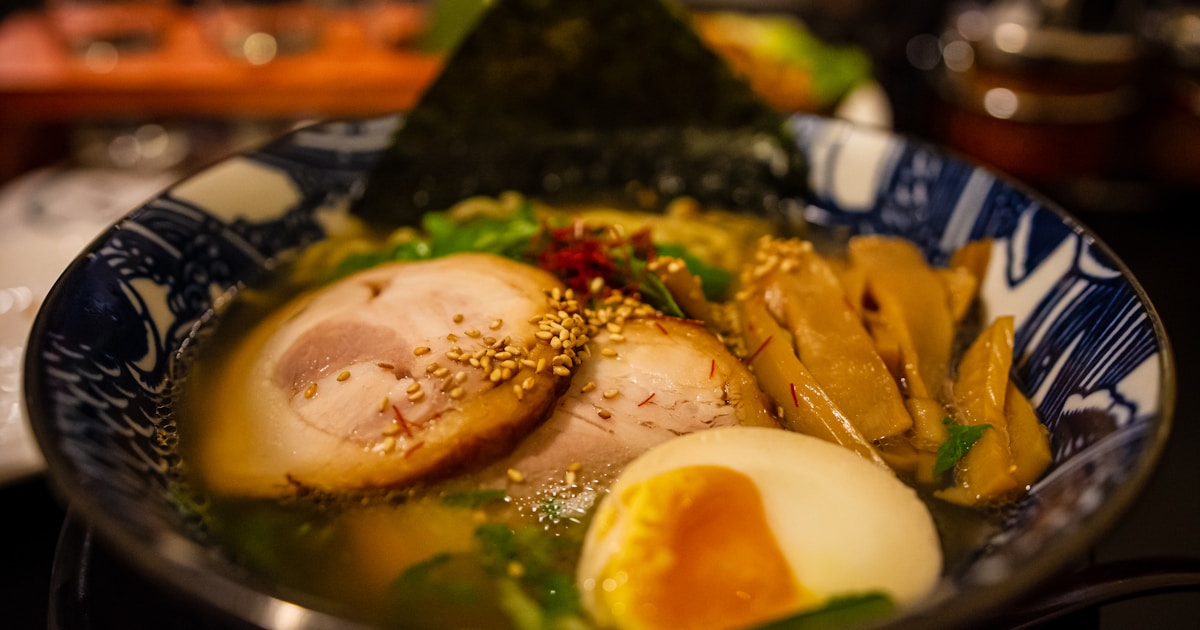
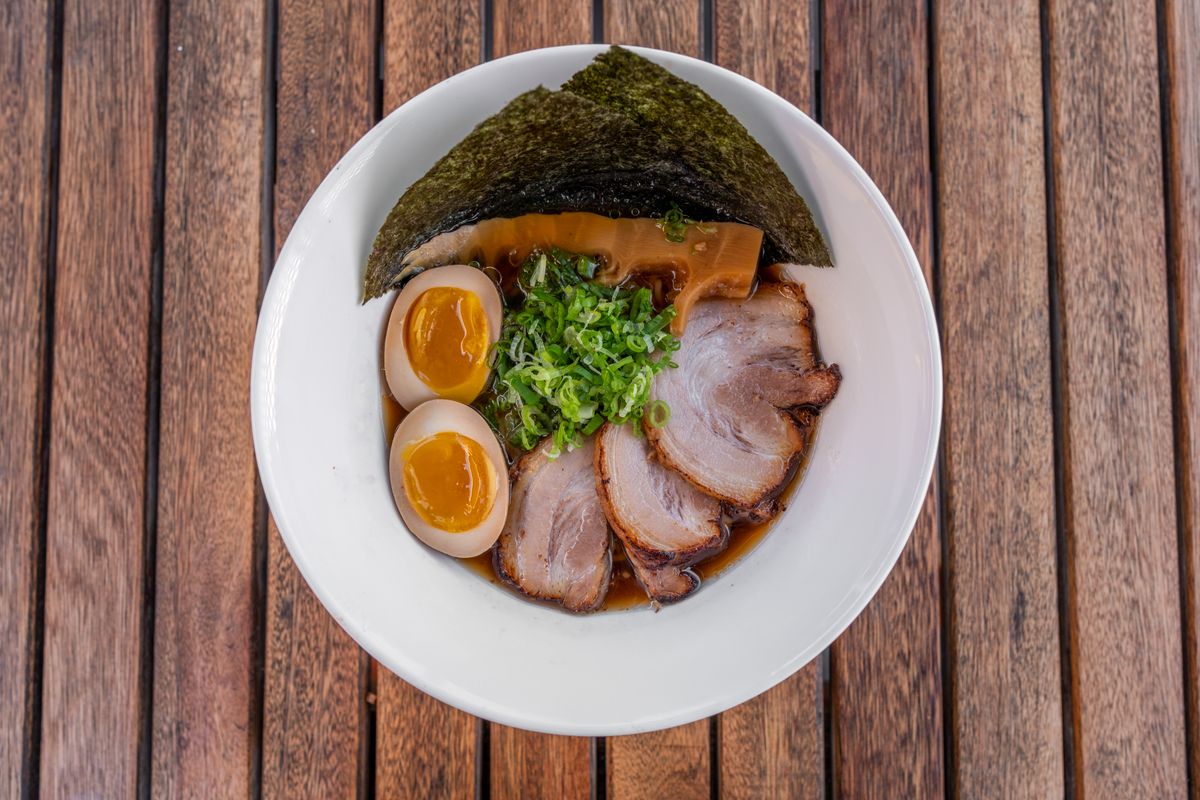
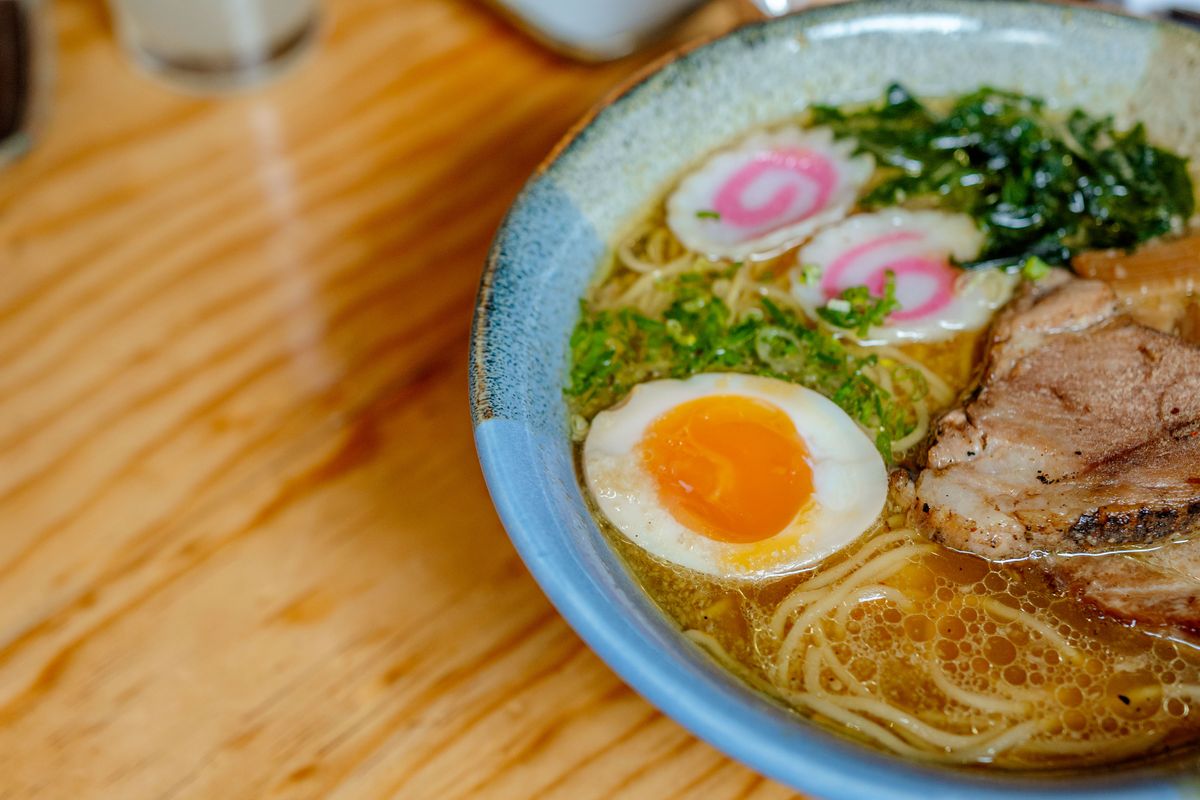
Hakata ramen is a regional style from the Hakata district of Fukuoka City in Kyushu, southwestern Japan. It is defined by three things: a milky white pork bone (tonkotsu) broth, very thin straight noodles, and a relatively simple set of toppings — usually just sliced chashu pork, scallions, sesame, beni shoga (red pickled ginger), and karashi takana (spicy mustard greens).
The broth is the soul of the bowl. To make tonkotsu, pork bones — primarily femur and hip — are simmered at a hard rolling boil for 12 to 24 hours, sometimes longer. The collagen breaks down into gelatin, the marrow emulsifies into the liquid, and the result is a creamy, opaque broth with a deep porky richness. Done well, it has the body of light cream and a flavor that is savory, sweet, and faintly smoky.
The noodles are equally distinctive. Hakata ramen uses very thin, low-hydration straight noodles that cook in under a minute and absorb a lot of broth. Because they soften quickly, Hakata diners often order their noodles “hard” (katamen) to keep them al dente, and many shops offer a free or cheap noodle refill called kaedama when you’ve finished the first portion but still have plenty of broth left.
The History of Hakata Ramen
Hakata ramen’s origin story is a story of the post-war economy. The most widely accepted account dates the dish’s birth to 1937, when a stall called Nankin Senryo began serving a Chinese-influenced noodle soup in Kurume, a city about 35 minutes south of Fukuoka by train. The original broth was clear, but a famous accident in 1947 — when the cook left a pot boiling longer than intended — produced the milky white tonkotsu we know today.
By the 1950s, the dish had migrated north to Hakata, where it found its true home in the city’s hectic ports, train stations, and night markets. Workers needed cheap, hot, fast food at strange hours, and a bowl of dense pork-bone soup over thin quick-cooking noodles fit perfectly. The yatai (food cart) became the dominant ramen venue, and many of today’s most famous Hakata shops trace their lineage back to a single charismatic yatai cook.
In the 1980s and 1990s, Hakata ramen entered a global era. Chains like Ippudo and Ichiran opened locations across Japan and then internationally. Today there are Ippudo restaurants in over a dozen countries, but for many ramen pilgrims, eating at the original Hakata location is a kind of culinary holy grail.
How to Get to Fukuoka
Fukuoka is one of the most accessible cities in Japan. The city’s Fukuoka Airport is famously close to the city center — it’s only about 5 minutes by subway from the airport to Hakata Station, the city’s main train hub. This is one of the shortest airport-to-city transfers in the world.
From Tokyo
The Tokaido-Sanyo Shinkansen runs from Tokyo Station to Hakata Station in about 5 hours, with the fastest Nozomi service costing roughly ¥23,000 ($156 USD) one-way. Sakura trains do not run from Tokyo, so JR Pass holders ride a Hikari to Shin-Osaka and change to a Sakura for Hakata, taking roughly 6 hours, or pay a supplement to use the faster Nozomi with the pass. Flights from Tokyo (Haneda) to Fukuoka take only 1.5 hours and often start around ¥10,000 ($68 USD) when booked in advance.
From Osaka and Kyoto
The Sanyo Shinkansen connects Shin-Osaka and Hakata in just 2.5 hours via Nozomi, costing about ¥16,000 one-way for a reserved seat (¥16,300 for tickets bought from July 2027). The journey from Kyoto takes about 15 minutes longer, and Nozomi trains run direct from Kyoto to Hakata with no transfer needed.
From overseas
Fukuoka Airport (FUK) has direct flights from many Asian cities, including Seoul, Shanghai, Taipei, and Hong Kong. From North America and Europe, most travelers connect through Tokyo or Seoul. The airport’s compact size makes it one of the easiest entry points into Japan for first-time visitors.
Travel tip
Ramen-hopping in Fukuoka means a lot of walking, late-night yatai visits, and using Google Maps to find tucked-away shops. Get an eSIM before you arrive so your phone is online from the moment you land at FUK.
Get your Japan eSIM (Stay connected from day 1) →
The Anatomy of a Hakata Ramen Bowl
Before diving into specific shops, it helps to understand the components you’ll see in every Hakata bowl. Knowing what each element does makes it easier to spot subtle differences between shops.
Tonkotsu broth
The broth is judged on three things: color (the whiter and more opaque, the more collagen has been extracted), body (the heavier and more cream-like, the better), and clean flavor (no harsh boar-y or barnyard-y notes). The best tonkotsu has an almost dairy-like richness without ever feeling greasy. Many shops use a “yobimodoshi” technique — adding fresh pork bones to the master pot every day, so the broth is theoretically decades old.
Noodles
Hakata noodles are thin (around 1.2mm), straight, and cooked al dente. Most shops let you specify firmness — yawarakai (soft), futsuu (normal), katamen (firm), barikata (very firm), and harigane (“wire,” nearly raw). For tourists, futsuu or katamen is the safest choice. Barikata is a Hakata signature for noodle purists — the noodles are almost crunchy at first, and they soften gradually as you eat.
Chashu pork
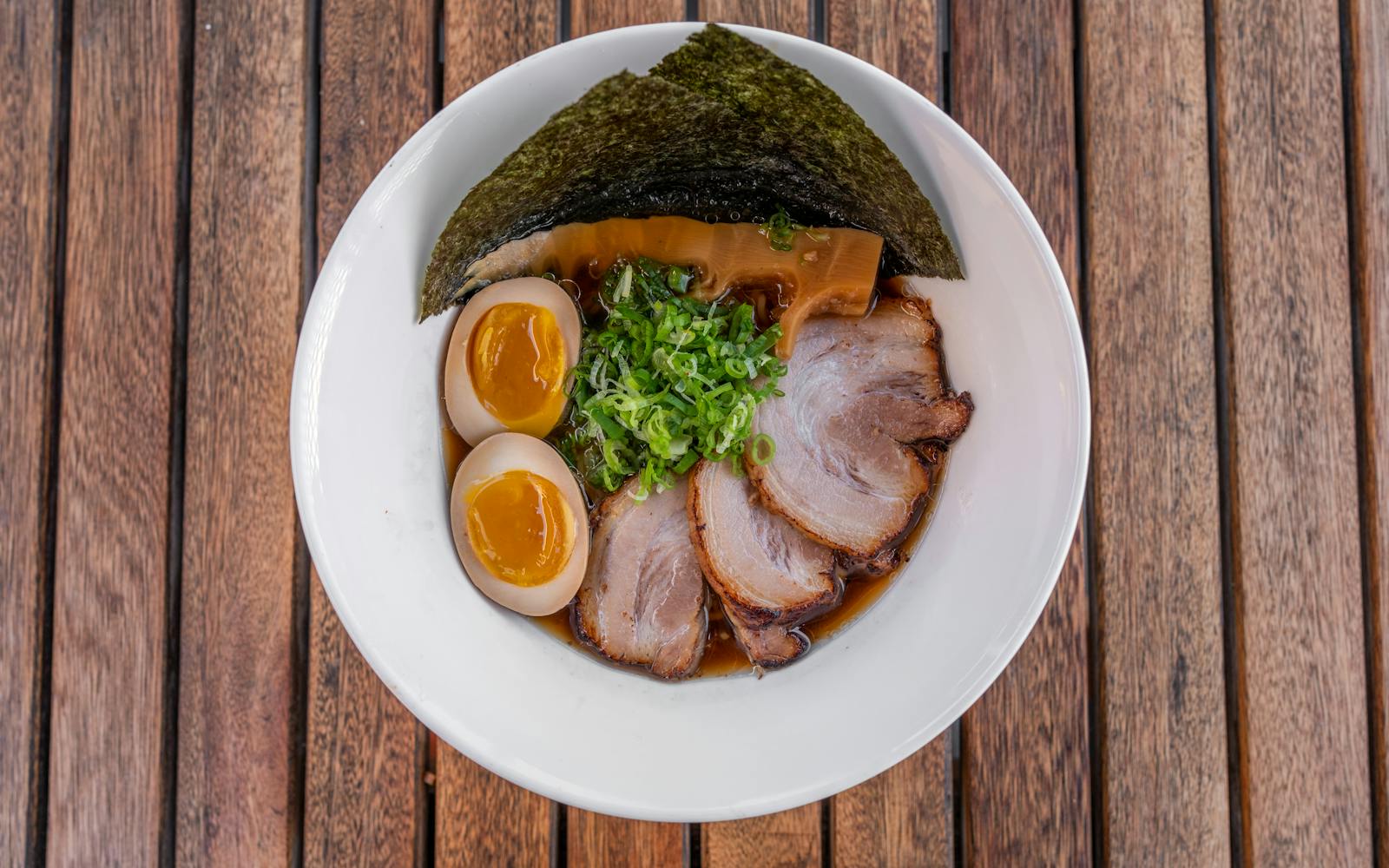
Hakata chashu is generally simpler than the soft-braised, fatty chashu of Tokyo-style shoyu ramen. It’s typically a thin slice of cooked pork shoulder, lean and unobtrusive, that complements rather than dominates the broth.
Scallions, sesame, and pickles
A small handful of finely chopped green scallions, a sprinkle of toasted white sesame, and a side of beni shoga (red pickled ginger) and karashi takana (spicy mustard greens) round out the bowl. The pickled ginger is meant to be added in small bites for a refreshing palate cleanse, not piled on at the start.
Kaedama (extra noodles)
This is the Hakata signature move. When you’ve finished about half your noodles but still have rich broth left, raise your hand and say “Kaedama, onegaishimasu!” Many shops will refill your bowl with a fresh portion of noodles for ¥100–¥200 ($0.70–$1.35 USD). Some places even ask you upfront how firm you want the second portion.
Where to Eat Hakata Ramen: The Best Shops
Fukuoka has hundreds of ramen shops, and there’s no single “best.” The list below covers the most famous, the most beloved by locals, and the most beginner-friendly. Order them roughly by neighborhood — Hakata Station, Tenjin, Nakasu, and Daimyo are the four main ramen clusters in the city.
1. Ichiran Hakata-eki Higashi Honten
Ichiran is now an international brand, but it was born in Hakata in 1960, and visiting the head office near Hakata Station is a different kind of pilgrimage. The store’s signature feature is the “flavor concentration booth” — individual single-person stalls separated by partitions, designed so you can focus entirely on the bowl. You order via vending machine, customize the broth richness, garlic, scallions, chili, and noodle firmness on a paper sheet, and your bowl arrives through a small curtained window.
Average bowl: ¥980 ($6.60 USD). Open 24 hours.
2. Ippudo Daimyo Honten
Ippudo is the Hakata shop that arguably did the most to bring Hakata ramen to the world. The original store opened in 1985 in Daimyo, a fashionable Tenjin neighborhood, and it’s still going strong. The flagship Shiromaru Motoaji is a clean, cream-rich tonkotsu that’s a perfect introduction to the style. Akamaru Shinaji adds a dab of garlic-infused miso oil that floats on top and gives it punch.
Average bowl: ¥850–¥1,100 ($5.75–$7.45 USD).
3. Hakata Daruma Sohonten
If Ichiran is the international face of Hakata ramen, Daruma is the locals’ answer. Founded in 1963 and located in a quiet corner of the Watanabedori area, Daruma’s bowl is a touch saltier and more pungent than Ippudo’s, with a fragrant pork-fat aroma that you can smell from the street. Locals love it for the no-frills atmosphere — counter seating, no bells and whistles, just incredible ramen.
Average bowl: ¥800 ($5.40 USD).
4. Shin-Shin Tenjin Honten
Shin-Shin is one of Tenjin’s most popular ramen shops, often with queues snaking around the corner. The broth is lighter and less intensely porky than Daruma’s, with delicate scallion and a perfect noodle bite. It’s a great choice for travelers worried about the heaviness of full-strength tonkotsu — you’ll still recognize it as Hakata ramen, but it goes down easier.
Average bowl: ¥800–¥1,000 ($5.40–$6.75 USD).
5. Hakata Issou
Located near Hakata Station, Issou is famous for two things: extraordinarily thick, almost chowder-like tonkotsu broth, and the “tonkotsu cappuccino” foam that crowns the bowl. Each spoonful coats your spoon. If you want to experience the maximum density possible in a Hakata-style bowl, this is your shop. Be prepared to queue, and don’t plan a heavy dinner the same day.
Average bowl: ¥850 ($5.75 USD).
6. Genki Ippai
This tiny ten-seat counter is one of the most cult-followed ramen shops in Hakata. The owner makes one bowl at a time, the broth is among the deepest in the city, and the menu is intentionally limited. Lunchtime queues can hit two hours, but most fans say the wait is worth it. Open from 11:30 AM until the broth runs out — usually by mid-afternoon.
Average bowl: ¥800 ($5.40 USD).
7. Sumiyoshi-an
For those who want to try Hakata ramen with a slightly more refined, modern interpretation, Sumiyoshi-an is a quiet upscale shop in the Sumiyoshi neighborhood serving small-batch tonkotsu using free-range pork bones. The broth has a noticeably cleaner, less greasy finish than the typical heavy-hitters, and the chashu is sliced thicker. Pairs well with a glass of local sake.
Average bowl: ¥1,200 ($8.10 USD).
The Yatai Experience: Eating at Fukuoka’s Iconic Food Carts
No Hakata ramen pilgrimage is complete without at least one yatai dinner. Yatai are the small wooden food carts that line the Naka River and the streets of Tenjin and Nakasu after sunset. They are a cultural institution unique to Fukuoka — over 100 yatai operate in the city, more than anywhere else in Japan — and many of them serve excellent ramen.
Where the yatai cluster
The biggest concentration is along the south bank of the Naka River, near Nakasu Island. A second cluster runs through Tenjin’s Showa Street, and a smaller third cluster is around Nagahama, near the fish market. Each location has a slightly different vibe — Nakasu is the most photogenic and touristy, Tenjin is more business-after-work, and Nagahama is where serious ramen heads go.
Yatai etiquette
A yatai usually seats 8 to 10 people on small stools, sheltered by a canvas roof. Squeeze in, greet the owner with “Konbanwa,” and order a beer or a hot tea while you decide. Most yatai have a short menu printed on a hand-written board: ramen (¥700–¥1,000 / $4.75–$6.75 USD), gyoza, oden, yakitori, and sometimes tempura. You can usually order at your own pace, and the owner will make conversation if your Japanese (or theirs) allows. Cash is king at most yatai — bring small bills.
Best yatai for ramen
Yatai don’t have prestigious “Michelin”-style rankings, and the lineup changes year to year as cooks retire or move. Some perennially good options include Take-chan in Nakasu (famous for stick-to-your-spoon broth), Hakata Kosuke in Tenjin (a full Hakata-style bowl in a yatai setting), and Kotetsu near Watanabedori (a longer, more sit-down yatai with a wider menu).
Hakata Station Ramen Street: An Easy First Stop
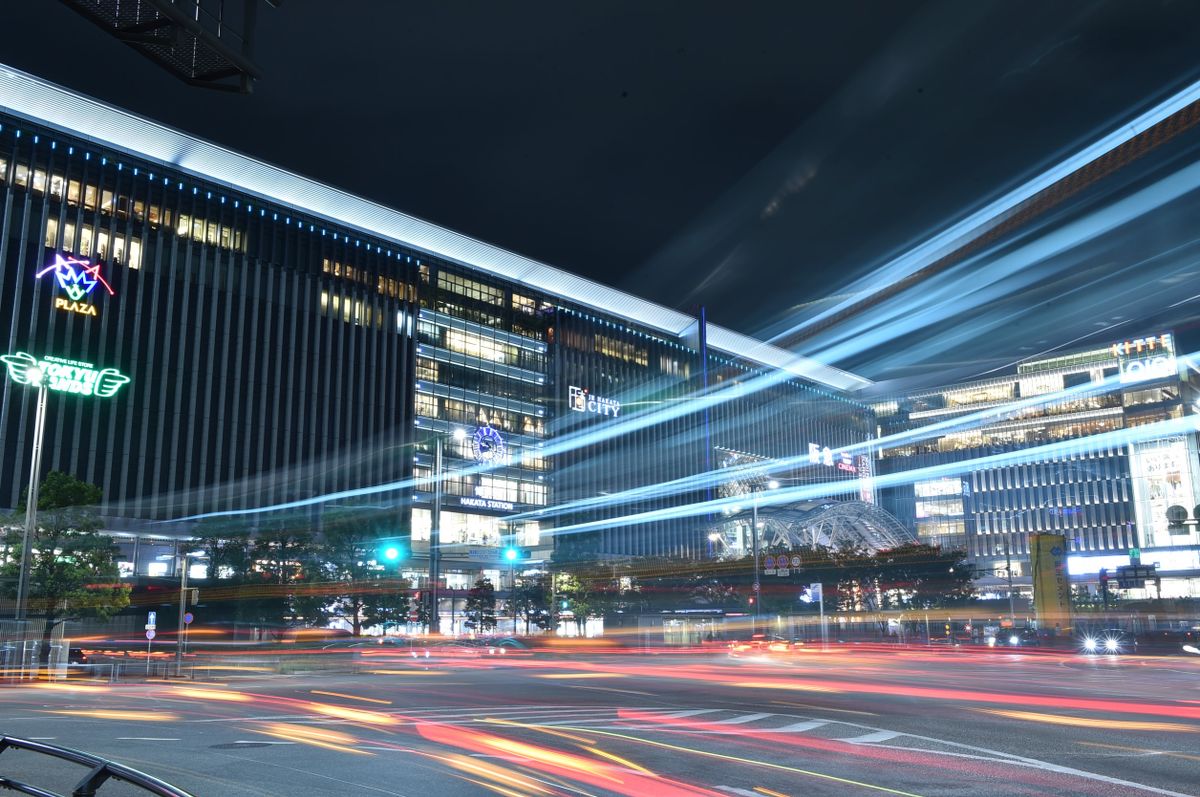
If you only have a few hours in Fukuoka — say you’re transiting between Tokyo and Kagoshima — Hakata Station’s “Hakata Menkaido” ramen street on the 2nd floor of Hakata Deitos and the “Hakata Itadaki Mon” food court make sampling several styles in one visit easy. Eight to ten shops rotate through the space, including some Hakata classics and a few from other regions (Sapporo miso, Kitakata, Wakayama).
This is also a great way for picky eaters or families to mediate disagreements: each person picks their own style, then everyone reconvenes at a common table.
How to Order Like a Local
The mechanics of ordering at a Hakata ramen shop are simple, but knowing the script makes the experience smoother and signals that you’re a respectful diner. Here’s a step-by-step.
Step 1: Use the vending machine if there is one
Many ramen shops in Japan, including most popular Hakata shops, use a vending-machine ordering system. Insert cash, press the button for the ramen you want plus any extras (egg, extra chashu, kaedama), and take your ticket to the counter. Some machines have English buttons, but if not, the visible photos of the bowls are usually enough.
Step 2: Customize your noodle firmness
When you sit down and hand over your ticket, the staff will ask “Men no katasa wa?” (How firm do you want the noodles?). The answer choices, easiest to hardest, are: yawarakai → futsuu → katamen → barikata → harigane. For first-timers, futsuu (normal) or katamen (firm) are best.
Step 3: Customize the richness
Some shops will also ask “Aji no kosa wa?” (How rich do you want the broth?). The choices are usually usu (light), futsuu (normal), or koime (rich). When in doubt, futsuu.
Step 4: Slurp it
Slurping is encouraged in Japan, especially for ramen. It cools the noodles down and aerates the broth’s flavor on the palate. If you’ve never slurped, this is your chance — it’s actually fun once you let go.
Step 5: Order kaedama if you want more noodles
Once you’ve eaten about half the noodles, raise your hand and say “Kaedama, onegaishimasu” (extra noodles, please). Most shops charge ¥100–¥200, and some have an option for the firmness too.
Step 6: Don’t pour all the broth out
It’s perfectly fine to leave some broth at the bottom of the bowl, especially if you’ve had kaedama. Drinking every last drop of the very rich tonkotsu is more than your stomach probably wants. Bonus tip: a small dish of beni shoga (pickled ginger) is meant to be eaten with the noodles, not at the very end.
Hakata Ramen vs. Other Regional Styles
Japan’s regional ramen styles are surprisingly distinct. If you’ve only had ramen at one place in Tokyo or in your home country, the differences below will help you place Hakata ramen in context. For more, see our complete Japan ramen guide.
Hakata vs. Tokyo (shoyu)
Tokyo-style shoyu ramen has a clear amber broth made with chicken, dashi, and soy sauce, and uses thicker, wavy noodles. Toppings are heartier — thick chashu, a soft-boiled egg with a runny yolk, menma (bamboo shoots), and seaweed. Tokyo ramen is balanced and elegant; Hakata ramen is rich and obsessive.
Hakata vs. Sapporo (miso)
Sapporo-style miso ramen, born in Hokkaido, uses a robust miso-based broth often topped with corn, butter, and stir-fried bean sprouts. The noodles are thick and curly. Sapporo ramen is a winter dish; Hakata ramen is for any season.
Hakata vs. Kurume
Kurume tonkotsu, from the city about 35 minutes south of Fukuoka by train, is the original tonkotsu and the inspiration for Hakata ramen. Kurume’s broth is even thicker and more aromatic — almost barnyard-funky if you’re not used to it. Many ramen pilgrims do a Hakata-Kurume double bill on a single trip.
Hakata vs. Kagoshima
Kagoshima ramen is also tonkotsu-based but lighter and a touch sweeter, often with a hint of chicken stock. The noodles are a bit thicker than Hakata’s. If you make it down to Kagoshima during your trip, comparing the two side by side is a fun ramen exercise. See our Kagoshima travel guide.
Beyond Ramen: What Else to Eat in Fukuoka
Fukuoka is one of Japan’s great food cities, and limiting your visit to ramen alone would be a mistake. Here are the local specialties to seek out alongside your bowls.
Mentaiko
Mentaiko is spicy marinated cod roe — small, glistening pink sacs that pop with salty, slightly spicy flavor. It’s used as a topping for rice, pasta, baguettes, eggs, and more. Try it at Fukuya in Hakata Station or Kawaya in Nakasu, both venerable mentaiko houses with tasting counters.
Motsunabe
This is a hot pot of beef offal (intestines and tripe), cabbage, garlic, and chili in a soy-or-miso-based broth. It’s the city’s classic winter dish. Try Yamanaka or Ichifuku for a proper sit-down motsunabe experience, ideally with a group of friends.
Hakata gyoza
Hakata gyoza are smaller and crispier than the gyoza you might know from Tokyo. They’re served bite-sized so you can eat one in a single mouthful. Tetsunabe in Tenjin and Bao Zi in Nakasu are local favorites. They pair perfectly with a bowl of ramen.
Yaki ramen
A Hakata yatai invention: thin Hakata noodles stir-fried with a bit of broth, vegetables, and pork in a small pan. Crispy and chewy at the same time, it’s the perfect snack to share between two people while you wait for ramen.
Mizutaki
A delicate chicken-based hot pot with vegetables and dipping sauce — not really a “ramen” dish but a Fukuoka classic worth trying if you have time for a fancier dinner. Hakata Hanamidori is one of the most respected mizutaki specialists.
Sample Ramen-Hopping Itineraries
1-Day Hakata Ramen Pilgrimage
Lunch (12:00 PM): Hakata Daruma Sohonten — start with a no-frills classic.
Afternoon (3:30 PM): Light snack at Tetsunabe (gyoza) or browse Tenjin shops.
Early dinner (5:30 PM): Ichiran Honten — solo booth experience for the contrast.
Yatai night (8:30 PM): A bowl at a yatai by the Naka River, with a small beer.
2-Day Hakata Ramen Tour
Day 1: Lunch at Shin-Shin (lighter intro), afternoon at Hakata Issou (thick contrast), dinner yatai with friends. Optional kaedama and Asahi at the yatai counter.
Day 2: Day trip to Kurume by train (¥770 / $5.20 USD, 35 minutes) for the original Kurume tonkotsu. Return to Fukuoka for Ippudo Daimyo dinner. End with mentaiko shopping at Hakata Station.
Where to stay
For a ramen trip, Hakata Station and Tenjin are the most convenient bases. Both put you within walking distance of the major ramen clusters and give you fast access to the airport, day trips, and yatai. Mid-range business hotels around Hakata Station start from ¥8,000 ($54 USD) per night.
Book your Fukuoka hotel on Agoda (Best prices guaranteed) →
Best Time to Visit Fukuoka for Ramen
Hakata ramen is good year-round, but each season has a different mood and a different supporting menu of seasonal dishes.
Spring (March–May)
Cherry blossoms peak late March to early April. Maizuru Park’s blossoms are stunning, and a post-hanami ramen at a yatai by the river is one of the great Fukuoka experiences. Daytime temperatures range 12–22°C (54–72°F).
Summer (June–August)
Fukuoka summers are hot and humid, but yatai season is in full swing. The Hakata Gion Yamakasa festival in mid-July is the city’s wildest celebration — gigantic floats hauled through the streets at dawn — and ramen feels especially good after a sweaty day of festival-watching. Evening temperatures stay in the high 20s.
Autumn (September–November)
The most pleasant season. Days are clear and crisp, around 18–24°C (64–75°F). Motsunabe season starts in October — the perfect counterpart to ramen for a cool-weather food trip.
Winter (December–February)
Winters are mild for Japan, around 4–12°C (39–54°F). Yatai stay open year-round, and a hot bowl of ramen against the cold air is unbeatable. Late October to early November also brings the Hakata Light-Up Walk, when major temples are illuminated at night.
Budget Guide: How Much Does a Hakata Ramen Trip Cost?
Backpacker (¥9,000–¥12,000 / $61–$81 USD per day)
Hostel bed, three ramen meals (¥800 each), local subway, and one beer or coffee. Hakata is one of the most affordable major Japanese cities to eat well in.
Mid-range (¥18,000–¥25,000 / $122–$170 USD per day)
Mid-range business hotel near Hakata Station, three sit-down meals (one ramen, one motsunabe, one yatai dinner), a few drinks, and free time for souvenir shopping at Hakata Station’s mentaiko shops.
Premium (¥40,000+ / $271+ USD per day)
Upscale hotel, mizutaki dinner at a top kaiseki-style chicken hot pot specialist, premium ramen lunch at Sumiyoshi-an, and taxi transport between yatai districts. For an even higher-end stay, browse Ikyu.com for ryokan-style accommodations.
Day Trips From Fukuoka for Ramen Lovers
Kurume — the original tonkotsu
Just 35 minutes south of Hakata by JR train (¥770 / $5.20 USD), Kurume is the historical birthplace of pork-bone broth. Dai-Ichi Asahi and Kunimoto Honten are two of the most respected old-school shops. The bowls are darker, oilier, and more rustic than Hakata-style.
Beppu — onsen plus ramen
The hot-spring resort town of Beppu, in Oita Prefecture, is about 2 hours from Hakata by Limited Express train. Combining a Beppu onsen day trip with a yatai dinner back in Hakata makes for a perfect 24-hour Kyushu sampler. See our Beppu onsen guide.
Yufuin — the prettier ryokan town
Yufuin is about 2 hours from Hakata and offers a charming old-town feel and superb ryokan stays. Many travelers do a Yufuin overnight on the way to or from Beppu. See our Yufuin travel guide.
Dazaifu — culture stop
The historic Tenmangu shrine at Dazaifu is just 30 minutes from Hakata and is famous for its plum-cake snack (umegae mochi). A great cultural counter-program to all the eating.
Practical Tips for Ramen Travelers
- Pace yourself. Tonkotsu is rich. Two bowls a day is a lot. Three is a stretch. Don’t try to hit five different shops in one afternoon — your stomach will thank you.
- Carry small cash. Most ramen shops and all yatai are cash-friendly. Some shops have card machines, but smaller establishments don’t.
- Bring a light shirt to change into. The smell of pork-bone broth lingers on clothes. After a yatai dinner, you’ll know.
- Make ramen your earliest meal of the day. Heavier ramen at lunch + lighter dinner is easier on the body than the reverse.
- Use Google Maps but cross-check Tabelog. Tabelog is Japan’s homegrown restaurant review site and has more accurate hours and queue updates than Google. The best Hakata shops have Tabelog ratings of 3.5+.
- Don’t take the queue personally. Popular shops have one-hour queues at lunch. Either come at off-peak hours (2:30 PM) or use the time to chat with locals in line.
- Skip the chashu egg if you’re new to Hakata. Hakata-style traditionally doesn’t use eggs. Order it once for comparison, but the classic bowl is just chashu, scallions, and sesame.
- Be brave at yatai. The first time approaching a yatai feels intimidating, but the cooks are warm and friendly. Just say “Sumimasen, hitori desu” (one person, please) and they’ll find you a stool.
- Get to know the karashi takana. The spicy mustard greens on the side are a Hakata signature. A small spoonful per bite is the way locals do it.
- Plan your route around the trains. The Fukuoka subway is small but efficient, and most ramen clusters are within walking distance of Tenjin or Hakata stations.
For broader Japan food advice, see our Japan food experiences guide and our Japan street food guide.
Where to Stay in Fukuoka for a Ramen Trip
The two best neighborhoods for a ramen-focused visit are Hakata Station area and Tenjin. Each gives you walking access to multiple ramen clusters and easy connections elsewhere.
Hakata Station area
Staying near Hakata Station puts the airport, the shinkansen, the Ramen Stadium, mentaiko shops, and several major Hakata ramen shops within minutes. Hotel options range from no-frills business hotels (Hotel Mystays Fukuoka, JR-Kyushu Hotel Blossom Hakata) to upscale (Grand Hyatt Fukuoka in Canal City). Expect ¥8,000–¥30,000 ($54–$203 USD) per night.
Tenjin
Tenjin is the city’s shopping, nightlife, and yatai heart. Staying here means walking distance to Ippudo Daimyo, Shin-Shin, several yatai clusters, and the city’s best izakayas. The Hotel Forza Tenjin Chuo and Hotel Monterey La Soeur Fukuoka are reliable options.
Nakasu
Staying in Nakasu, the entertainment district between Hakata and Tenjin, makes yatai-hopping easy and gives you riverside views. The downside is some streets get noisy at night. Expect ¥9,000–¥18,000 ($61–$122 USD) per night.
Compare Fukuoka hotel deals on Agoda →
Frequently Asked Questions (FAQ)
Is Hakata ramen the same as tonkotsu ramen?
Hakata ramen is a specific regional style that uses tonkotsu (pork bone) broth, but not all tonkotsu ramen is Hakata ramen. Other tonkotsu styles include Kurume, Kagoshima, and Kumamoto, each with subtle differences in broth thickness, noodle thickness, and toppings.
What’s the difference between Ichiran and authentic Hakata ramen?
Ichiran is an authentic Hakata-style chain — the head office is in Hakata. The broth, noodles, and toppings are all Hakata-style. The difference is the format: Ichiran’s “flavor concentration booths” are a 1990s innovation. Most other Hakata shops use traditional counter seating.
Can vegetarians or vegans eat Hakata ramen?
True Hakata ramen is by definition pork-based, so authentic shops don’t typically have vegan options. A few specialty shops (notably Menya Kaiko) serve plant-based ramen, but they are not Hakata-style. If you have dietary restrictions, plan ahead and use HappyCow to find vegan-friendly noodle alternatives.
How much should I tip at a ramen shop?
Tipping is not customary in Japan. Don’t leave money on the counter; it confuses staff and they may run after you to return it. A polite “gochisousama deshita” (thank you for the meal) when leaving is the appropriate gesture.
Are yatai safe and hygienic?
Yes. Yatai are licensed and regulated by Fukuoka City. They have running water, refrigeration, and proper cleanup procedures. The food is just as safe as a regular restaurant.
Can I bring kids to a Hakata ramen shop?
Yes, especially during lunch and at family-friendly chains like Ippudo. Yatai are technically also family-friendly, but they’re cramped and stay open late, so most parents bring kids in the early evening (5:30–7:00 PM) rather than late night.
How long should I stay in Fukuoka for a ramen trip?
Two full days is enough to hit the headline shops, do a yatai dinner, and squeeze in a Kurume day trip. Three days lets you slow down, add a sightseeing day at Dazaifu, and try motsunabe and mizutaki on top.
What’s the cheapest way to get to Fukuoka from Tokyo?
The cheapest option is usually a low-cost or mid-cost airline (Peach, Jetstar, Skymark, StarFlyer) flying Haneda or Narita to Fukuoka, with fares from ¥6,000 to ¥10,000 ($40–$68 USD) when booked in advance. Highway buses are cheaper but take 14+ hours and aren’t recommended for first-timers. The shinkansen is comfortable and covered by the JR Pass (Nozomi and Mizuho need an extra fee) — see our Shinkansen guide and JR Pass guide for whether the pass is worth it for your itinerary.
What time do yatai open?
Most yatai open around 6:00 PM and close between 1:00 and 3:00 AM, depending on weather and crowds. Friday and Saturday nights are the busiest. Some yatai close on Sundays and during typhoons.
Do Hakata ramen shops speak English?
Some, especially Ichiran and Ippudo, have English menus and at least one English-speaking staff member. Smaller shops and yatai usually don’t, but they’re used to foreign visitors and will communicate with gestures, pointing, and patience. Bring Google Translate as a backup.
Is Hakata ramen healthier or unhealthier than other ramen?
Hakata ramen tends to be higher in fat than shoyu or shio styles because of the pork-bone broth — typically 700–900 calories per bowl, compared to 500–700 for clearer broths. The collagen-rich tonkotsu has some health upsides too. As with all ramen, moderation is key.
Can I make Hakata ramen at home?
Yes, but it takes time. Authentic tonkotsu broth requires 12–24 hours of simmering pork bones. Many home cooks use a pressure cooker to shorten this to 4–6 hours. Specialty Hakata noodles are widely available frozen or dried in major Asian supermarkets, and quick-recipe versions using milk-enriched stock can give you a passable shortcut bowl in under an hour.
The Culture of Slurping and Sharing
One element that surprises first-time visitors at Hakata ramen shops is the silence. Despite the steam, the heat, and the crowd, the dominant sound is slurping. Talk is minimal, eye contact rare, and the focus is single-minded: the bowl in front of you. Many shops have signs encouraging you to “concentrate on the flavor” — and Ichiran’s individual booths take this idea to its logical extreme.
This focused, almost meditative way of eating is part of what makes Hakata ramen feel like a ritual rather than just a meal. You sit at the counter, you slurp your bowl in 8 to 12 minutes, you bow lightly to the chef, and you go. The transaction is efficient but full of small respects. Watching the rhythm of a busy ramen shop at lunchtime — diners moving in and out, fresh broth ladled with a steady hand, noodles dropped into boiling water and lifted out 60 seconds later — is a small piece of Japanese craftsmanship hiding in plain sight.
Souvenirs and Take-Home Ramen
If you’re a ramen enthusiast and want to bring Hakata flavors home with you, Fukuoka has several options for high-quality souvenirs you can pack in your suitcase. The basement food halls of Hakata Hankyu and Iwataya in Tenjin both have dedicated ramen souvenir sections.
Frozen and dry-pack tonkotsu sets
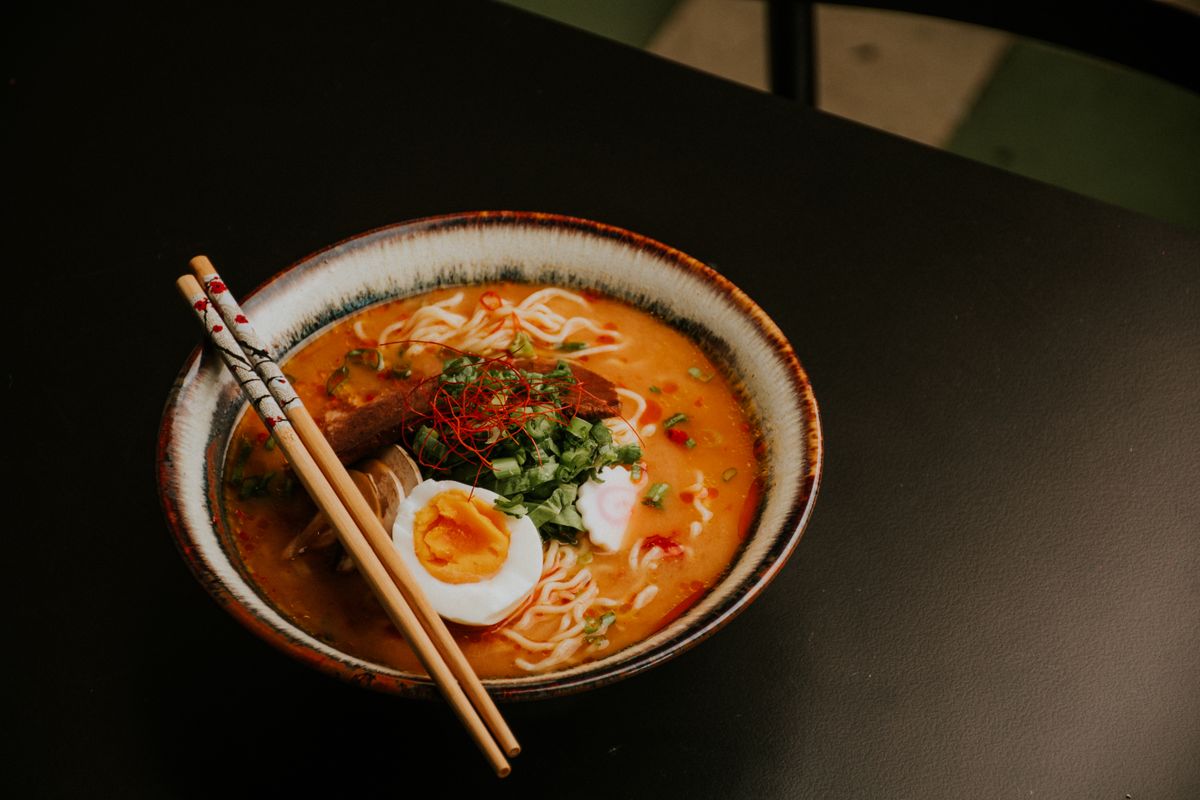
Most major brands — Ippudo, Ichiran, Daruma — sell take-home kits with frozen broth and dry noodles. Ichiran’s boxed take-home ramen set is famous: it’s a rich condensed broth, dry noodles, and pre-portioned toppings, all in a single shippable box. ¥1,500–¥3,000 ($10–$20 USD) per set.
Powdered tonkotsu broth packets
Cheaper but surprisingly close to the real thing, these dry packets dissolve into a milky broth in minutes. Daruma’s powdered broth is a fan favorite for backpackers who want a taste of Hakata without the freezer space.
Mentaiko and other Hakata specialties
Don’t leave Fukuoka without buying mentaiko. Vacuum-sealed packs from Fukuya travel well in cool bags for a few hours, and tube versions are airline-safe. Other recommended souvenirs are Hakata torimon (sweet bean-paste-filled cakes) and umegae mochi from Dazaifu.
Where to buy
The most convenient one-stop shop is Hakata Station’s “Ming” souvenir mall on the ground floor. Tenjin Underground City has a similar food souvenir section. For the largest ramen-specific selection, the Shin-Yokohama Ramen Museum store ships nationwide if you forget anything.
Final Thoughts: A Ramen Pilgrimage Worth Making
Hakata ramen is more than a meal. It’s a window into a city’s working-class history, a contemporary culinary craft that gets revisited daily by hundreds of small shops, and a deeply communal experience around steaming bowls and shared counters. Whether you’re a serious ramen enthusiast or a curious first-timer, eating your way through Fukuoka’s tonkotsu shops and yatai will leave you with the kind of food memories that stay with you for years.
Plan two to three days in Fukuoka, slot in a Kurume side trip if you can, eat at least one yatai dinner, and pace yourself. The bowls are rich, the city is small, and the warmth of the people who make and serve this food is what really sticks with most travelers.
For more on planning a Japan trip beyond Fukuoka, see our 30 essential Japan travel tips for first-timers and our destinations hub. Safe travels and happy slurping.
Related Japanese Food Guides
Hungry for more? Explore these related Japanese food guides: the Japanese wagyu beef guide, the Okinawa food guide, the Hokkaido food guide, the Japan izakaya guide, and Nagasaki in Kyushu.
Going to Japan? Speak Japanese with confidence.
Hirameki Japanese — camera translate for menus and signs, a two-way conversation mode, and furigana + romaji on every phrase. Free to download with kana charts, conversation mode and starter words; a one-time purchase unlocks everything.

Plan your Japan trip
Two things every first-timer should book
Some links are affiliate links. If you book through them we may earn a small commission at no extra cost to you.