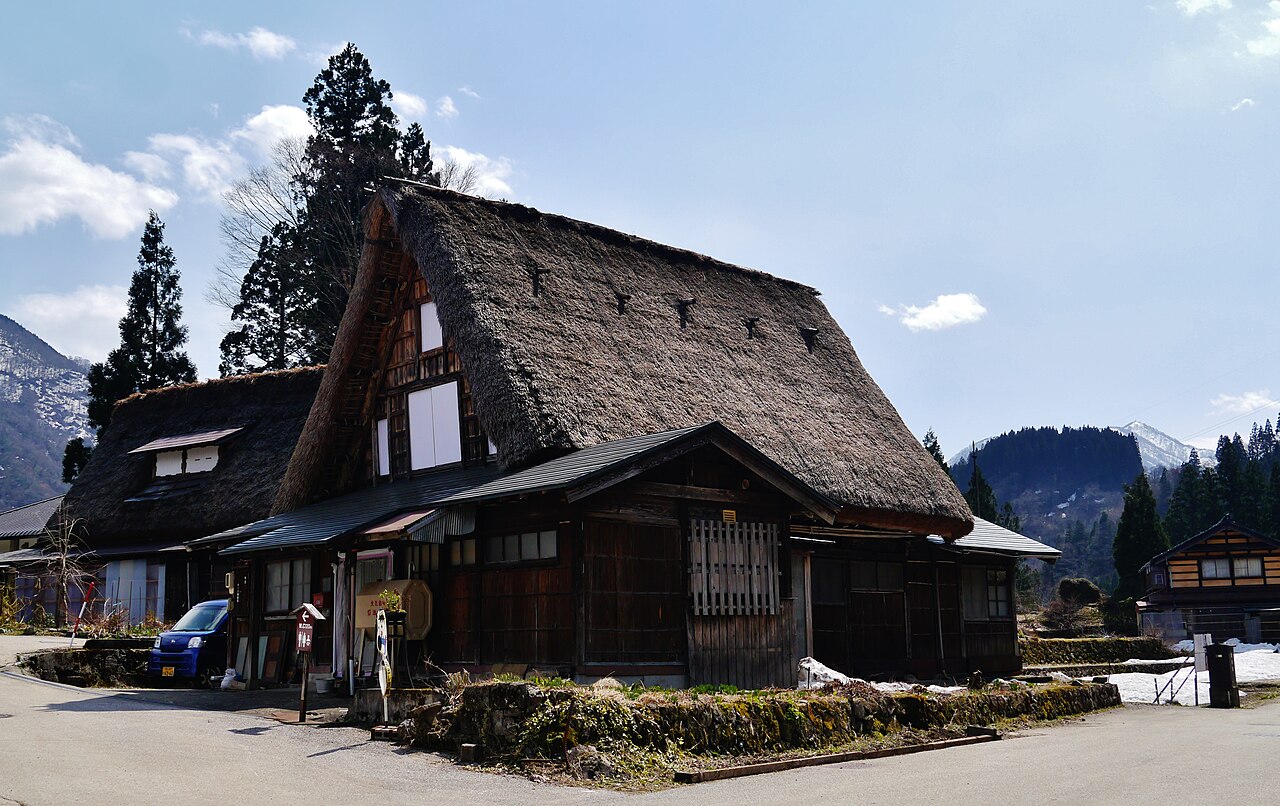
Gokayama is one of Japan’s most enchanting hidden gems — a remote cluster of mountain villages in Toyama Prefecture where centuries-old thatched gassho-zukuri farmhouses still stand exactly where they were built three hundred years ago. While neighbouring Shirakawa-go gets the crowds, Gokayama remains beautifully quiet, often visited by only a handful of travellers a day. If you want to experience rural Japan as it once was — with woodsmoke curling from sunken hearths, paper handcrafted from local mulberry, and folk songs that haven’t changed since the Edo period — Gokayama is the place.
This complete guide explains everything a first-time visitor needs to know about Gokayama: how to get there from Tokyo, Kanazawa or Takayama, which of the two UNESCO-listed villages to visit, where to stay overnight in a thatched farmhouse, what to eat, the festivals worth timing your visit around, and how Gokayama differs from Shirakawa-go just down the road.

What and Where Is Gokayama?
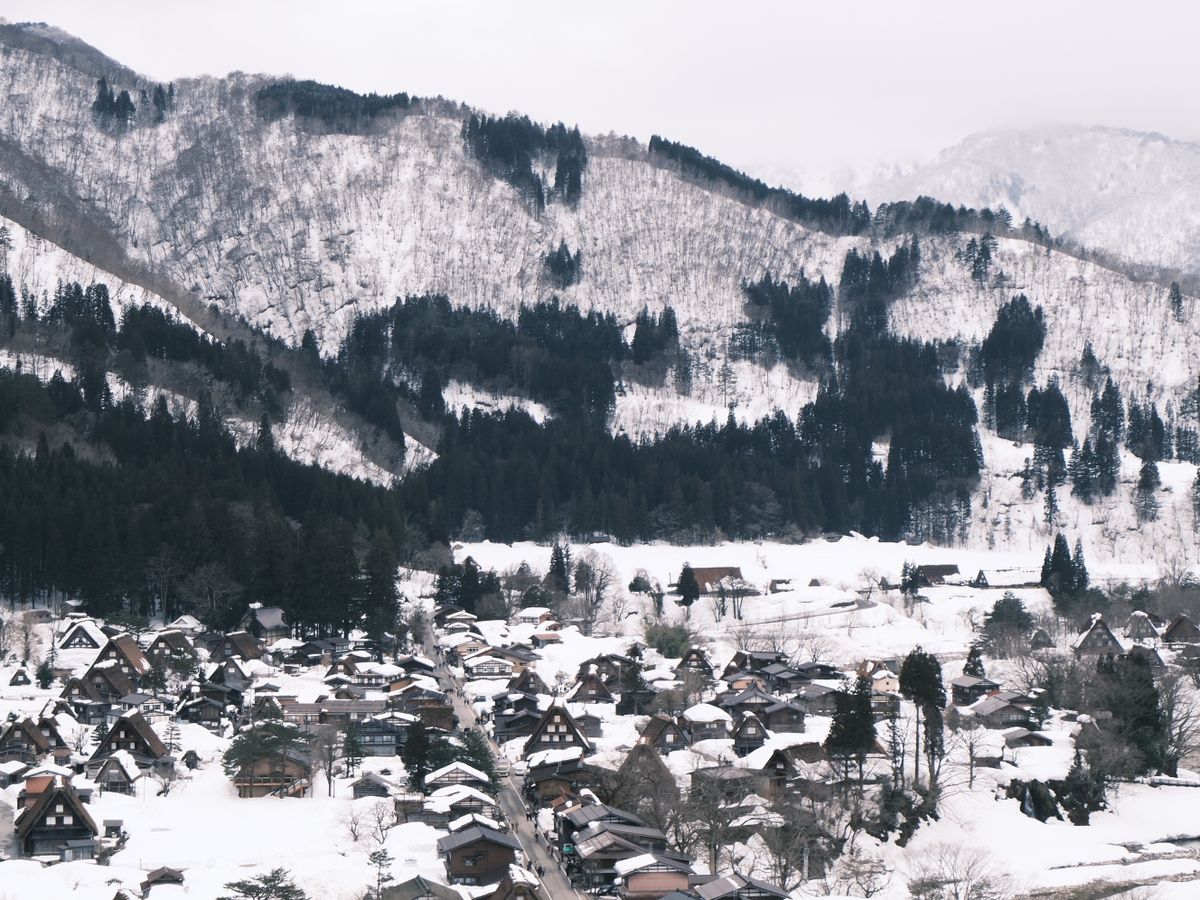
Gokayama (五箇山, literally “five mountain villages”) is a collective name for a string of small settlements tucked deep into the Sho River valley in the southwestern corner of Toyama Prefecture, in central Japan’s Hokuriku region. Together with Shirakawa-go in neighbouring Gifu Prefecture, Gokayama was inscribed on UNESCO’s World Heritage List in 1995 as a “Historic Village of the Gassho-Zukuri Style.” Out of dozens of hamlets in the area, two — Ainokura and Suganuma — carry the World Heritage designation and are the ones travellers come to see.
The villages sit at about 350 to 400 metres elevation, hemmed in on all sides by steep, forested mountains that stay snow-capped from December to April. Until a tunnel was bored through the mountain in the 1990s, Gokayama was effectively cut off from the rest of Japan for months at a time every winter. That isolation is exactly why the villages survived intact — while postwar reconstruction swept thatched roofs out of most of rural Japan, the steep slopes here made modernisation slow and expensive, and the farmhouses simply stayed.
For first-time visitors to Japan looking beyond the Tokyo–Kyoto–Osaka golden route, Gokayama is one of the most rewarding stops you can add. For inspiration on other off-the-beaten-path ideas, browse our wider list of Japan destinations and hidden gems.
The Two UNESCO Villages
Ainokura (相倉) is the larger and more atmospheric of the two, sitting on a small plateau above the valley with 20 surviving gassho-zukuri farmhouses arranged in a rough oval. A short uphill walk from the village leads to a famous viewpoint where you can see the whole settlement framed by mountains — in winter, it is the iconic Gokayama image you’ll have seen on postcards.
Suganuma (菅沼) is smaller, with just nine gassho farmhouses huddled together on a curve of the Sho River. It is more compact and easier to walk, and from the highway above you get a “miniature village” panorama that is unforgettable in fresh snow. Suganuma is also home to the Gokayama Folk Museum and the Saltpetre Museum, both of which explain the unique history of how these villages survived for centuries.
Both are free to enter and explore on foot. There is no ticket gate — people still live and work in many of the houses.
Why “Gassho-Zukuri” Matters
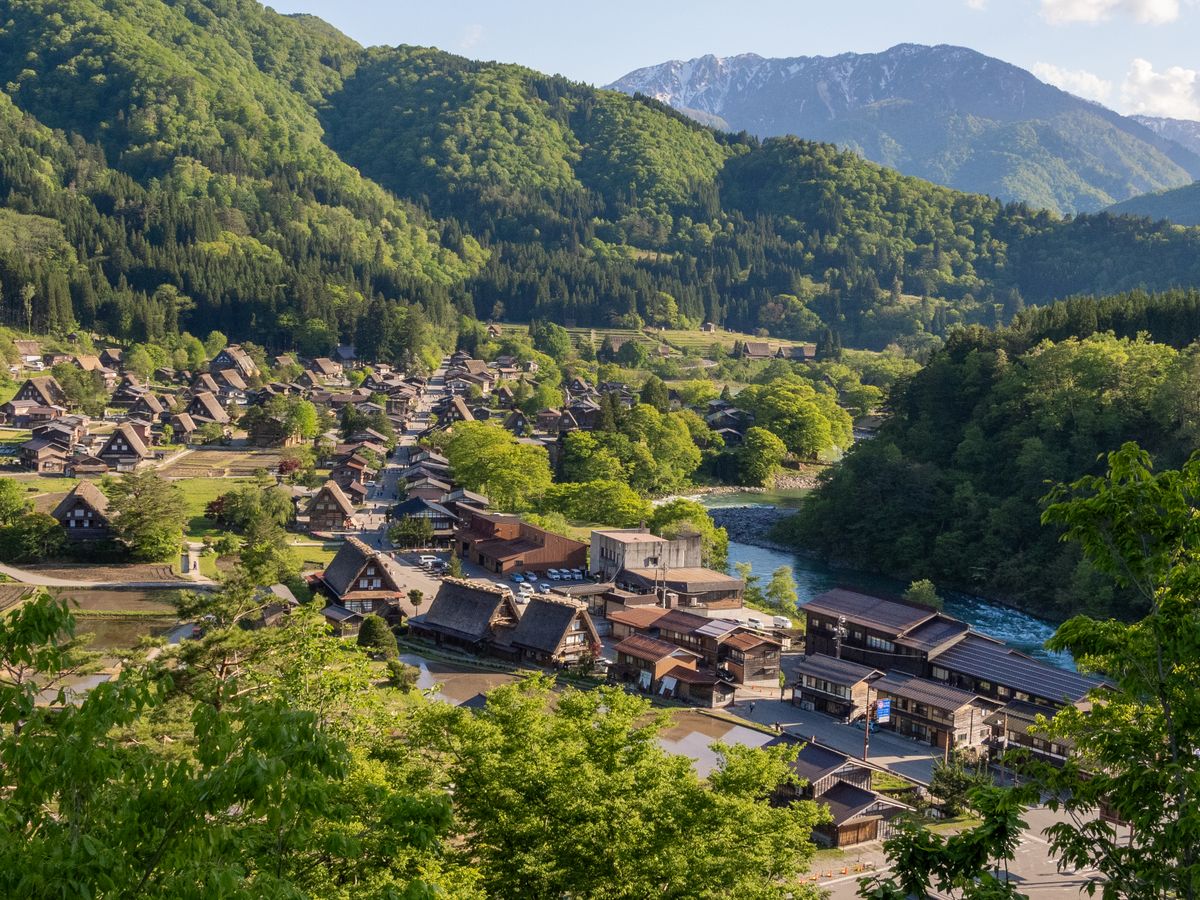
The word gassho-zukuri (合掌造り) literally means “praying-hands construction,” because the steep triangular roofs resemble two hands pressed together in prayer. The pitch is no accident: the roofs are angled at about 60 degrees specifically to shed the metres of heavy, wet snow that pile up here every winter. A poorly built thatched roof would collapse under the weight; a gassho roof simply sheds it.
Each roof is rebuilt every 30 to 40 years using around 5,000 to 6,000 bundles of susuki (silvergrass) reed, harvested from local hillsides. The work is done collectively by the village — a custom called yui — with neighbours, friends and former residents returning to help in a single day. There are no nails in the upper roof structure; everything is lashed together with rope made of wild wisteria vine.
Inside, the houses are typically three or four storeys tall. The ground floor was the family living area, centred on an irori (sunken charcoal hearth) that smoulders quietly day and night. The smoke rises through the open ceiling, preserving the timbers and keeping the thatch dry from below — one of the cleverest passive-architecture solutions in the world. The upper floors were used for silkworm farming and storing equipment.

How to Get to Gokayama
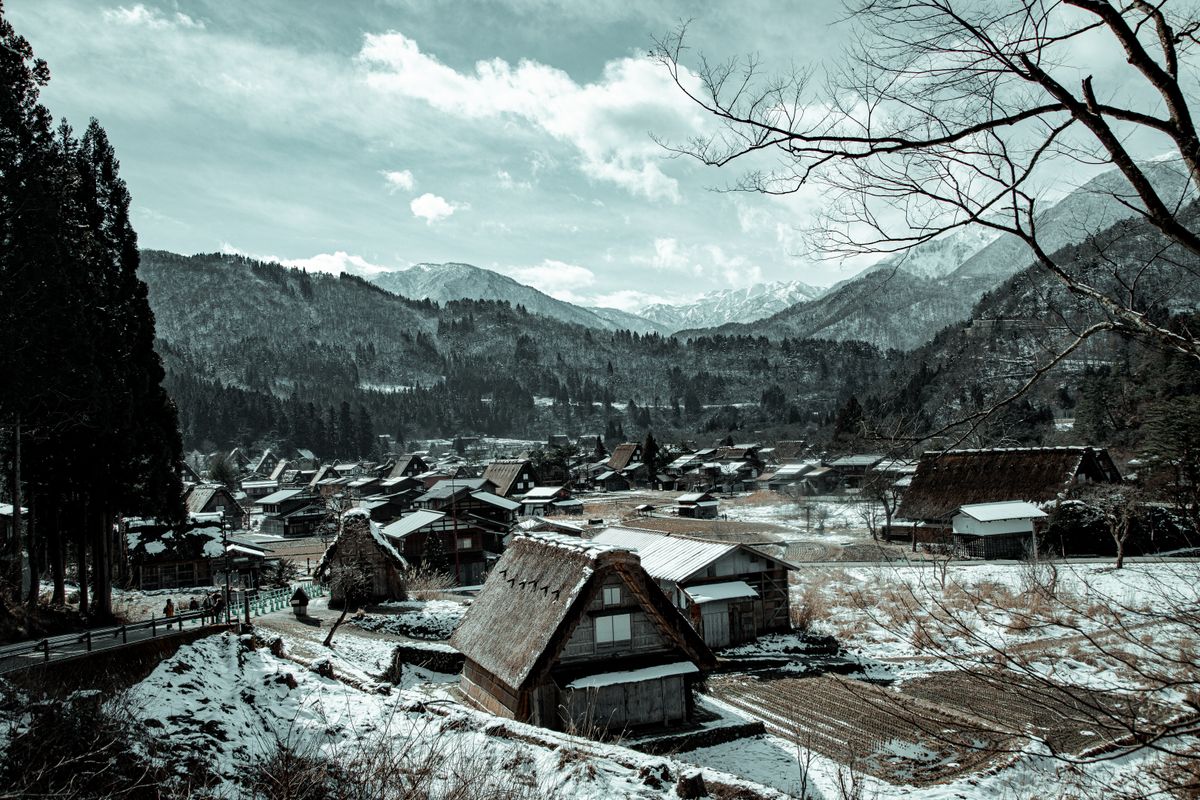
Gokayama is genuinely remote — that is part of its appeal — but it is easier to reach than first-timers expect. Public transport works well if you plan around the bus timetable; a rental car gives you maximum flexibility and lets you combine Gokayama with Shirakawa-go and Takayama in the same trip.
From Kanazawa (Recommended for First-Timers)
The easiest base for Gokayama is Kanazawa, the most-visited city on the Sea of Japan coast and a destination in its own right. From the east exit of Kanazawa Station, the World Heritage Bus (operated by Nohi Bus) runs direct to Gokayama and on to Shirakawa-go. The journey takes about 1 hour 15 minutes to Suganuma and 1 hour 25 minutes to Ainokura. A one-way ticket is about ¥1,800 (US$12); a return is around ¥3,300 (US$22). There are 3 to 4 services a day. Seat reservations are required — book at least the day before, especially in autumn and during snowy weekends.
From Takayama
From Takayama, the same Nohi World Heritage Bus runs north via Shirakawa-go to Gokayama. The total journey is about 2 hours 15 minutes to Suganuma. This works well if you are already exploring the Japanese Alps; combine it with our Shirakawa-go guide for a two-village UNESCO day. One-way fare from Takayama is about ¥2,600 (US$17).
From Tokyo
From Tokyo, take the Hokuriku Shinkansen from Tokyo Station to Kanazawa (about 2 hours 30 minutes, ¥14,180/US$94 one-way unreserved), then the World Heritage Bus as above. If you have a Japan Rail Pass the Shinkansen leg is free. For everything you need to know about riding the bullet train, see our complete Shinkansen guide and our breakdown of whether the Japan Rail Pass is worth it.
From Osaka or Kyoto
The fastest route is the Thunderbird limited express train from Osaka or Kyoto to Tsuruga, then the Hokuriku Shinkansen to Kanazawa, then the bus — total around 4 hours. Plan an overnight in Kanazawa rather than trying to make Gokayama a day trip from the Kansai region.
Driving Yourself
If you are comfortable driving in Japan, a rental car is the best way to see Gokayama. From Kanazawa it is about 1 hour 10 minutes on the Tokai-Hokuriku Expressway (exit at Gokayama IC for Suganuma, or Fukumitsu IC for Ainokura). From Takayama it is about 1 hour 30 minutes. Parking at both villages costs ¥500 (about US$3) for cars. The roads are well maintained and signage to the UNESCO sites is in English. In heavy winter snow, snow tyres or chains are mandatory and rental agencies in Kanazawa supply both.
Once you arrive in Japan, you’ll want mobile data from day one to navigate timetables, find your bus, and check weather. We recommend setting up an eSIM before you land — it activates the moment you switch off airplane mode. Get your Japan eSIM (Stay connected from day 1) →
The Best Time to Visit Gokayama
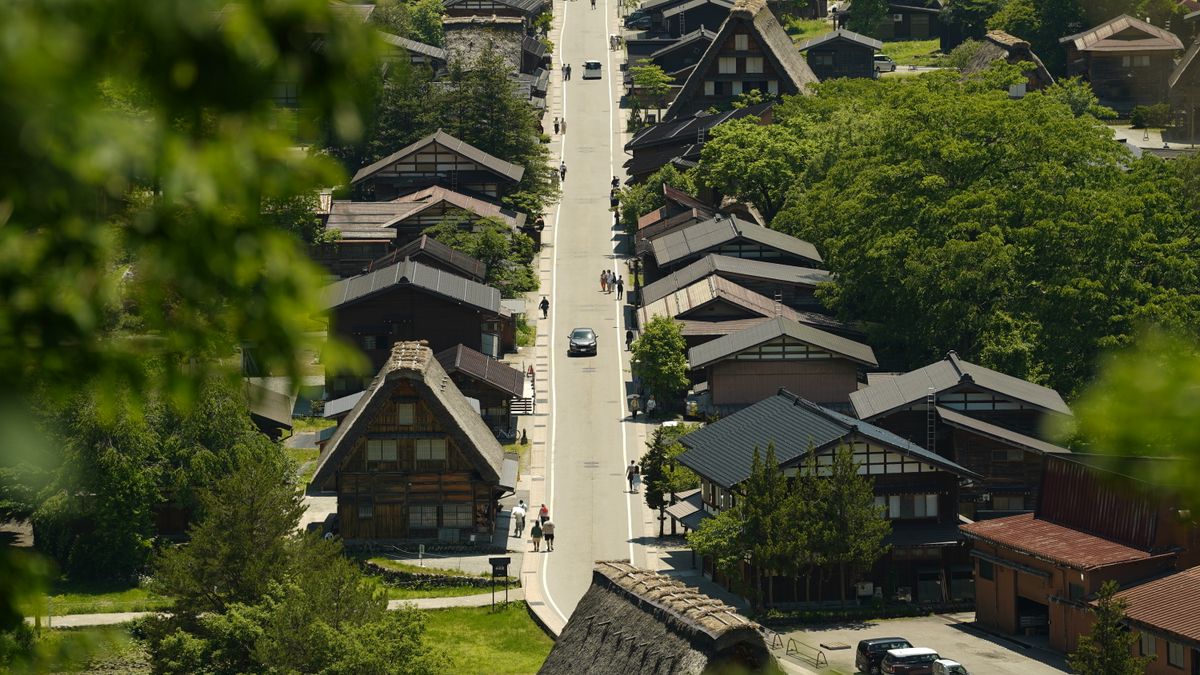
Gokayama is a true four-season destination — each looks completely different, and each is worth a trip.
Winter (December to February): The Icon
This is the Gokayama people dream of. Snow piles three to four metres deep against the houses, the thatched roofs become white triangles, and on selected nights in January and February the villages are illuminated after dark — the famous Gokayama Light-Up. Dates change yearly but are usually two Saturdays in late January or early February. Reservations to be inside the village during the light-up are tightly limited; book through the official Toyama tourism website 4 to 6 weeks in advance.
Winter daytime visits do not require a reservation. Bring proper winter boots — the cleared paths are still slushy — and a warm coat. Daytime temperatures hover around 0°C to 3°C (32°F to 37°F).
Spring (April to May)
The snow lingers into early April, then melts into a brief, brilliant spring. Cherry trees bloom in late April here, much later than Tokyo or Kyoto. Wild flowers carpet the rice paddies and the surrounding mountains stay capped in white — one of the prettiest combinations in Japan. Temperatures range from 8°C to 18°C (46°F to 64°F).
Summer (June to August)
The valley turns vibrant green. The rice paddies surrounding the villages are flooded and reflective in June, then deep emerald by August. Summer is festival season — the Mugiya Matsuri in mid-September (technically late summer/early autumn) is one of the most atmospheric folk festivals in rural Japan, with lantern-lit processions and slow folk songs that date back over 400 years.
Autumn (October to November)
Many visitors say autumn is Gokayama’s secret best season. The mountain forests turn red, orange and gold; the rice paddies turn yellow before harvest; and the air is crisp and clear. Crowds are noticeably lighter than in winter. Peak colours come from late October to mid-November.
What to See and Do in Ainokura
Plan to spend at least 2 to 3 hours wandering Ainokura. The village is shaped roughly like an oval, with a single main lane running through it. There are no traffic lights, no convenience stores and no vending machines bigger than a few drink dispensers — everything is wood, thatch and stone.
The Viewpoint (Ainokura Observation Point)
A clearly signed path leads up the hill behind the village to a small wooden platform with a panoramic view down over the rooftops. The climb is short — 10 to 15 minutes — but steep in places. Go at sunset for the most beautiful light, or at sunrise in winter for the empty postcard shot.
Murakami House (Murakami-ke)
One of the few gassho farmhouses fully open to the public as a museum. Built in the 1500s and continuously occupied by the Murakami family for over four centuries, it is the oldest surviving gassho-zukuri building in Japan. Inside you can climb to the upper floors where silkworms were once raised, sit by the smouldering hearth, and see traditional folk costumes and farming implements. Entry is ¥300 (about US$2). Allow 30 to 45 minutes.
Ainokura Folk Museum (Minzoku-kan)
A small but well-curated museum showing the agricultural and craft history of Gokayama, including the production of washi paper from mulberry bark and saltpetre (gunpowder ingredient) from rotted leaves and human waste — the village’s secret cash crop during the Edo period. Entry ¥200 (US$1.30).
What to See and Do in Suganuma
Suganuma is smaller and faster to walk — allow about 1 to 1.5 hours. From the parking area on the highway above, a long covered escalator carries you down to the village level, which feels appropriately like descending into the past.
The Highway Viewpoint
Before you go down, walk to the wooden observation deck at the parking area for the classic “miniature village in the valley” panorama. This is the angle you’ve seen in every Japan tourism brochure.
Gokayama Folk Museum and Saltpetre Museum
Two small museums in adjacent gassho buildings tell the story of the saltpetre industry that funded Gokayama for nearly 300 years. The lord of Kaga (modern Kanazawa) was forbidden from buying gunpowder on the open market, so he secretly contracted the isolated mountain villages to produce saltpetre by burying organic matter under their houses for years at a time. The displays explain the chemistry and the social history in clear English. Combined entry is ¥300 (US$2).

Staying Overnight in a Gassho-Zukuri Farmhouse
The single best thing you can do in Gokayama is stay overnight. Several families in Ainokura operate their homes as minshuku (family-run guesthouses), opening up a tatami room for one or two parties per night. You sleep on a futon, eat dinner around the irori hearth with the host family, and watch the village fall silent at dusk as the last day-trippers leave. Once they’re gone, Ainokura is yours.
Rooms typically sleep 2 to 4 people. Rates run about ¥9,000 to ¥13,000 (US$60 to US$87) per person, including dinner and breakfast featuring local mountain vegetables, river fish, hand-cut tofu and the famous Gokayama kabu turnip pickles. Bathrooms and toilets are shared. There is no English on-site at most minshuku — the families speak through gesture, kindness and the universal language of pouring you another small cup of sake.
Most minshuku must be booked by phone or via Japan-side travel agents, but a handful are listed on major booking sites. For a wider selection of accommodation including more conventional ryokan in the area and hotels in nearby Kanazawa, Book your hotel on Agoda (Best prices guaranteed) → or Find luxury hotels on Ikyu.com → for high-end ryokan in nearby Kaga Onsen.
What to Expect at a Gokayama Minshuku
Check-in is usually from 3 pm. You will be welcomed at the entrance, asked to remove your shoes, and shown to your tatami room. Dinner is served around 6 pm at low tables in the main room, typically with one or two other guest parties and the host. Bathing is sequential — one party at a time, family bath style — and lights out is by about 9 pm because the village is genuinely dark by then. Breakfast is at 7:30 am. The whole experience is gentle, generous and unforgettable.
What to Eat in Gokayama
Mountain cuisine in Gokayama is rooted in what could be grown, foraged, fermented or stored through the winter. It is simple but deeply flavoured.
- Iwana shioyaki — salt-grilled mountain char, threaded onto a bamboo skewer and roasted around the irori hearth until the skin crisps and the flesh flakes off the bone. Often served whole, head and all.
- Gokayama tofu — famously firm and dense, you can pick it up with chopsticks like a block of cheese. It is made with mountain spring water and far more soybean than ordinary tofu. Try it sashimi-style with a little soy and grated ginger.
- Kabu no tsukemono — locally grown red turnips fermented through the winter, sliced thin and served as a deep crimson pickle.
- Sansai (mountain vegetables) — fern shoots, butterbur, wild parsley and other foraged greens, served simmered, in tempura or in miso soup.
- Inaka soba — rough, dark, country-style buckwheat noodles served in hot broth or cold with dipping sauce.
- Goheimochi — flat skewers of pounded rice slathered in a sweet-savoury walnut-miso glaze and grilled over coals. Sold at food stalls in both villages for around ¥400 (US$2.70).
If you want to go deeper on Japan’s incredible food culture before or after your trip, our Japan street food guide and best Japanese food experiences are good starting points.
Festivals and Cultural Experiences
Mugiya Matsuri (Mid-September)
Gokayama’s signature festival, held annually on 17 and 18 September in Ainokura and Kaminashi villages. The festival commemorates the Heike, the defeated warrior clan whose surviving members are said to have fled into these mountains in the 12th century and founded the villages. After dark, dancers in indigo robes and woven sedge hats perform slow, hypnotic folk dances by lantern light, accompanied by a haunting chanted song that has been passed down for over 400 years. Crowds are modest but accommodation books out months in advance.
Kokiriko Festival (Late September)
Held in Kaminashi village just outside the UNESCO area on 25 and 26 September. The kokiriko is one of Japan’s oldest folk songs, accompanied by a percussion instrument made of 108 small wooden slats threaded together that produces a soft clacking sound as the dancer flips it. Watching kokiriko performed in its original setting — in front of a gassho farmhouse, by performers in heron-feathered black hats — is one of those quiet, profound Japan moments.
Washi Paper-Making
The hamlet of Higashi-Nakae has a small workshop where you can make a sheet of Gokayama washi paper from local mulberry bark in about 30 minutes for ¥1,000 (US$6.70). Your sheet is dried and shipped to your home address in Japan or overseas (postage at cost).
Combining Gokayama with Shirakawa-go
Many travellers visit both Gokayama and Shirakawa-go in a single trip — they are 25 km apart on the same bus route. If you only have time for one, here is a quick comparison.
Choose Shirakawa-go if: you want a larger, more developed village (Ogimachi has 110+ gassho houses), you like a more energetic atmosphere with plenty of restaurants and souvenir shops, you want easy day-trip access from Takayama or Kanazawa, or this is your only chance to see gassho-zukuri.
Choose Gokayama if: you want quieter, smaller villages with far fewer tourists, you want to stay overnight in a farmhouse for a slow, immersive experience, you are interested in living craft traditions like washi paper-making, or you want to feel that you really have stepped back in time.
Best of both worlds: day-trip Shirakawa-go from Takayama or Kanazawa, then bus on to Gokayama and stay overnight in Ainokura. The contrast is illuminating.

Suggested Itineraries
Half-Day Trip (from Kanazawa)
If you are short on time, you can do Gokayama as a long half-day from Kanazawa.
- 09:00 — Depart Kanazawa Station on the World Heritage Bus
- 10:25 — Arrive Ainokura. Walk the village, climb to the viewpoint, visit Murakami-ke.
- 12:30 — Lunch at one of the village restaurants (try the iwana set).
- 13:30 — Bus to Suganuma, or stay longer in Ainokura.
- 15:30 — Bus back to Kanazawa.
- 17:00 — Back in Kanazawa for the evening.
One Night, Two Villages (Recommended)
This is the trip we recommend for first-timers who want to really see Gokayama.
- Day 1: Morning train Kanazawa → Takayama (or vice versa). Lunch in Takayama. Afternoon bus to Shirakawa-go for 2–3 hours of village exploring. Evening bus to Gokayama (Ainokura). Check into your minshuku. Dinner around the irori.
- Day 2: Sunrise walk around an empty Ainokura. Breakfast. Visit Suganuma in the morning. Lunch. Afternoon bus back to Kanazawa.
Two Nights, Slow Travel
- Day 1: Travel to Ainokura. Settle in. Walk village at golden hour.
- Day 2: Washi paper workshop in the morning. Visit Suganuma in the afternoon. Hike a short section of the mountain trails. Second night in Ainokura.
- Day 3: Slow morning. Last walk through the village. Lunch. Bus to Kanazawa or Takayama.
Practical Tips
- Cash is essential. There is one ATM in the area (at the small post office near Kaminashi) and most minshuku and museums are cash-only. Bring ¥30,000–¥50,000 (US$200–US$330) per person for a two-night stay.
- Wi-Fi and mobile signal are patchy. Don’t expect strong 4G in Ainokura; download offline maps and your bus timetable before you arrive.
- Luggage is awkward. The villages have no flat sidewalks. If you have big suitcases, leave them in coin lockers at Kanazawa Station and bring an overnight bag only. Or use the takkyubin luggage forwarding service to send bags ahead to your next hotel.
- Buses don’t run often. The last bus back to Kanazawa is around 16:30. Missing it is a serious problem — there is no taxi service to speak of.
- Bring a torch (flashlight). If you stay overnight, the lanes are unlit after about 8 pm.
- Respect that people live here. Do not enter gardens, do not photograph residents without asking, and stay on marked paths. The houses are private homes, not theme-park exhibits.
- Dress for the weather. Even in summer, evenings are cool. In winter, waterproof boots, gloves, hat and a thick coat are essential.
- Buy snacks before you arrive. There is no convenience store inside either village.
- The 60-degree roofs are not a metaphor. If you stay in a gassho house, the ceilings on the second floor really do slope inward sharply — mind your head.
- Airport transfer: If you’re flying into Tokyo with a lot of luggage and dread the train journey to Kanazawa, you can pre-book a door-to-airport shared van. Book airport transfer with NearMe →
Money, Budget and Costs
Gokayama is not an expensive destination, but it does involve transport. Here is a realistic per-person budget for a one-night, two-day trip from Kanazawa.
- Return bus, Kanazawa → Gokayama: ¥3,300 (US$22)
- Murakami-ke entry: ¥300 (US$2)
- Folk museums (both): ¥500 (US$3.30)
- Lunches (x2): ¥3,000 (US$20)
- Snacks, goheimochi, drinks: ¥1,500 (US$10)
- One night at a minshuku (dinner + breakfast included): ¥11,000 (US$73)
- Washi paper workshop (optional): ¥1,000 (US$6.70)
- Total: about ¥20,600 (US$137)
For ways to stretch your yen further during a longer Japan trip, our budget travel guide shows how to do Japan for around $50 a day.
Where to Base Yourself
Kanazawa is the most convenient base for Gokayama. It is a beautiful city in its own right, with the famous Kenrokuen garden, a preserved geisha district, and superb seafood. Most travellers spend two nights in Kanazawa, taking a day or overnight trip to Gokayama between them.
Takayama works almost as well. The morning market and old town are a delight, and you can combine Takayama + Shirakawa-go + Gokayama into one efficient three-day Japanese Alps loop.
Toyama City is closer on the map but worse-connected to the villages by direct bus. Skip it as a base unless you are coming up from the Tateyama-Kurobe Alpine Route.
For specific hotel ideas in Kanazawa from luxury ryokan to budget business hotels, Search hotel deals on Yahoo! Travel → or browse organised tours including Gokayama-Shirakawa-go on .
Frequently Asked Questions
Is Gokayama better than Shirakawa-go?
Neither is “better” — they are different. Shirakawa-go is bigger, busier and easier; Gokayama is smaller, quieter and slower. If you have time, do both. If you can only do one and you want crowds and easy logistics, choose Shirakawa-go. If you want stillness and you are willing to plan ahead, choose Gokayama.
Can I do Gokayama as a day trip from Tokyo?
Technically yes, but it would be a punishing day — about 12 hours door-to-door with only 2 hours in the village. Don’t. Sleep at least one night in Kanazawa or Takayama, and ideally stay overnight in Gokayama itself.
Do I need to book in advance?
For day-trip bus tickets, yes, especially in autumn and winter — the World Heritage Bus is reservation-only and sells out. For minshuku in Ainokura, book 1 to 3 months ahead in peak season (October foliage, January light-up, mid-September festival). For midweek visits in June or November, 2 to 3 weeks ahead is usually fine.
Is there English support?
Signage at both villages and the museums is in clear English. Bus drivers and most minshuku owners speak very limited English. Bring a translation app and download Google Translate’s Japanese pack for offline use. With a smile and a phone, everything works.
Can children visit Gokayama?
Absolutely. Children love the irori hearth, the steep climbs and the village cats. The villages are flat enough to walk easily and there is no traffic on the inner lanes. Minshuku usually welcome children but the experience — futon, shared bath, early lights-out — is gentler than a hotel and works best for children who can settle quietly in the evening. Note that the upper floors of museum farmhouses have steep ladder-style stairs.
Is Gokayama wheelchair accessible?
Partly. The main lanes in both Ainokura and Suganuma are flat and paved. The viewpoint hike in Ainokura is not accessible. The covered escalator down to Suganuma is wheelchair friendly. Most farmhouse interiors are not accessible because of the entry step, raised tatami floors and ladder stairs.
What about ATMs and credit cards?
Bring cash. There is no full-service bank inside the UNESCO villages, and almost all minshuku, restaurants and museums are cash-only. The post office at Kaminashi has a 7-Eleven-compatible ATM. For a fuller explanation of how cash and card work in Japan, see our cash vs card guide.
Is one full day enough for Gokayama?
One full day is enough to see both villages and visit the main museums. One overnight is enough to actually feel Gokayama. Two nights is luxury.
What about Japan eSIM — will it work in the mountains?
Yes, with the right provider. The major Japanese carriers (Docomo, KDDI, SoftBank) all reach Gokayama with usable 4G in the villages, though signal is patchy on the hiking trails. Get your Japan eSIM → before flying and you’ll have data the moment you land — perfect for checking bus times.
A Brief History of Gokayama
To understand why Gokayama looks the way it does, it helps to know a little of its history. The valley was first settled in the 12th century, according to local tradition by survivors of the Taira (Heike) clan, fleeing after their defeat to the Minamoto in the Genpei War. Many other remote Japanese mountain valleys claim Heike refugee origins, and the historical record is murky, but the legend is a real and living part of how Gokayama residents understand themselves — you’ll see it referenced in the Mugiya Matsuri songs and in the names of village shrines.
For most of the medieval period the villages were extremely poor, sustained by silkworm farming, charcoal-making, papermaking and small terraces of rice. In the 17th century, however, the Maeda lords of Kaga (the great clan based in Kanazawa) noticed an unusual opportunity. Edo-period Japan’s strict sankin-kotai system, and the shogun’s anti-firearm policies, made it difficult for daimyo to legally buy gunpowder. The Maeda solution was to secretly contract the isolated Gokayama villages to manufacture saltpetre — the essential ingredient — by composting silkworm waste, plant matter and human urine under the floorboards of the gassho houses for three to five years at a time. The smell must have been considerable. The income, however, transformed the villages, paid for the construction of the largest gassho houses you see today, and funded a small but vibrant culture of poetry, song and craft. When firearms manufacturing moved elsewhere in the late 19th century, the villages quietly returned to subsistence farming — but the houses, fortunately, remained.
In the postwar period, two things almost destroyed Gokayama. The first was a 1950s dam-building boom that flooded several smaller hamlets in the lower valley. The second was rural depopulation as young people left for jobs in the cities. By the 1970s only a handful of farmhouses were still inhabited and many were collapsing. The UNESCO designation in 1995 changed everything, channelling preservation funding, drawing visitors and giving young residents an economic reason to stay. Today both Ainokura and Suganuma are inhabited year-round, with active community associations that maintain the buildings, run the museums and host visitors.
Nearby Day Trips and Add-Ons
If you’ve made the journey to Gokayama, several other spots in northern Hokuriku are worth adding to your itinerary:
- Kanazawa — the obvious base, with the Kenrokuen garden (one of Japan’s “Three Great Gardens”), the Higashi Chaya geisha district, the 21st Century Museum of Contemporary Art, and the famed Omicho seafood market. Worth 2 to 3 nights.
- Takayama — preserved Edo-period merchant town with morning markets, sake breweries and Hida beef. 1 to 2 nights.
- Shirakawa-go — Gokayama’s better-known UNESCO sister, just 30 minutes away by bus. Do as a half-day add-on.
- Toyama Bay (Himi) — some of Japan’s best winter seafood (yellowtail, white shrimp, firefly squid in spring), with classic views of the Tateyama mountain range rising directly out of the sea.
- Tateyama-Kurobe Alpine Route — an extraordinary cross-mountain journey through the Japanese Alps using six different transport modes, open from mid-April to late November.
- Eiheiji Temple — the headquarters of Soto Zen, deep in the Fukui forests, where overnight temple-stay programmes for foreigners are available year-round.
Photography Tips for Gokayama
Gokayama is one of the most photogenic destinations in Japan, but a few tips will help you bring back the shots you’re hoping for:
- Golden hour is golden. The valley is deep and the surrounding mountains block direct sun for much of the day. Plan your visit to be at the Ainokura viewpoint either 90 minutes before sunset or just after sunrise.
- Winter is the postcard. If you have flexibility, plan for a snow visit between mid-January and mid-February. The light-up evenings produce the iconic glowing-village photo, but be aware that you’ll be one of many on the same hillside.
- Use a wide-angle lens. The valley is steep and the houses are tall. A 16-35mm full-frame equivalent gets the whole village; a 24-70mm zoom handles most interior and detail work.
- Bring a tripod for blue hour. The 30 minutes after sunset, when warm window lights glow against the deep-blue sky, produce the best images of all — but require slow shutters.
- Respect privacy. Wide shots of the village are fine; close-up portraits of residents through windows are not. Ask before photographing anyone.
- Drones are restricted. Both UNESCO villages prohibit drone flights without special permission from the local preservation council. Don’t risk a fine.
Final Thoughts
In a country famous for its neon, its bullet trains and its perfect Shinkansen punctuality, Gokayama is a deliberate, generous slowing-down. The villages were spared modernisation by sheer geographic accident, but the families who still live in the gassho farmhouses have made a conscious choice to keep them alive — rethatching the roofs together, fermenting the same turnip pickles, singing the same 400-year-old songs by lantern light. To visit Gokayama is to be quietly welcomed into a living tradition.
If you can swing the timing, stay overnight. Wake up before dawn, step outside in your slippers, and walk the empty main lane of Ainokura as the woodsmoke from breakfast fires starts curling out of every chimney into the cold mountain air. There is nothing else quite like it — not in Japan, and probably not anywhere else in the world.
For more remote and beautiful corners of Japan worth adding to your trip, browse our full list of Japan destinations and our wider guide to essential travel tips for first-time visitors.
Going to Japan? Talk to locals with confidence.
Hirameki Japanese — instant offline translation, camera translation, furigana + romaji, and 314 free flashcards. No login. Works without internet.

Plan your Japan trip
Two things every first-timer should book
Some links are affiliate links. If you book through them we may earn a small commission at no extra cost to you.