Every spring, a hillside in northeastern Japan turns the same impossible shade of pale blue as a clear morning sky, and a few million people travel to see it. The place is Hitachi Seaside Park, a 350-hectare seaside garden in Ibaraki Prefecture, and the cause of all the excitement is a tiny North American wildflower called nemophila — known affectionately as “baby blue eyes.” For about three weeks in late April and early May, around 5.3 million nemophila bloom simultaneously across Miharashi Hill at the heart of the park, creating one of the most photographed landscapes in modern Japan. The horizon disappears, the sky and the earth meet, and visitors stand at the edge of what looks like the Pacific Ocean turned into a flower field.
For first-time visitors to Japan, Hitachi Seaside Park is the perfect easy day trip — just over an hour from Tokyo, surprisingly stress-free to navigate, and full of seasonal colour from April all the way through November. This complete guide covers the famous nemophila bloom, the equally striking autumn kochia season, how to get there from Tokyo, when to go, what else to see in Ibaraki, and all the practical tips you need to plan a smooth visit. It is also one of the few day trips from Tokyo that almost no large tour group reaches in the same numbers as Hakone or Kamakura — which means you can enjoy a famous attraction without the famous crowds.
What Is Hitachi Seaside Park?
Hitachi Seaside Park (ひたち海浜公園) is a national government-run park covering 350 hectares of restored coastland on the eastern edge of Ibaraki Prefecture, about an hour and a half north of central Tokyo by direct train and bus. The land was once part of a US Air Force bombing range used during the postwar occupation. After it was returned to Japanese ownership in 1973, it was steadily redeveloped into one of the country’s largest and most beloved flower parks, opening to the public in 1991.
Today the park is organised into seven zones — flower gardens, woodland, the dune meadows, a small amusement park with a 100-metre Ferris wheel, a pond and waterway zone, sports fields, and a coastal area looking out across the Pacific. The most famous of these is Miharashi Hill (見晴らしの丘), a 58-metre rise covered each spring in millions of nemophila and each autumn in kochia bushes that turn fiery red. The park is large but flat, and a small road train and bicycle rental network make it easy to cover even with limited time.
Quick facts about Hitachi Seaside Park
- Location: Hitachinaka City, Ibaraki Prefecture, eastern Kanto region
- Size: 350 hectares (1.35 square miles) — one of Japan’s largest public gardens
- Travel time from Tokyo: About 2 hours by train + bus
- Admission: Adults ¥450, seniors ¥210, students under 16 free
- Open: 09:30 to 17:00 most of the year, until 18:00 in peak nemophila and kochia seasons
- Closed: Most Tuesdays and during the New Year holiday
- Famous for: Nemophila (late April–early May) and kochia (October)
The Nemophila Harmony: Japan’s Most Famous Spring Spectacle
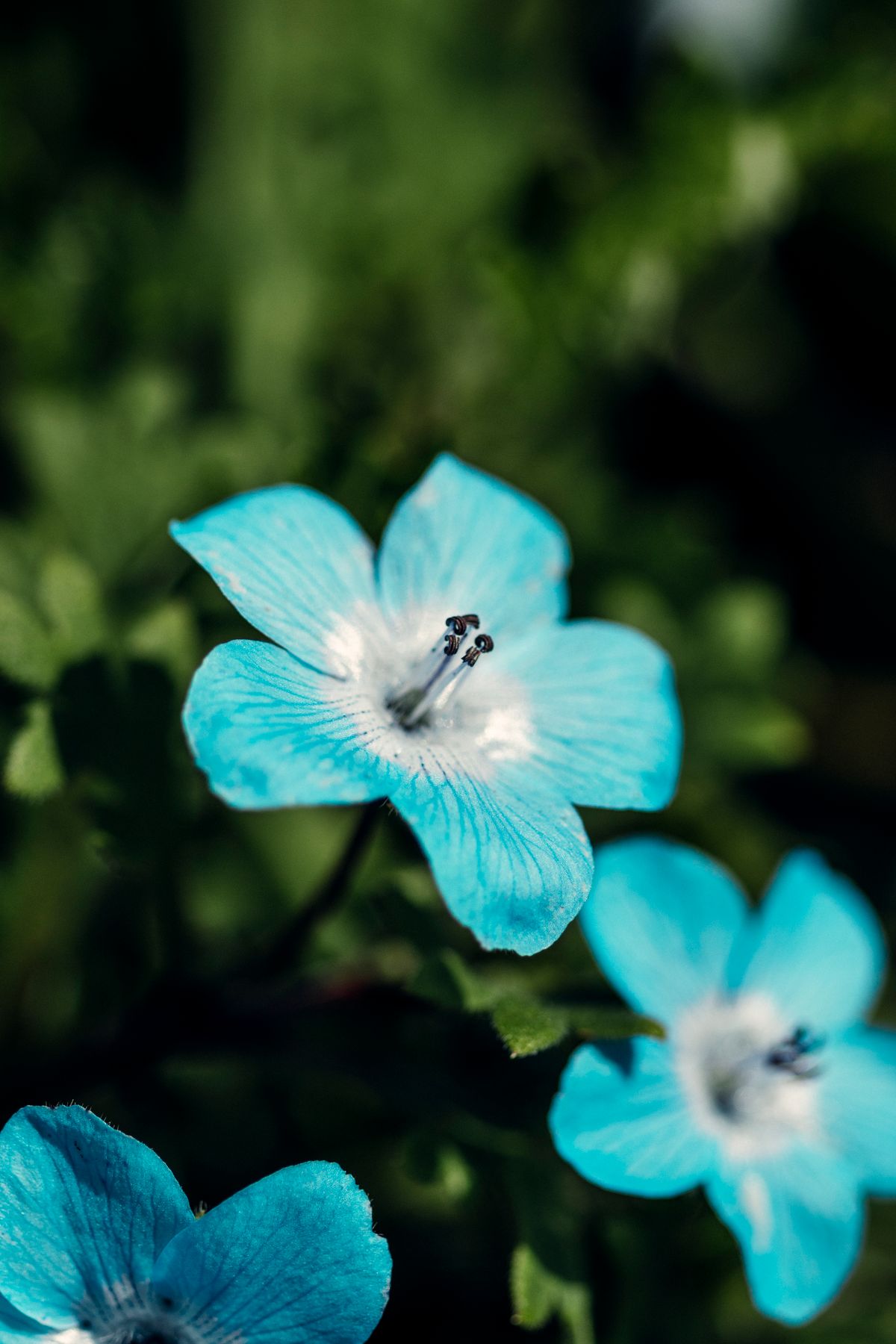
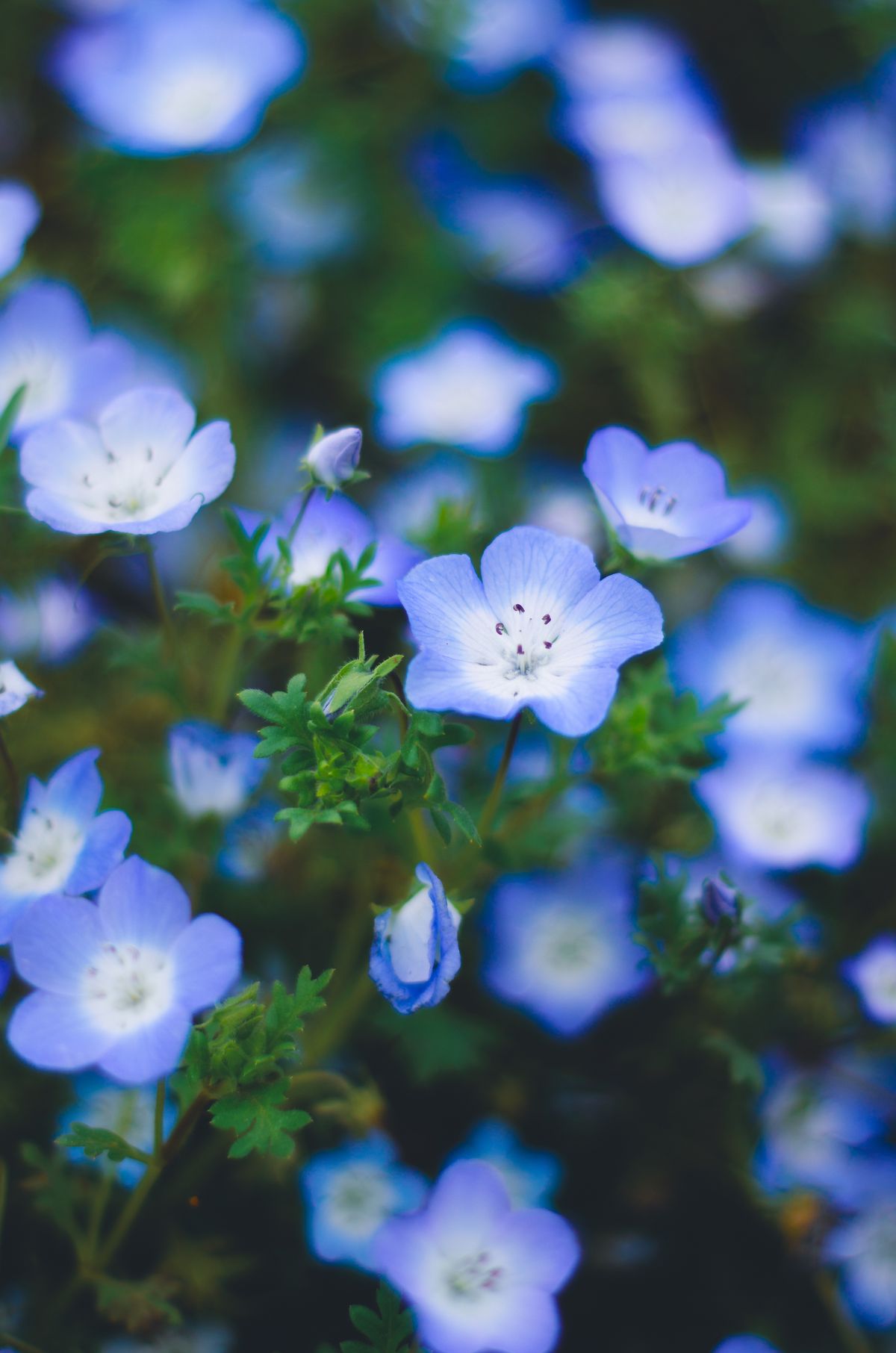
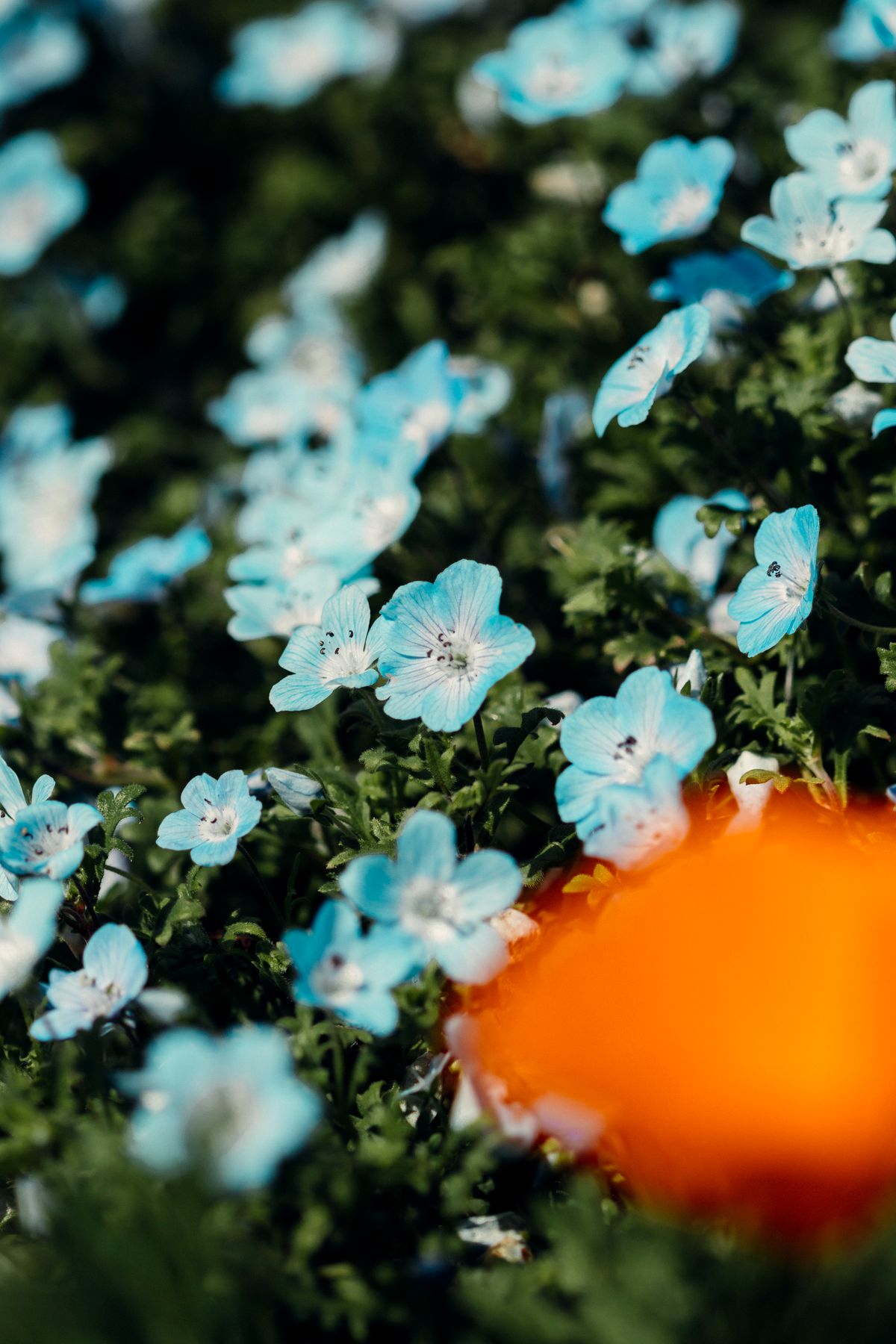
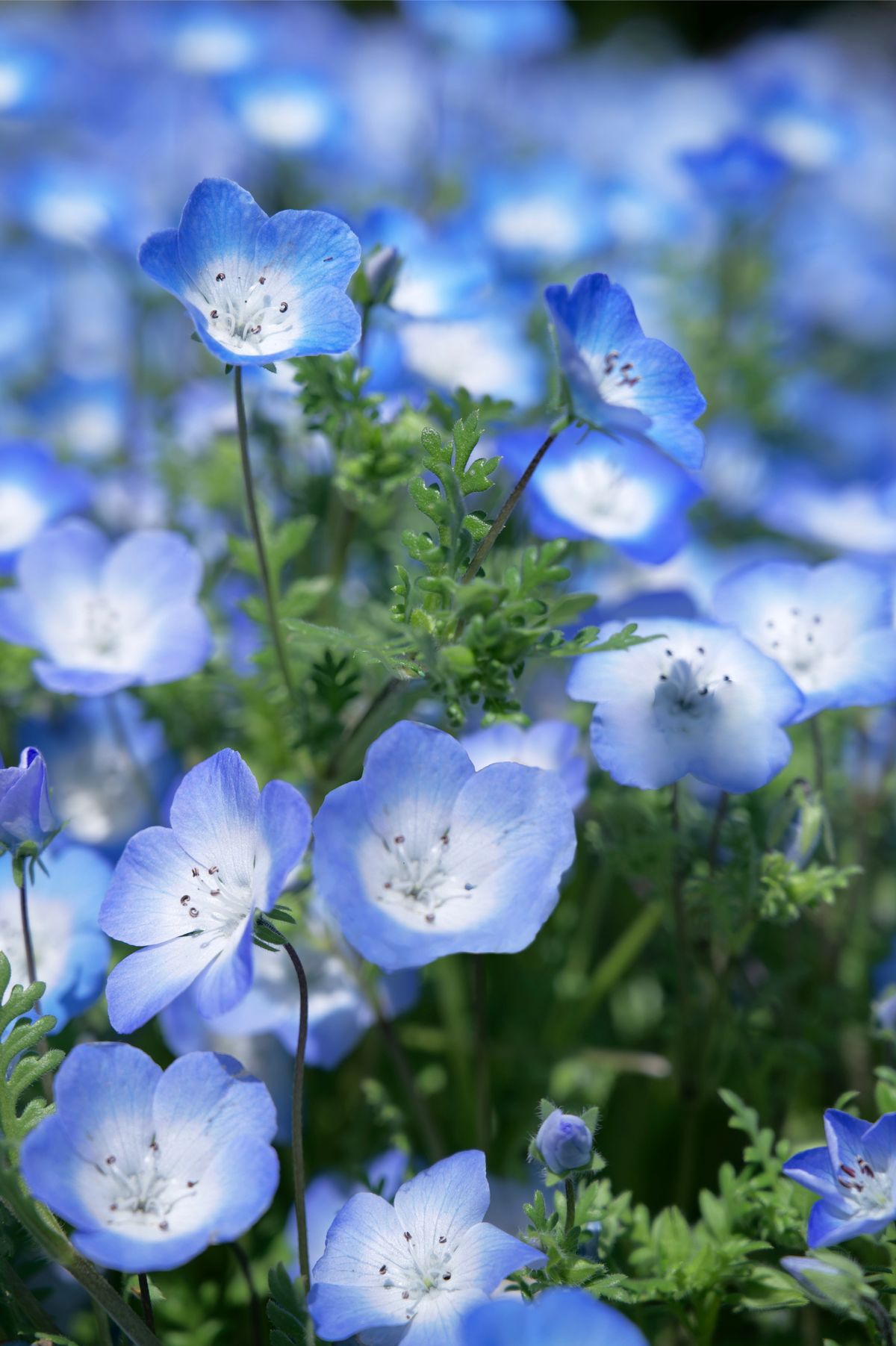
The signature event at Hitachi Seaside Park is the spring blooming of nemophila on Miharashi Hill, marketed each year as the “Nemophila Harmony.” This is what most international visitors come to see, and it is genuinely worth the trip. Nemophila (Nemophila menziesii) is a small native California wildflower with five round petals and a pale blue colour that matches the Pacific sky almost perfectly. When millions of these flowers bloom simultaneously on a slope facing the ocean, the visual effect is that the horizon disappears entirely.
When is the best time to see the nemophila?
The flowers typically begin to open in mid-April, peak between April 20th and May 5th, and continue blooming for another week or so before they fade. Exact timing depends on the year’s weather — a warm spring can push peak forward by five days, a cool spring can delay it by the same margin. The park publishes a daily bloom status update on its English website during peak season, and most years the chart is heavily weighted toward the last week of April.
If your trip to Japan falls in the cherry blossom window of late March to early April, you can almost always plan Hitachi as a post-sakura highlight — the nemophila peaks just as the last cherry trees fade in nearby Mito. For travelers planning a multi-week trip during Golden Week (April 29 to May 5), Hitachi is one of the few attractions that gets better during Golden Week, since the flowers are at their fullest.
How big is the nemophila field, exactly?
Miharashi Hill itself spans 4.2 hectares — about six football fields. The hillside is planted with 5.3 million nemophila seedlings every autumn by the park’s gardening team, and the seedlings overwinter, grow through early spring, and bloom in unison the following April. Walking paths weave through the field, and a viewing platform at the summit of the hill offers panoramic photos with the Pacific Ocean as a backdrop.
Photographing the nemophila
The best photos almost always come at the first hour after opening (09:30 to 10:30) and the last hour before closing (16:30 to 17:30 in extended-hours season). Crowds are thinnest at these times, the light is softer, and the colour of the flowers reads more accurately to a camera sensor. If you want a shot of yourself in the field with no other tourists, you must commit to the early morning slot — by 11:00 the slope can have several thousand people on it.
Bring a wide-angle lens if you have one. The field photographs best from the lower paths looking up the slope, with the ocean horizon visible above the field. A polarising filter helps cut through the haze and saturate the blue. Phone cameras handle the scene very well — the contrast between sky and flowers is naturally vivid.
The Kochia Carnival: Autumn’s Best-Kept Secret
Hitachi Seaside Park’s other signature season is the autumn “Kochia Carnival.” Kochia is a round, leafy shrub that grows about a metre high, planted across the same Miharashi Hill in roughly 32,000 individual bushes. The plants stay green through summer, blush bright red in early October, and slowly fade to a deep crimson and then a tawny gold by early November. Many Japanese visitors consider the kochia season even more striking than the nemophila — the flame-red wave of bushes climbing Miharashi Hill is unlike any other landscape in Japan.
When to see the kochia
The transition from green to red happens fast. Most years, the bushes are mostly green in late September, vividly red between October 5th and October 25th, and beginning to brown by early November. The park’s English bloom report tracks this transition closely. The shoulder weeks at either end are often the most beautiful — the bushes are streaked with green, red, and orange together, creating an effect that pure peak photos miss.
Combining a Hitachi visit with autumn foliage at Nikko or in the Tohoku mountains makes for a wonderful Kanto-to-Tohoku autumn week. For tips on planning around the Japanese koyo season more broadly, see our Japan autumn foliage guide.
Other Flower Seasons at Hitachi Seaside Park
Many travelers think of Hitachi as a “nemophila park,” but the gardens stay beautiful through almost every month of the year. The park’s planning team rotates flowers across the seven zones so that something is always in peak bloom. Here is a rough month-by-month chart.
Late March to mid-April: daffodils and tulips
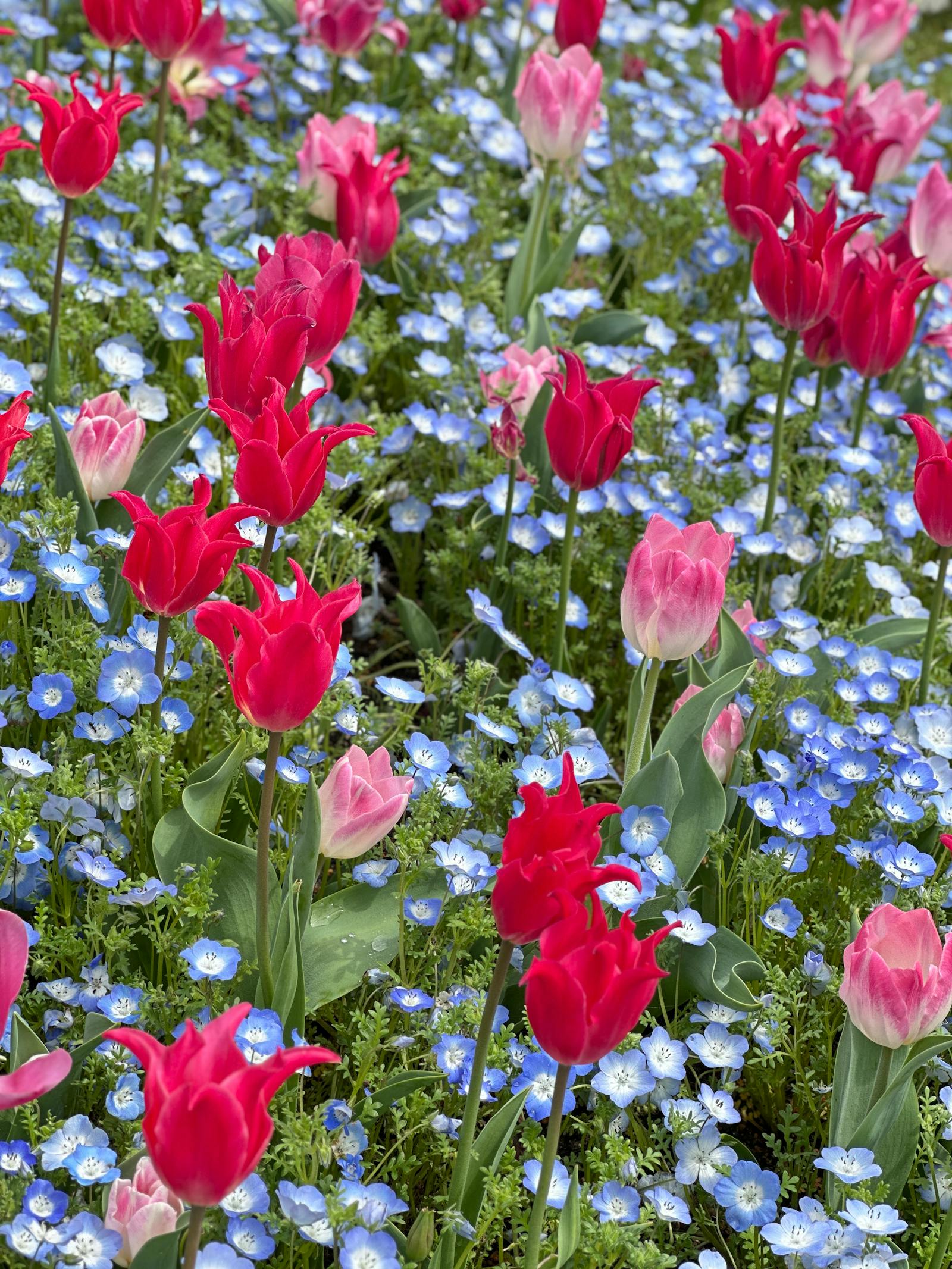
Around one million daffodils bloom across the Suisen Garden in late March, joined by 250,000 tulips in 250 varieties in the Tulip Garden in early April. This is one of the largest tulip plantings in Japan and a popular alternative for visitors whose trips miss the nemophila window.
Late April to early May: nemophila
The peak season described above.
Mid-May to mid-June: poppies and roses
About 1.5 million Californian and Iceland poppies bloom in red, orange, and yellow across the Egg Forest Flower Garden. Their colours are the visual opposite of nemophila — fire instead of sky — and they make a less crowded but equally photogenic visit.
Mid-July to late August: sunflowers and zinnia
Roughly 25,000 sunflowers bloom in two waves through the summer, with the Mihare Flower Field at peak in mid-August. Zinnias in pinks and reds anchor the lower fields. This is the quietest season of the year for foreign tourists, partly because of the heat, but the park is at its most colourful overall.
Late September to October: red spider lily and cosmos
Cosmos in pink, white, and crimson cover the Cosmos Hill in late September. Red spider lilies bloom in a separate, smaller display the same weeks. Both are popular subjects for Japanese landscape photography.
October: kochia (described above)
Late October to November: cosmos hill at peak
The final autumn cosmos varieties extend the season well into November and overlap with the kochia turning gold.
How to Get to Hitachi Seaside Park from Tokyo
Despite its iconic status on social media, Hitachi Seaside Park sits well outside the standard tourist circuit, and many first-time visitors arrive surprised at how easy the journey actually is. There are three reasonable options from Tokyo: limited express train plus bus, ordinary train plus bus, or a direct highway bus.
Option 1 — Limited Express Hitachi (fastest)
The JR Hitachi or Tokiwa Limited Express runs from Tokyo’s Shinagawa, Tokyo, or Ueno stations directly to Katsuta Station in about 75 minutes. From Katsuta, a connecting bus to the park’s West Gate takes 15 minutes. A one-way limited express seat costs ¥4,180 (US$28); the bus is ¥420 (US$3). Total door-to-door time is about an hour and forty minutes. Japan Rail Pass holders can use the limited express with no surcharge, making this the best option for pass holders.
Option 2 — Local JR Joban Line (cheapest)
The ordinary Joban Line from Ueno to Katsuta takes about 2 hours and 15 minutes and costs only ¥2,310 (US$15). Trains depart every 20–30 minutes during the day. From Katsuta, the same connecting bus takes you to the park. Good choice for budget travelers without a rail pass.
Option 3 — Direct highway bus
A few highway buses run direct from Tokyo Station’s Yaesu side to Hitachi Seaside Park’s South Gate during peak nemophila and kochia seasons. Travel time is around 2 hours and the cost is approximately ¥2,200 (US$15). These buses are usually fully reserved on weekends — book three to five days in advance.
From Kyoto and Osaka
Take the Shinkansen to Tokyo Station, then the Hitachi or Tokiwa limited express up to Katsuta. From Kyoto, total travel time is about 5 hours; from Shin-Osaka, about 5 hours 30 minutes. Most travelers staying in Kansai do this as a one-night Tokyo overnight rather than a same-day round trip.
A reliable mobile data plan is essential for first-time visitors navigating multiple connections like this. Get your Japan eSIM (Stay connected from day 1) → so you can pull up train times, bus schedules, and maps the moment you step off the plane.
Tickets, Hours, and Entry Tips
Admission is sold at any of the four park gates (West, South, Sea, and the Glico Gate near the amusement park). Tickets are simple paper stubs; queues can be long in peak season but move quickly.
Ticket prices
- Adults (15 and over): ¥450 (US$3)
- Seniors (65 and over): ¥210 (US$1.40)
- Children under 15: Free
- Annual passport: ¥4,500
Opening hours by season
- Most of the year: 09:30 to 17:00
- Nemophila peak (late April to early May): 07:00 to 18:00 on selected dates
- Kochia peak (October): 09:30 to 17:30
- Closed: Most Tuesdays (the following Wednesday if Tuesday is a holiday), and December 31 to January 1
Which gate to use
The West Gate is closest to Miharashi Hill and the nemophila field, so it is the most popular entrance during spring and autumn. Expect crowds there from 10:00 onward. The South Gate is a much shorter walk from the Katsuta station bus, but it is further from the headline flowers. If you arrive after 11:00, the South Gate is often quicker overall because you skip the West Gate queue and rent a bicycle to ride to Miharashi.
Getting Around the Park
Hitachi Seaside Park is large — covering it on foot takes a full day, and the heat in summer or the wind from the ocean in winter makes that uncomfortable. Three good options exist.
Bicycle rental
The park has dedicated cycling paths and several rental stations near the West and South gates. A standard bike costs ¥460 for 3 hours or ¥820 for the full day. Tandem and child-seat bikes are also available. Cycling is the single best way to see the whole park in one visit.
“Sea-Side Train” road train
A bright yellow road train circles the park every 15 minutes during peak seasons, stopping at each major garden. A day pass costs ¥600 (US$4). It is the easiest option for travelers with mobility limitations.
Walking
If you only have a few hours and you only want to see the headline flower field, walking from West Gate to Miharashi Hill takes about 15 minutes. The park map is well marked with English and there are food carts and toilets along the way.
Where to Eat in and Around the Park
The park has six food and drink areas, ranging from grab-and-go ice cream stands to sit-down restaurants. Food quality is reasonable for a public park, with prices typical of a national tourist attraction (¥1,000–¥2,000 for a main course).
Inside the park
The Sea-Side Café at the South Gate serves rotating seasonal lunches — nemophila-themed soft-serve ice cream in spring, kochia-shaped rice balls in autumn, and fresh seafood curries year-round. The Bakery Café Tippy near the West Gate is the best option for breakfast and pastries. The Glico Snack Shop serves Japanese-style fast food and is popular with families.
Outside the park
The nearby Ajigaura area is famous for two specialties worth a detour: hoshi-imo (sun-dried sweet potato slices, a Hitachinaka specialty since the Meiji era), and incredibly fresh kaisendon (sashimi rice bowls) from boats that land at Naka-Minato fish market each morning. The fish market is a 15-minute drive from the park and worth the diversion if you have a rental car. For more on the region’s food, see our Japan food experiences guide.
What Else to See in Ibaraki
Many travelers treat Hitachi Seaside Park as a single-stop day trip from Tokyo, but Ibaraki has more to offer than its famous flower field. Consider extending your trip by a day or two to see other highlights of this often-overlooked prefecture. Our broader Ibaraki travel guide covers the region in detail, but a few highlights are worth listing here.
Kairakuen Garden (Mito)
One of Japan’s “Three Great Gardens,” Kairakuen is famous for 3,000 plum trees that bloom in February and March, six weeks before the cherry blossoms. The garden is a 30-minute train ride from Hitachi Seaside Park, making it an easy add-on for early-spring travelers.
Mount Tsukuba
The 877-metre peak of Mount Tsukuba is often called the “Mount Fuji of the East” and has been written about in Japanese poetry for over 1,000 years. A cable car climbs most of the way up, and the summit views stretch across the Kanto Plain toward Tokyo’s skyline. The hike, if you choose to walk, takes about 90 minutes one way.
Ushiku Daibutsu
Until 2018, this 120-metre standing Buddha statue was the tallest in the world. A small elevator inside takes you up to the chest level for a panoramic window. It is a short drive from Hitachi if you have a rental car.
Fukuroda Falls
One of Japan’s “Three Great Waterfalls,” Fukuroda is a four-tier, 120-metre cascade that takes on a different character in each season — vivid green in summer, fiery red in autumn, and frozen solid in deep winter.
Where to Stay: Tokyo Base or Local Stay?
Most foreign visitors do Hitachi Seaside Park as a day trip from Tokyo and head back to their city base the same evening. This is the most efficient approach. If you would rather break up the journey, a one-night stay in the nearby city of Mito or in Hitachinaka itself gives you the option of arriving at the park before opening time — a meaningful advantage in nemophila season.
Tokyo hotels
If you are using Tokyo as a base, the best neighbourhoods are around Tokyo Station, Shinagawa, or Ueno — all three have direct limited express trains to Katsuta. Book your hotel on Agoda (Best prices guaranteed) → for the widest selection of Tokyo properties at every budget level.
Mito and Hitachi area hotels
Mito has a handful of business hotels in the ¥6,000–¥10,000 range and a few mid-range properties around Lake Senba. Hitachinaka itself is much smaller, with mostly business-class options near the train station. Booking ahead is essential during nemophila and kochia peak weekends, when rooms within an hour of the park sell out months in advance.
For travelers planning a longer trip
A multi-day package combining Tokyo, Hitachi Seaside Park, Nikko, and the Tohoku region is a popular itinerary for travelers visiting in late April or late October. Find affordable Japan tour packages → can be a useful starting point to compare what’s on offer.
Sample Day Itinerary: Tokyo to Hitachi and Back
Morning
Catch the 08:00 limited express Hitachi or Tokiwa from Shinagawa or Tokyo Station. Arrive at Katsuta at 09:15. Board the connecting bus at 09:25 and reach the park’s West Gate at 09:40, just before opening at 09:30. Buy your ticket, walk straight to Miharashi Hill, and aim to be on the slope between 10:00 and 11:00 for the best balance of light and crowds.
Mid-day
After photographing the nemophila or kochia field, walk down to the Tamago Forest area for a snack, or visit the small amusement park if you are traveling with children. The Ferris wheel here climbs 100 metres and is one of the most underrated viewpoints in Kanto.
Afternoon
Rent a bicycle for the afternoon and cycle through the tulip garden, the rose garden, and the coastal pine forest. Stop at the Sea-Side Café for a late lunch — try the local Hitachi-no-Sato seasonal curry or the nemophila ice cream in spring.
Evening
Catch the bus from West Gate back to Katsuta around 17:00, then a limited express south to Tokyo. You will be back at your hotel before 19:00, with time for a relaxed dinner in Shinjuku, Ginza, or wherever you are based.
The Story Behind the Flowers: A Brief History
The site that is now Hitachi Seaside Park has had several lives. Before the war it was farmland and pine forest, owned by local families who grew sweet potatoes and grazed dairy cattle on the dunes. During the Pacific War the Japanese Imperial Army built an airfield here, and after the war the US Air Force took over the land as the Mito Air Base, using it primarily as a bombing range from 1947 until 1973. Local opposition to the base grew throughout the 1960s, and when the land was finally returned to Japanese ownership a quiet, multi-decade plan to transform it began.
The Ministry of Land, Infrastructure, Transport and Tourism began designing the park in the late 1970s. Sections opened progressively: the woodland zone in 1991, the formal flower gardens in 1992, the coastal zone in 1996, and the famous Miharashi Hill flower field — which only acquired its current millions-of-flowers identity in the mid 2000s — taking final shape after years of trial planting. The first major nemophila planting was carried out in 2007 with around 1.5 million seedlings. The figure grew steadily until reaching 4.5 million in 2013 and the current 5.3 million in recent years.
This careful, decades-long horticultural project is part of what makes Hitachi feel different from other Japanese gardens. Most famous garden spaces — Kenrokuen in Kanazawa, Korakuen in Okayama, Kairakuen in Mito — are historical sites carefully preserved over centuries. Hitachi Seaside Park, by contrast, is a modern creation, a piece of carefully designed national landscape painting that did not exist a generation ago. It is one of the very few major Japanese tourist sites where international visitors and Japanese visitors are seeing the same thing at roughly the same historical moment, which gives the place a particular kind of contemporary energy.
Local Specialty: The Hitachinaka Sweet Potato Tradition
If you have time after the park, take fifteen minutes to explore Hitachinaka’s other claim to fame: the dried sweet potato, known in Japanese as hoshi-imo. The Hitachinaka region produces more than 90 percent of all dried sweet potatoes consumed in Japan, a tradition that dates to the late Meiji era when local farmer Daikichi Ozawa adapted a Shizuoka technique for the sandy coastal soils here. The variety most commonly used today, called tamayutaka, is sweeter and softer than most table-grade sweet potatoes and dries into a chewy, deep-orange slice that locals eat with green tea.
Several roadside farm shops between the park and Naka-Minato Fish Market sell hoshi-imo in vacuum-packed bags ideal for travel. They keep well at room temperature for two or three weeks, making them an excellent edible souvenir. Quality grades range from inexpensive industrial slabs to artisanal varieties packed in beautiful gift boxes for ¥2,000 to ¥4,000. Look for the words nama-bohi (semi-dried) on the package — these have a softer, more delicate texture preferred by most hoshi-imo aficionados.
Sustainability and the Park’s Future
One reason the nemophila bloom is so reliable each year is the park’s careful approach to soil management. The same hillside is planted every year, but with a rotation of cover crops between flowering seasons that returns nitrogen to the soil and reduces the need for chemical fertilisers. The park’s horticultural team has won several national awards for low-impact landscaping techniques, and the entire site is now powered partly by a small solar farm hidden behind the woodland zone.
The park is also actively expanding its non-spring attractions in an effort to spread visitor numbers more evenly across the year. New zones include a children’s adventure playground, a beach yoga programme on weekend mornings, and an evening light-up event during the kochia season that runs from sunset to 20:00 on selected dates. For travelers visiting in October, the night kochia event is a particularly photogenic alternative to the daytime experience — the red bushes glow softly under warm-toned LED lighting against the dark sky.
Frequently Asked Questions
When exactly do the nemophila bloom?
The flowers begin opening in mid-April, peak between April 20th and May 5th most years, and fade by mid-May. The park publishes a daily bloom status update on its English-language website during the season, with photo evidence. Plan your visit for the last week of April for the safest peak-season odds.
How crowded is Hitachi Seaside Park during peak nemophila season?
Very. The park typically welcomes 30,000 to 60,000 visitors per day during the peak weekend in late April, and 80,000+ on Golden Week peak days. Crowds concentrate on Miharashi Hill between 11:00 and 15:00. To minimise the impact: arrive at opening, leave Miharashi by noon for the quieter gardens, and return to the hill for a final photo at golden hour.
Is Hitachi Seaside Park worth visiting outside of nemophila and kochia seasons?
Yes. Tulips in early April, poppies in mid-May, sunflowers in August, and cosmos through October all offer genuinely beautiful experiences. Crowds are dramatically lower outside the two headline windows, and admission stays the same.
Can I bring a tripod for photography?
Yes, tripods are permitted in the park’s open areas, though staff may ask you to move if you are blocking pathways during peak periods. Drones are not permitted anywhere in the park without prior written permission.
Are pets allowed?
Small dogs in a carrier or on a leash are permitted in most outdoor areas, but not inside buildings, the amusement park rides, or the road train. Bring water and waste bags.
Is Hitachi Seaside Park wheelchair accessible?
Yes. The major paths are paved and gently sloped. Wheelchair rentals are available free of charge at the West Gate and South Gate information desks. The road train is wheelchair accessible. Miharashi Hill has a paved viewing path that does not require climbing the steep central path.
Can I see the nemophila for free from outside the park?
No. The flowers are entirely within the paid-entry zone of the park. The ¥450 admission fee is, however, one of the best values for a major Japanese tourist attraction.
How long should I plan to spend in the park?
A focused visit covering just Miharashi Hill takes 2 to 3 hours. To see the full park well — including the rose garden, the cosmos hill, the amusement park area, and the coastal dunes — plan for at least 5 hours. Photography enthusiasts often spend a full 8-hour day.
Is there a hotel inside the park?
No. The closest accommodations are in Hitachinaka City (5–10 minutes by car) and in nearby Mito (25 minutes by train). Tokyo remains the most common base for international travelers.
Can I combine Hitachi with Nikko or Kamakura in a single trip?
Yes, but not in a single day. A two-day plan with Hitachi on day one and Nikko on day two (using a Tokyo overnight in between) works well. For Kamakura, plan separate day trips since the two are on opposite sides of Tokyo. Our best day trips from Tokyo roundup compares them all.
Practical Tips for Your Hitachi Seaside Park Visit
- Book your limited express seat in advance. Reserved seats sell out two to three days ahead during Golden Week. Use the JR East online booking site or buy at any major Tokyo JR station.
- Arrive at opening. The difference between 09:30 and 11:00 on a peak nemophila weekend is dramatic in terms of crowd density and photograph quality.
- Pack a small umbrella. Spring weather in Ibaraki can shift quickly from sun to drizzle; the flower field is fully open and there is little shelter.
- Wear comfortable, closed-toe shoes. Walking paths are gravel in many places and dusty after dry weather.
- Bring sunscreen and a hat. The slope of Miharashi Hill faces south and there is minimal shade.
- Cash works everywhere, cards work most places. The main café and ticket booths accept major credit cards and IC cards like Suica.
- Use the lockers near every gate if you arrive with a large bag. They cost ¥100–¥400.
- Check the daily bloom report on the park’s English website before traveling — the park does not refund admission if the flowers are not at peak.
- Buy an airport transfer voucher in advance if you arrive at Narita or Haneda the night before. Book airport transfer with NearMe → is the easiest way to skip the bus queue.
- If you don’t speak Japanese, download an offline Google Translate Japanese pack before your trip. Local bus drivers and ticket clerks have limited English but are unfailingly helpful.
- Pack a portable charger. You will take more photos than you think.
- Take the second-to-last bus, not the last. Buses fill up at peak times and the final service can leave standing-room only.
The Quiet Joy of Ibaraki’s Famous Flowers
Japan has many spectacular flower seasons — the cherry blossoms of Tokyo and Kyoto, the wisteria of Ashikaga Flower Park, the lavender of Furano in Hokkaido. What makes Hitachi Seaside Park different is the audacity of its central spectacle. Five million flowers, one colour, planted in a single field, blooming all at once: it is the kind of thing that only a country with a deep cultural patience for nature would create. Nobody had to do this, and yet thousands of Japanese gardeners replant the seedlings each autumn and tend them through the winter, simply because the result is so extraordinary.
Standing on the viewing platform on Miharashi Hill on a clear April morning, with the Pacific spreading out behind you and the blue flowers spreading toward it in front of you, you understand a particular kind of Japanese aesthetic that the cities cannot show you. Beauty is in the doing — in the planting, in the tending, in the brief peak, in the equally brief acceptance that next year it will all have to be done again. Whether you visit in spring for the nemophila, in autumn for the kochia, or at any of the gentler seasons in between, Hitachi Seaside Park is a reminder of why Japan’s natural year is one of the most carefully observed and most beautifully presented in the world.
For more ideas on how to plan a trip around the country’s incredible seasonal cycles, see our best time to visit Japan guide. And if you’re still putting together your itinerary, our Japan travel tips for first-timers covers everything you need to know before you go.
Final Thoughts: Why Hitachi Belongs on Your Japan Bucket List
Of all the spring spectacles in Japan, the nemophila of Hitachi Seaside Park may be the easiest to plan and the hardest to forget. The park is affordable, accessible, and remarkably uncrowded compared to the most famous urban gardens. The flowers themselves are unlike anything else in the country — that improbable pale blue, those millions of tiny faces. And the surrounding region of Ibaraki, often skipped by first-time visitors, is one of the most rewarding corners of greater Tokyo for those willing to spend a day away from the neon and noodle bars.
Set your alarm early, book the limited express seat ahead, and trust that the trip is worth the effort. The blue field on the hill above the Pacific has been waiting for you for an entire year, and it disappears again only a few weeks later. Few sights in any country deliver as much beauty for as small a price — and few day trips give a first-time visitor a clearer sense of why Japan remains, for travelers, an endlessly surprising country.
Considering a fuller multi-day Japan trip and want to compare prices across booking platforms? Search hotel deals on Yahoo! Travel → for an alternative view of the Japanese market, especially useful for finding the right hotel for late-April peak nemophila week.
Going to Japan? Talk to locals with confidence.
Hirameki Japanese — instant offline translation, camera translation, furigana + romaji, and 314 free flashcards. No login. Works without internet.

Plan your Japan trip
Two things every first-timer should book
Some links are affiliate links. If you book through them we may earn a small commission at no extra cost to you.