In this guide
- How kimono rental works
- Where to wear it: Kyoto & Tokyo
- Wearing it right: small etiquette that matters
- Practical tips (weather, photos, what’s underneath)
- FAQ
How kimono rental works
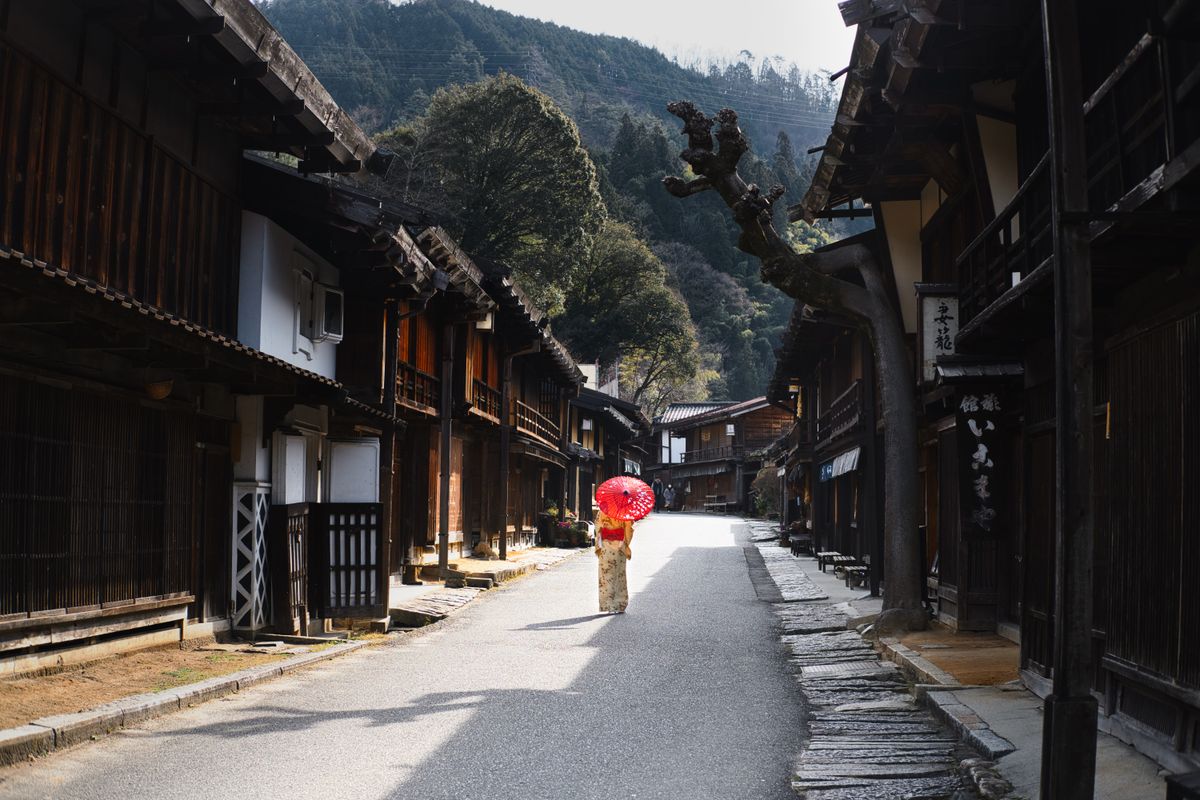
The process is friendlier than first-timers expect. You reserve a time slot, arrive at the shop, and pick your kimono from racks organized by color and pattern — staff help you match an obi (sash), bag and grip socks. Professional dressers then layer everything correctly in 30–45 minutes; women’s plans usually include simple hair styling. You leave your clothes and luggage at the shop, spend the day in the streets, and return by closing time (typically 5–6pm; many shops sell a next-day-return option so you can keep it for dinner). Men’s, couples’ and kids’ plans are standard, and staff at the big rental shops handle everything with zero Japanese needed — though a polite onegaishimasu goes a long way (see our phrases guide).
Where to wear it: Kyoto & Tokyo
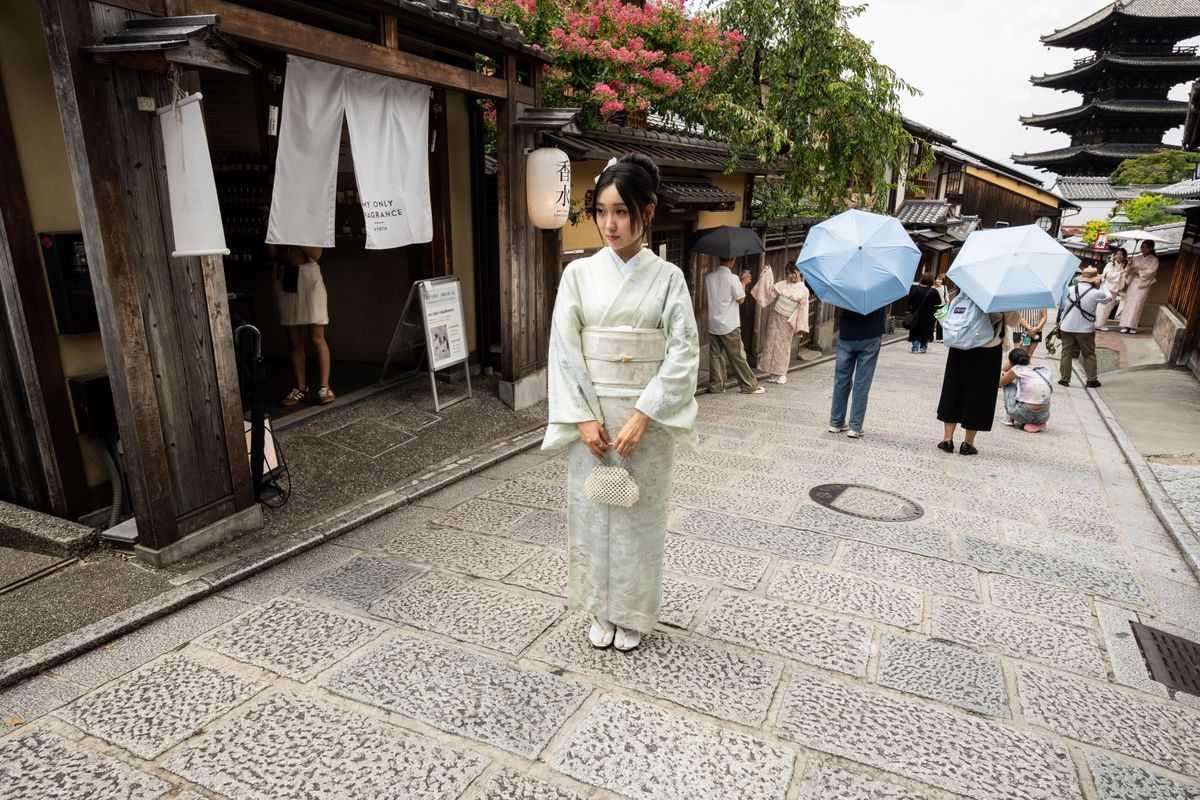
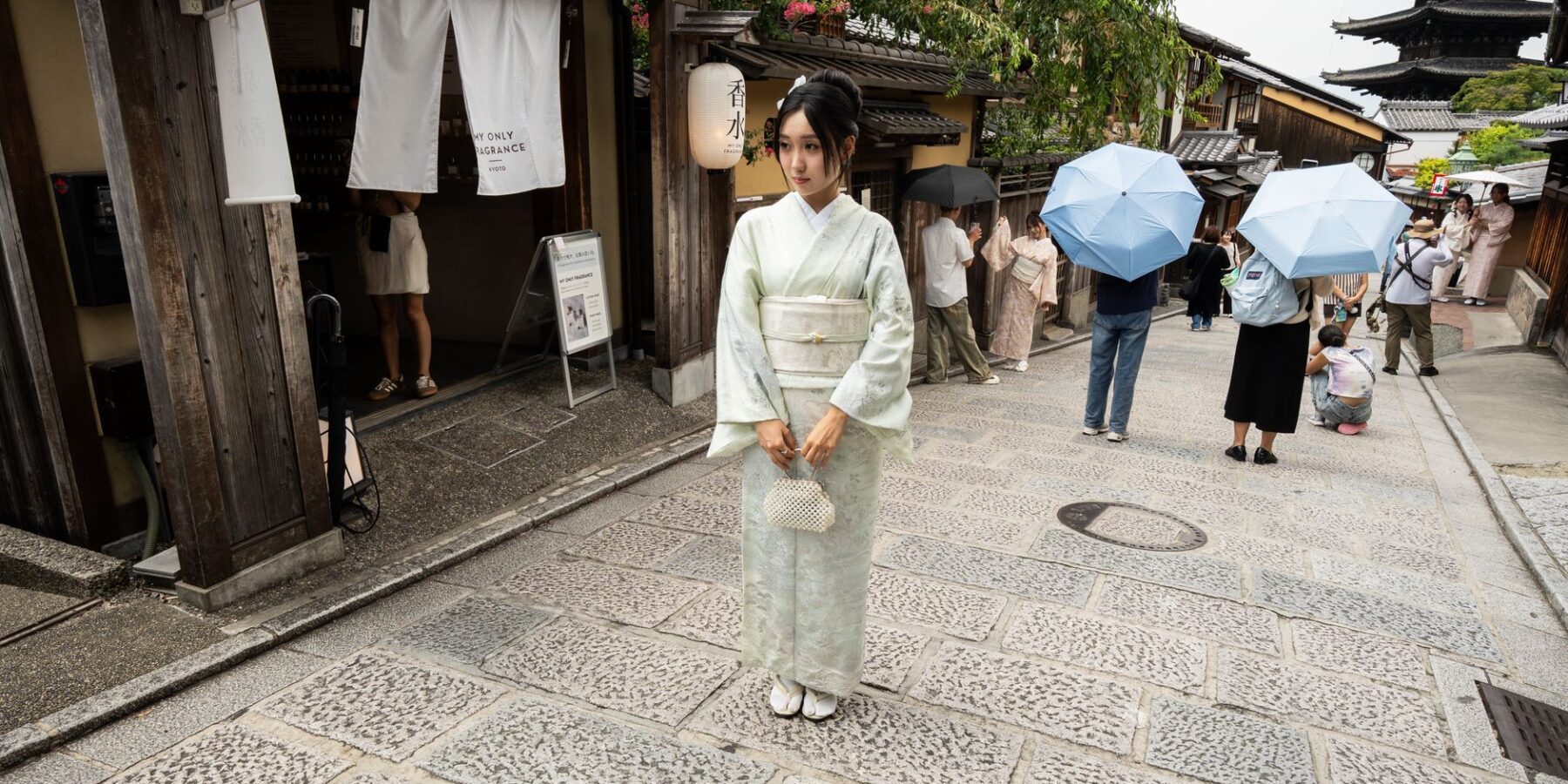
- Kyoto — Higashiyama. The definitive backdrop: stone-paved Ninenzaka and Sannenzaka lanes, wooden machiya facades, and Kiyomizu-dera at the top. Most rental shops cluster right here, so you’re dressed and in the scenery within minutes.
- Kyoto — Gion & the riverside. Hanamikoji street, the Shirakawa canal with its willows, and the Kamo river banks at sunset. Quieter than Higashiyama in early morning.
- Kyoto — Arashiyama. The bamboo grove in kimono is a classic photo — go before 9am to beat the crowds.
- Tokyo — Asakusa. The capital’s kimono quarter: Senso-ji temple, Nakamise lane and old shitamachi streets, with dozens of rental shops around the station.
Base yourself near the action — see where to stay in Kyoto and where to stay in Tokyo. Autumn foliage season is the most photogenic (and busiest) time of all — plan with our autumn guide and reserve both kimono and hotels early (compare on Agoda).
Wearing it right: small etiquette that matters
- Collar rule — left over right. Dressers handle this, but never re-wrap it yourself the other way: right-over-left is reserved for dressing the deceased.
- Walk small. The wrap restricts stride by design; short steps look graceful and keep everything in place. Slow is the point — this is a strolling outfit, not a hiking one.
- Mind the sleeves. Hold them when reaching for anything (shrine water ladles, food stalls, door handles).
- Sitting: smooth the back panel and sit upright on the front edge of chairs; in restaurants, tuck sleeves onto your lap.
- Eating while strolling is best skipped in kimono — sauces and sleeves are enemies. Sit down for that matcha soft-serve.
- Rain or shine, shops lend umbrellas; ask rather than dashing.
Practical tips (weather, photos, what’s underneath)
What’s underneath: wear a thin, low-necked top and leggings/shorts — the shop layers over them. Seasons: summer plans switch to lighter yukata; winter shops add warm inner layers and a shawl — kimono are warmer than they look. Photos: the golden combinations are early morning (empty lanes) or the hour before sunset (warm light on wooden streets); many shops sell a pro-photographer add-on that’s worth it for couples. Money-saver: basic plans are genuinely fine — the ¥3,000 kimono photographs just as beautifully as the premium silk one. Getting around all day is easiest with everything preloaded on your phone: maps, our sign-reading tools, and an eSIM.
Frequently asked questions
Is it OK for foreigners to wear kimono in Japan? Yes — it’s welcomed. Rental shops exist largely for visitors, and locals generally read it as appreciation of the culture, especially worn with the etiquette above.
How much does kimono rental cost? ¥3,000–6,000 for standard day plans; hair styling, premium fabrics and photo packages add ¥1,000–5,000.
Do I need to book in advance? A day or two ahead normally; for late March–early April (cherry blossoms) and November (foliage), book weeks ahead.
Kimono or yukata — what’s the difference? Yukata is the light, unlined summer version — cheaper, cooler, easier to wear. In July–August most shops rent yukata by default.
Going to Japan? Talk to locals with confidence.
Hirameki Japanese — instant offline translation, camera translation, furigana + romaji, and 314 free flashcards. No login. Works without internet.

Plan your Japan trip
Two things every first-timer should book
Some links are affiliate links. If you book through them we may earn a small commission at no extra cost to you.