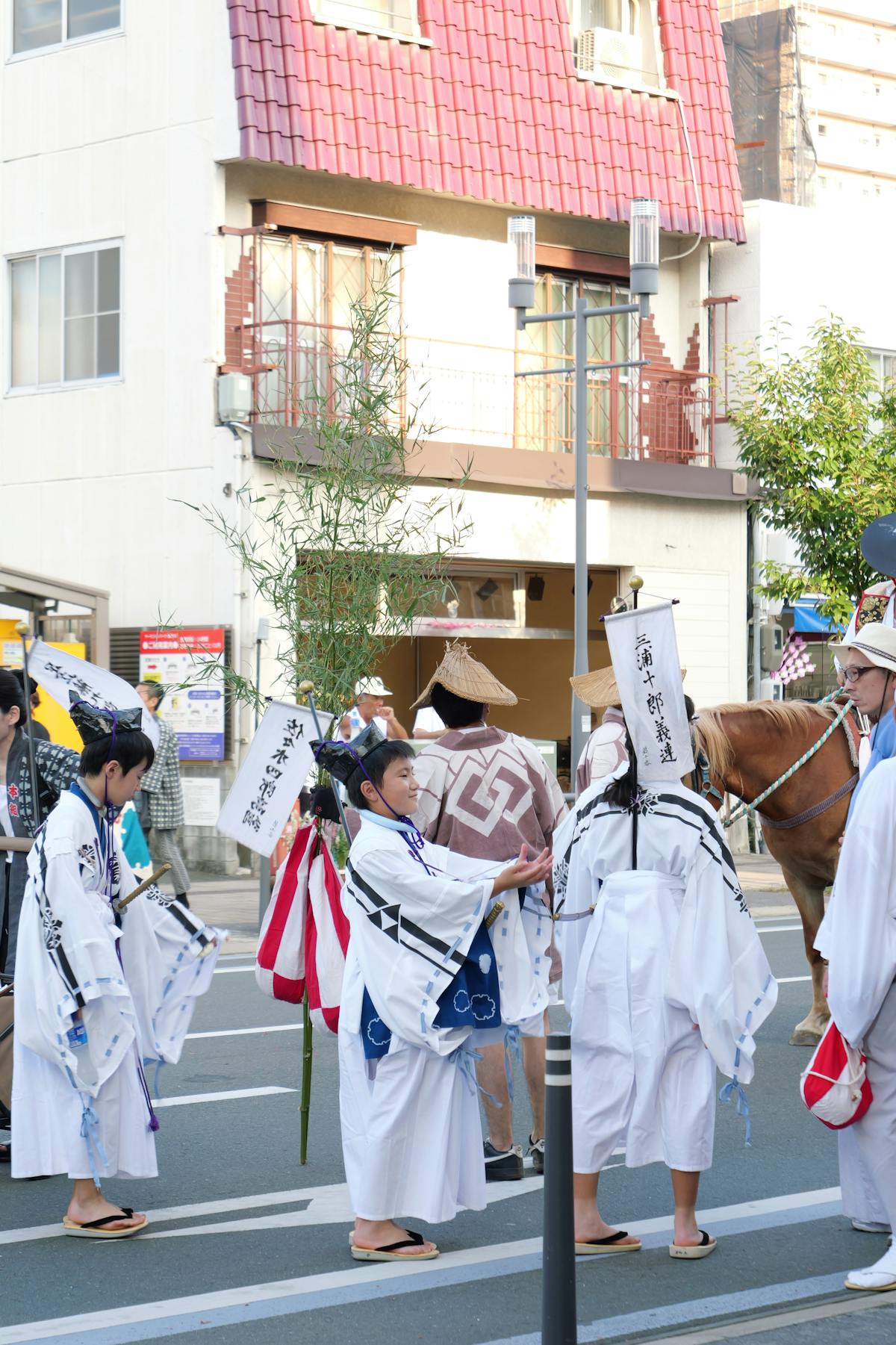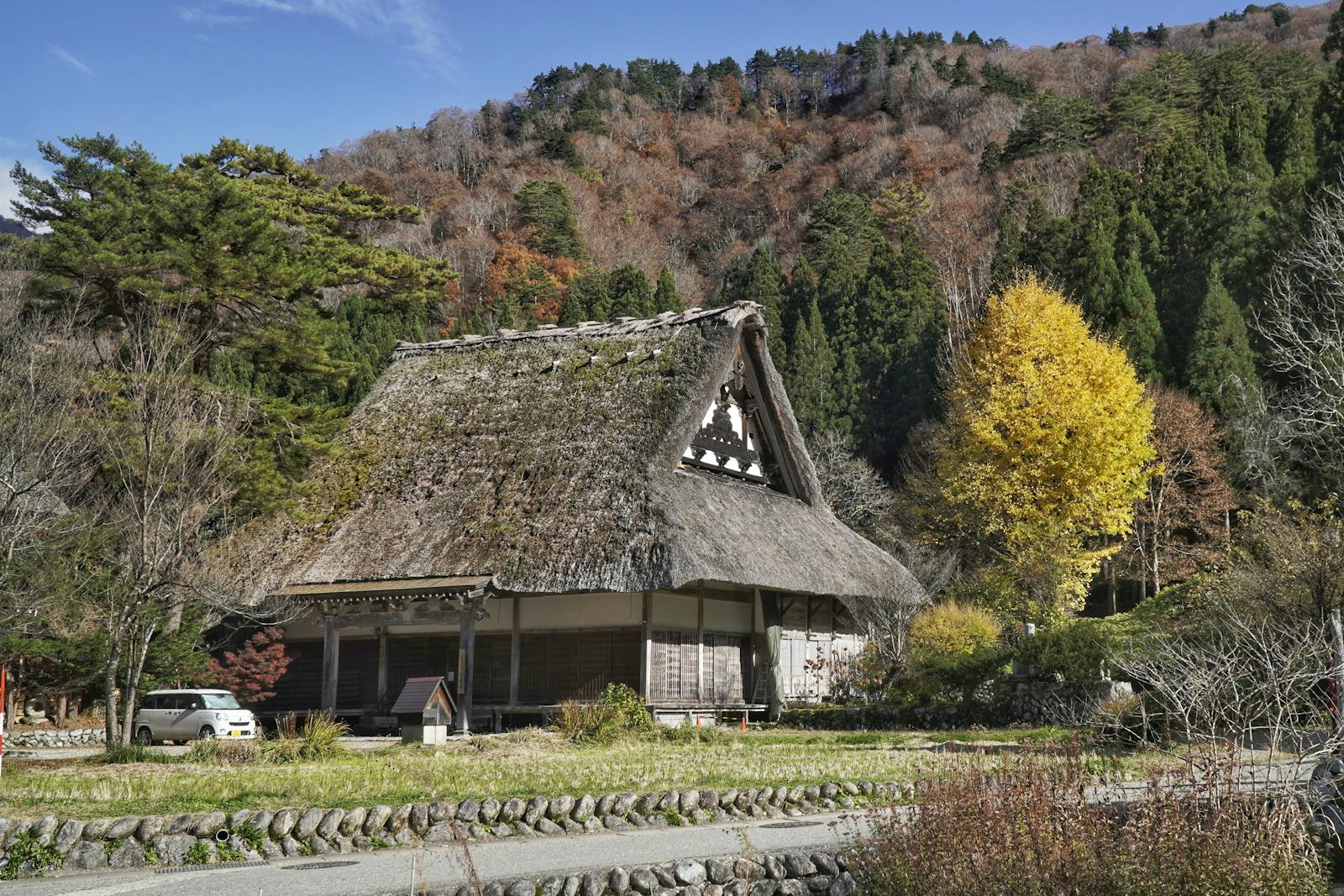
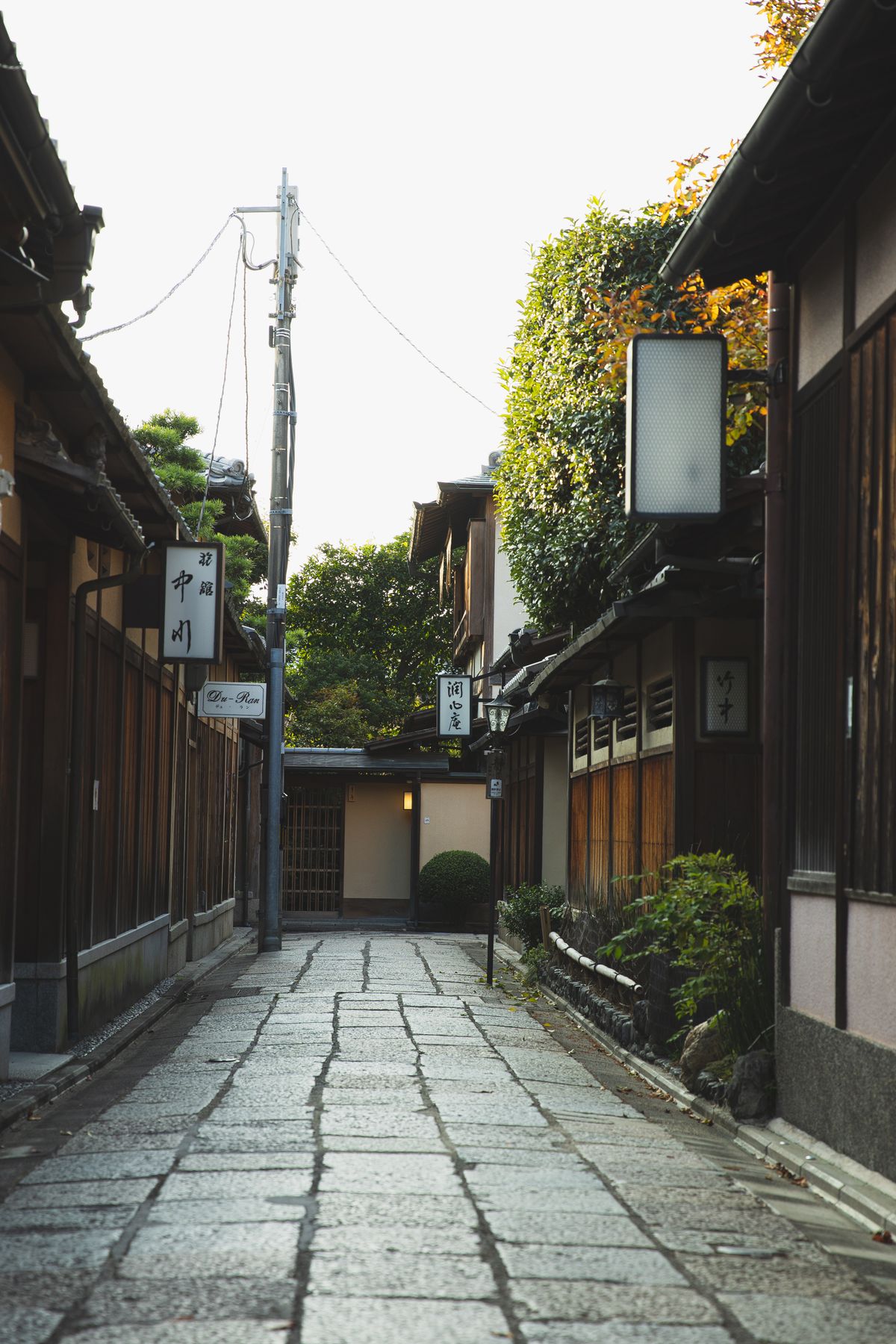
Tucked into a narrow valley deep in the mountains of southern Fukushima, Ouchi-juku (大内宿) is one of the most magical and least-visited places in Japan. A 400-year-old post town on the old Aizu-Nishi-Kaido road, it has only one street — a wide unpaved lane lined on either side by thatched-roof wooden houses, with a small river running just behind them. There are no telephone poles, no overhead wires and no neon signs. In summer the rooftops are bright green with moss and grass; in winter they disappear beneath two metres of snow. For travellers willing to make the journey, it is one of the last places in Japan where you can stand in a street and genuinely feel like you have stepped into the Edo period.
This complete guide is written for first-time visitors to Japan who have never been to rural Tohoku, who may not speak any Japanese, and who want to know exactly how to get there, what to eat, where to sleep, what to photograph and how much it all costs. By the end of it you should be able to plan a confident day trip or overnight visit to Ouchi-juku from either Tokyo or Aizu-Wakamatsu, and to combine it with the rest of Fukushima’s underrated samurai history.
What Is Ouchi-juku and Why Is It Worth the Trip?
Ouchi-juku was built in the early 1600s as a way station — what the Japanese call a shukuba-machi — on the Aizu-Nishi-Kaido (会津西街道), the post road that connected Aizu-Wakamatsu Castle to Nikko and the Tokugawa shogun’s eastern court. Samurai, merchants and travelling priests stopped here to rest, change horses, and eat hot soba before continuing the climb over the mountain passes. The village still has its original layout: a wide central avenue, drainage ditches on either side, and roughly 30 thatched-roof houses lined up in two neat rows.
What makes Ouchi-juku exceptional is not just its age but its preservation. Telephone and electrical cables were buried underground in the 1980s, the asphalt was removed and replaced with packed gravel, and a strict zoning law prohibits modern signage. In 1981 the village was designated an Important Preservation District for Groups of Traditional Buildings — the same protection given to Shirakawa-go’s UNESCO-listed gassho farmhouses. Many of the houses are still lived in by descendants of the families who built them, and most now operate as soba restaurants, sweet shops, ryokan, craft galleries or family-run inns.
If you have already visited Shirakawa-go or Takayama, Ouchi-juku will feel both familiar and quite different. Shirakawa-go is famous for its enormous gassho-zukuri farmhouses with steep triangular roofs; Ouchi-juku’s thatched roofs are gentler and flatter, the village more linear, and the crowds dramatically smaller. On a weekday in the off-season, you may share the entire street with fewer than 50 other visitors.
How to Get to Ouchi-juku
This is the part that scares people off, but it really is not as hard as it looks. The fastest realistic transit time from central Tokyo is about three hours each way, and the most scenic route includes a ride on a delightful little railway called the Aizu Railway, whose trains were partly designed in collaboration with manga artist Reiji Matsumoto.
From Tokyo (Day-Trip Friendly Route)
The journey involves three trains and one short bus or taxi ride. Allow 3 to 3.5 hours each way.
- Tokyo Station to Koriyama: Tohoku Shinkansen (Yamabiko service). Roughly 75–85 minutes, ¥8,000 (US$53) reserved seat. Trains run every 20–30 minutes.
- Koriyama to Aizu-Wakamatsu: JR Banetsu West Line local train. About 65 minutes, ¥1,170. Trains run roughly once an hour.
- Aizu-Wakamatsu to Yunokami Onsen: Aizu Railway local train (this is now a separate private operator). About 35 minutes, ¥1,100. Yunokami Onsen Station is the closest train station to Ouchi-juku and is itself worth a stop — it is the only thatched-roof railway station in Japan.
- Yunokami Onsen to Ouchi-juku: Local bus called the Sarukura-go (¥500, 20 minutes, departs about 5–6 times per day, timed to arriving trains) or a taxi (about ¥3,500 one-way). Reliable wheelchair-accessible service does not exist on this last leg — book a taxi if you have mobility needs.
For Japan Rail Pass holders, the Shinkansen and JR sections are covered, but the Aizu Railway and the local bus or taxi are not. If you have the pass, the day trip is much cheaper.
For more on whether the Japan Rail Pass makes sense for your specific trip, see our JR Pass worth-it guide and the related Shinkansen guide.
From Aizu-Wakamatsu (the Logical Base)
If you can spare two nights in Fukushima Prefecture, it is much more pleasant to base yourself in Aizu-Wakamatsu and visit Ouchi-juku as a half-day or full-day excursion. Aizu-Wakamatsu is the historic samurai capital of the region, home to Tsuruga Castle and the Iimoriyama burial site of the Byakkotai young warriors. From Aizu-Wakamatsu station, the round-trip to Ouchi-juku takes about 90 minutes each way and costs roughly ¥3,200 round trip.
Combine Ouchi-juku with our existing guide to Aizu-Wakamatsu for a full two-day Fukushima samurai itinerary.
By Rental Car
A rental car is the most flexible option, particularly if you want to combine Ouchi-juku with the To-no-Hetsuri rock formations, Yunokami Onsen, or the open-air Aizu Bukeyashiki samurai mansion. From central Tokyo expect a 3-hour drive on the Tohoku Expressway via Shirakawa Interchange. From Aizu-Wakamatsu it is a 40-minute drive through mountain roads. Note that winter conditions can be severe — snow tyres are mandatory from December through March, and rental companies usually swap them automatically for that period in Tohoku.
If you would rather skip transfers and have someone meet you at the airport with English-language support, Book airport transfer with NearMe → covers most northern Tohoku routes including Fukushima Airport pickups.
Best Times of Year to Visit Ouchi-juku
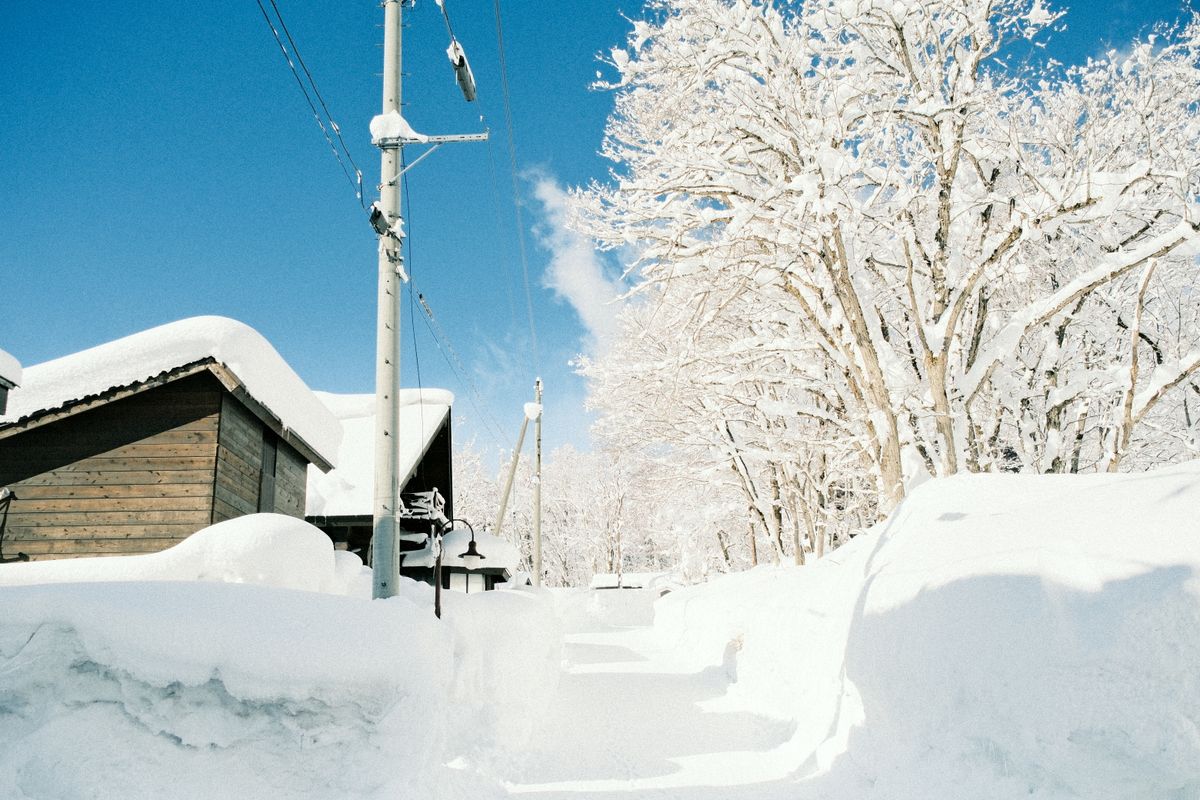
Ouchi-juku is genuinely a four-season destination, and the village photographs differently in every month. The main visitor seasons are spring (cherry blossoms, late April), summer (lush green roofs, August), autumn (red maples, late October) and the deep winter Snow Festival in early February.
Winter (December to early March)
This is the most evocative season. Roughly two metres of snow fall in the valley each winter, transforming the village into a hushed monochrome scene with white roofs, white road, and only the dark wooden façades of the houses peeking out. The Ouchi-juku Snow Festival (typically the second weekend of February) features traditional kamakura snow huts lit with candles after dark — one of the most beautiful winter sights in Japan. Daytime highs hover around −2°C to 4°C; nights drop to −10°C. Pack thermals, ice-grip overshoes for your boots, hat and waterproof gloves.
Spring (April to mid-May)
Cherry blossoms bloom in mid to late April here — about two weeks later than Tokyo. The lower hills around the village turn pale pink. Mountain temperatures swing 15 degrees between morning and afternoon; pack layers.
Summer (June to August)
The roofs are at their greenest, with grass and tiny wildflowers growing on the thatch. Temperatures stay cool by Japanese standards — 24–28°C — because of the 700-metre elevation. Light cottons by day, a layer for evenings.
Autumn (late September to mid-November)
The most spectacular foliage in southern Tohoku. The hills behind the village turn fiery red and orange. Mid- to late-October is the absolute peak. This is also the busiest period — for weekday visits in good light, get there before 9:30 AM.
Many travellers choose autumn for combined Japanese foliage trips. See our wider Japan autumn foliage guide for timings across the country.
A Brief History of the Aizu-Nishi-Kaido Road and Ouchi-juku
To understand why Ouchi-juku looks the way it does, it helps to picture Japan in the early 1600s. The country had just been unified by the Tokugawa shogunate after a century of civil war. The shogun ruled from Edo (now Tokyo), but the powerful regional lords — the daimyo — still ran their own domains and were required to travel to Edo every other year to spend extended time in the shogun’s service. This system, called sankin-kotai, required dozens of post roads to be built across mountains and rice plains.
The Aizu-Nishi-Kaido road was one of the smaller but politically important roads. It ran from the Aizu domain capital — Aizu-Wakamatsu Castle — over the central mountains to Imaichi (near Nikko) where it joined the much larger Nikko-Kaido leading to Edo. The Aizu daimyo and his retinue used it twice a year. Pilgrims, merchants and lower-ranking samurai used it constantly. By the late 1600s, the small farming hamlet at the foot of the Hijiore Pass — Ouchi — had been formally designated as a shukuba-machi (post station). Travellers were required by law to stop there, change horses if needed, and check in with the local government office before continuing.
The town had to be functional. The wide street allowed horses, carts and palanquins to pass. The drainage ditches on either side carried snowmelt away and provided a continuous water supply for the families and horses. The houses faced inward, with a kitchen and stable at the front and family living spaces at the back. The roofs were thatched with reed grass cut from the surrounding mountains, replaced every 20–30 years in a community effort that survives to this day. Many of the architectural quirks you notice — the deep eaves, the wooden boards along the lower walls, the tightly fitted gable boards — were practical adaptations to the four-metre snowdrifts that buried the village every winter.
The village lost its political reason for existing in 1873, when the Meiji government abolished the sankin-kotai system and built the modern road and railway network that bypassed Ouchi-juku entirely. The village became poor, but that very poverty preserved it. No one could afford to demolish and rebuild the houses in modern materials. By the 1970s, when a postwar Japan looked back and realised what it had lost in the rush to modernity, Ouchi-juku was one of the very few rural villages that had escaped redevelopment. The 1981 preservation designation followed naturally, and the community decided to bury the power lines, replace concrete with packed earth and gravel, and convert their homes into the shops and inns you see today. The village now hosts roughly 1.2 million visitors a year — and yet, if you arrive before 10 AM in the off-season, it can still feel like you are the only traveller in town.
What to Do When You Arrive: A Walking Plan
The village itself is small — a single 450-metre street with a small shrine at the end and a hill rising behind it. You can walk it from end to end in 10 minutes. To enjoy it properly, plan for at least 3 hours, or 5–6 hours if you want to sit down for a leisurely meal and a sweet shop tea break.
1. Walk the Main Street Slowly
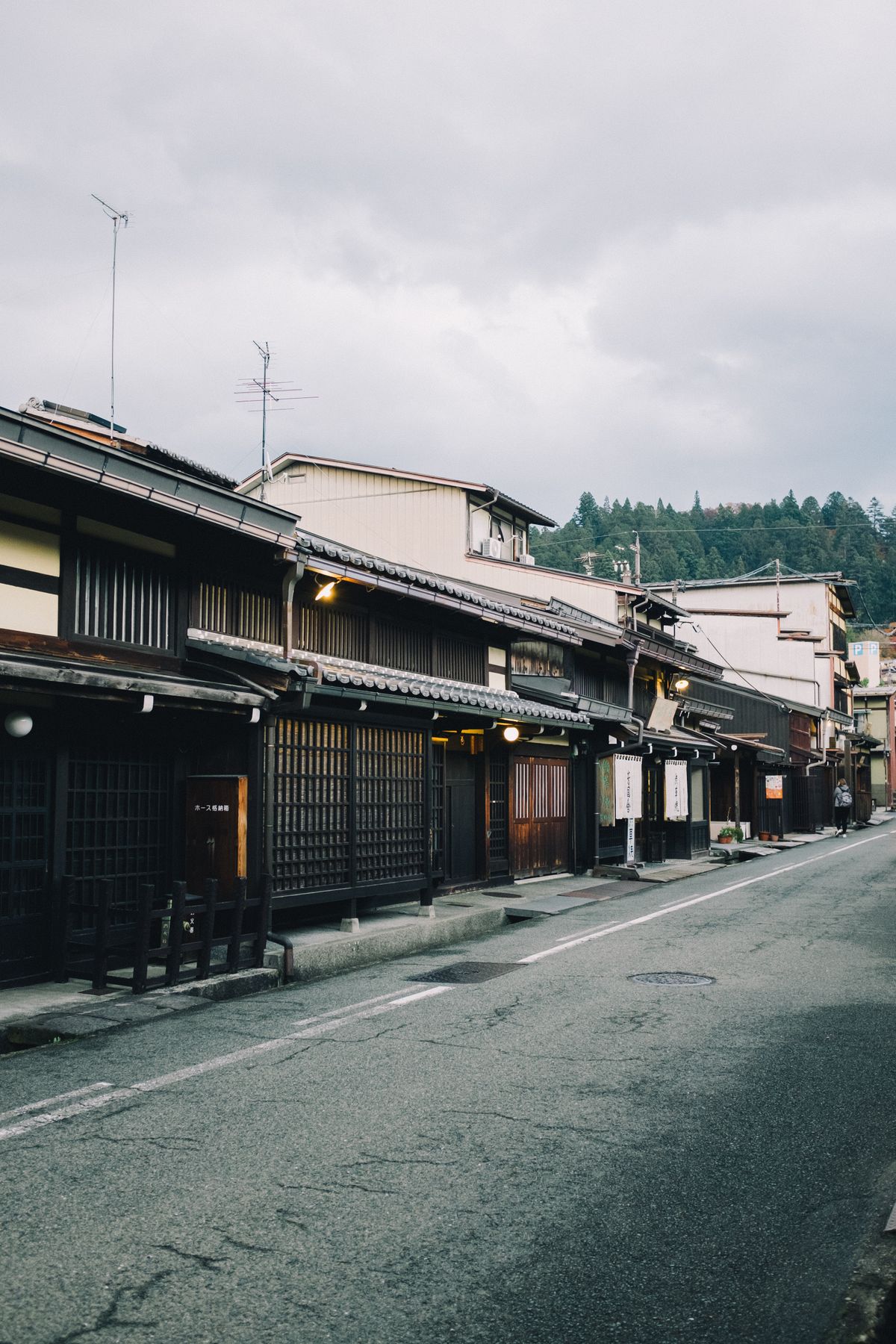
The first thing to do is simply walk slowly from one end of the street to the other. Look at how the houses are slightly staggered to channel snow off the rooftops away from the street; how the eaves curve down to chest height; how the wooden shutters slide rather than swing; how the drainage channels along both sides of the road are still fed by a mountain stream. There are no cars allowed in the central section. Photographers should walk early in the morning before 9 AM and again in the last 30 minutes before sunset.
2. Climb to the Komagataki Viewpoint
At the north (uphill) end of the street, behind the small Takakura Shrine, a steep stone staircase climbs roughly 60 steps to a viewing platform from which you can see the entire village laid out below — both rows of thatched roofs, the curve of the mountain pass beyond, and (in summer and autumn) green and red foliage on the surrounding hills. This is the single most famous photograph of Ouchi-juku and the one that appears on virtually every postcard. Allow 10 minutes for the climb. There is no admission fee.
The platform is also the best place to be at dusk during the Snow Festival, when the village below is dotted with hundreds of candle-lit snow lanterns.
3. Visit the Folk Museum (Ouchi-juku Honjin Museum)
Roughly halfway down the street, the Ouchi-juku Honjin Museum (大内宿本陣跡) is a reconstructed inn that once housed visiting daimyo and samurai officials. Inside you can see period rooms with their tatami, lacquered furniture and hand-carved transoms, plus a small display of Edo-era travel documents and currency. Admission is ¥250 adults and ¥100 children. Allow 30 minutes. It is also a good warming break in winter — most of the houses are unheated and the museum keeps a charcoal brazier going.
4. Eat Lunch (See the Food Section Below)
Reserve roughly an hour for the negi soba experience — the village’s signature dish — described in detail below.
5. Browse Craft Shops and Sweet Stalls
About ten of the houses are working shops. Look for items including:
- Akabeko red cow figurines — papier-mâché lucky charms originally made in nearby Yanaizu, often hand-painted in front of you. From ¥400.
- Kurumibocchi walnut sweets — toasted walnuts coated in caramelised sugar. ¥500 per bag.
- Aizu lacquerware — small bowls and chopsticks in red, black or vermilion. Genuine pieces start around ¥2,000.
- Tochi-mochi — chewy mochi made with horse-chestnut flour, lightly bitter and very Tohoku.
- Local rice wine — Aizu sake from Suehiro, Hanaharu and other small breweries. Lightly chilled bottles are sold for ¥600–¥1,200.
6. Pay Respect at Takakura Shrine
The small Shinto shrine at the north end of the street was built to enshrine the spirit of Prince Mochihito, who according to local legend escaped the Battle of Uji in 1180 by fleeing through this valley. The shrine is free, modest and atmospheric, especially in falling snow.
What and Where to Eat in Ouchi-juku
The defining culinary experience here is negi soba — and yes, you really do eat it with a spring onion instead of chopsticks. But there is much more on offer than just the famous bowl.
Negi Soba (ねぎそば)
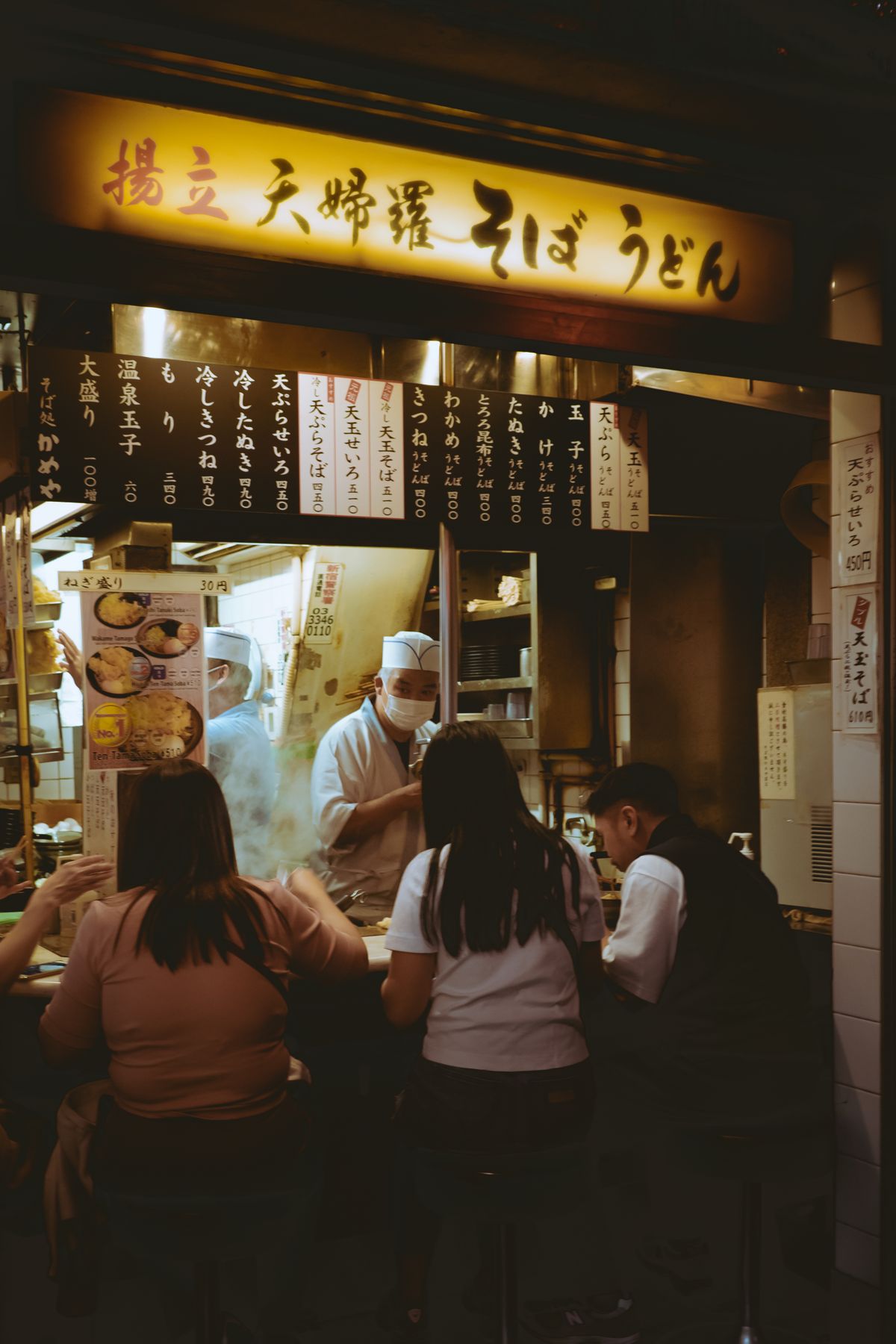
The most famous restaurant for negi soba is Misawaya, which has been serving the same dish since the late 1800s. A bowl of chilled buckwheat soba arrives topped with bonito flakes and accompanied by one long, raw Japanese negi (long onion). You use the negi as both your scoop and your seasoning — scooping up the noodles, taking a small bite of the green tip between mouthfuls, and ending the meal by drinking the dipping sauce. It is not a gimmick: the dish dates back to a wedding ritual in which the long onion symbolised an unbroken connection between two families.
A bowl runs ¥1,500–¥1,800. Most negi soba restaurants in Ouchi-juku open from 10 AM to about 3 PM only. Try to arrive before noon to avoid queues, especially in autumn.
Iwana (Mountain Char) Grilled Over Charcoal
Watch for outdoor charcoal grills set up along the main street, where local mountain char (iwana) are skewered on bamboo, salted and grilled head-up over glowing embers. Eat them whole — head, bones and all. ¥700–¥900 per fish. Best on a cold morning.
Mochi and Stick Sweets
Locally made fresh mochi pounded that morning is sold in many of the shops along the street. Stick mochi grilled and served with sweet miso glaze or with kinako (roasted soybean flour) cost about ¥300 each. Tochimochi (horse-chestnut mochi) is a regional specialty worth trying.
Tea, Amazake and Hot Sake
Several shops sell warming drinks. Look for amazake — a sweet, non-alcoholic fermented rice drink served hot in winter — for around ¥400 a cup. Aizu sake by the cup, lightly warmed, runs ¥500.
For More on Japanese Food
For a broader introduction to Japanese regional and street food culture, see our Japan Street Food Guide and our Food Experiences guide.
Where to Sleep: Day Trip or Overnight?
You can absolutely do Ouchi-juku as a day trip — most visitors do. But staying overnight inside one of the village’s minshuku (family-run inns) is one of the most underrated experiences in Japan, particularly because all day-trippers leave by 5 PM and the village becomes almost entirely silent.
Staying in Ouchi-juku Itself
There are roughly six minshuku within the village proper, with names like Honke Ogiya, Yamamotoya and Matsumotoya. All offer traditional tatami rooms, futons laid out at night, kerosene heaters or charcoal braziers, and a two-meal package with dinner and breakfast. Expect to pay ¥10,000–¥15,000 per person per night with meals.
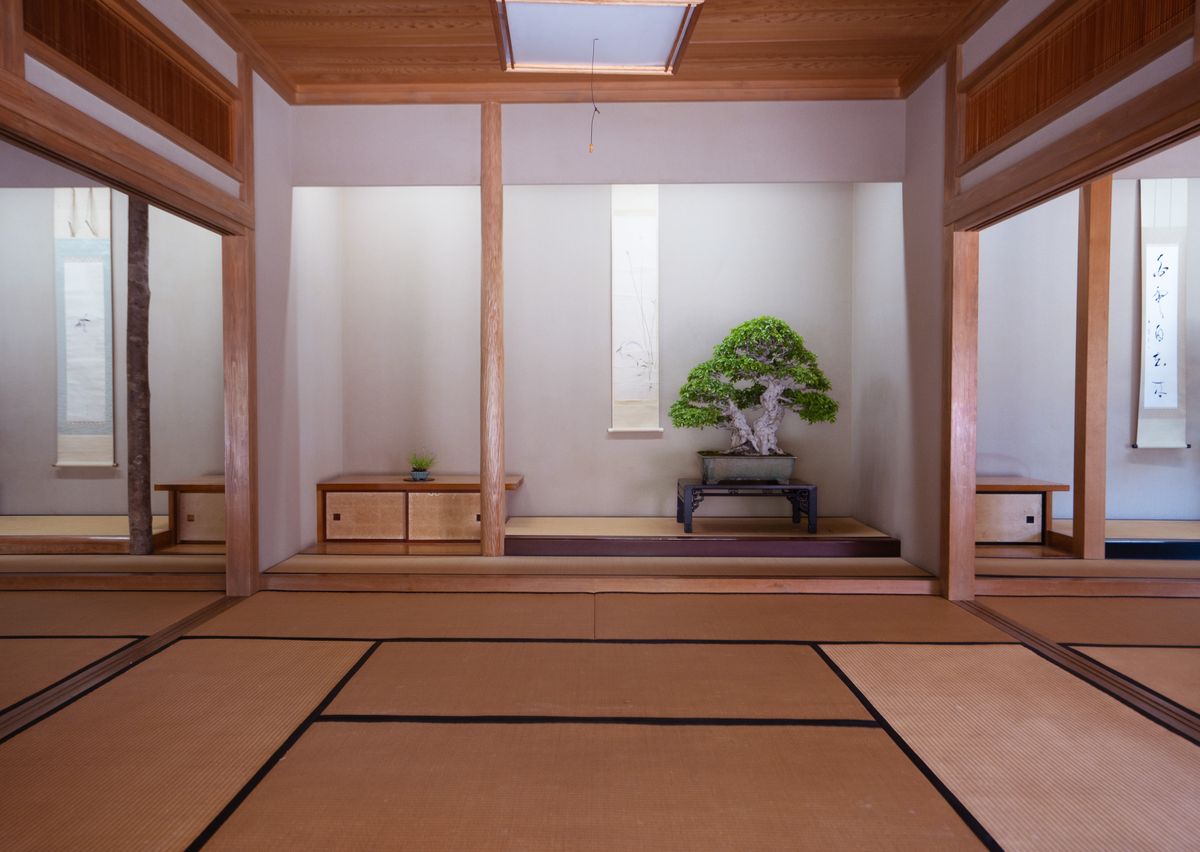
What to expect: shared bathrooms (no en-suite), the family preparing your dinner in their kitchen and serving it on a low table, and an early bedtime. There is essentially no Wi-Fi in some properties. Bookings must be made by phone in Japanese unless you go through an agent.
For English-language reservations, the major online travel agents have very limited Ouchi-juku inventory. Your best chance is to book a hotel in nearby Yunokami Onsen or Aizu-Wakamatsu through Agoda, and ask the property to call ahead to a village minshuku as a paid service.
Book your hotel on Agoda (Best prices guaranteed) →
Staying at Yunokami Onsen (Easier Option)
Yunokami Onsen, the small hot spring resort 15 minutes by car from Ouchi-juku, has several mid-range and luxury ryokan with private outdoor baths and full kaiseki dinner service. It is the most popular base for travellers who want a touch more comfort. Expect ¥18,000–¥35,000 per person per night.
The most famous property here is Yunokami Onsen Shimizuya, a large traditional ryokan with hot spring baths fed by mineral-rich water at 60°C. For luxury options in the area, Find luxury hotels on Ikyu.com →
Staying at Aizu-Wakamatsu (Most Practical)
For travellers visiting Ouchi-juku on a half-day from elsewhere, Aizu-Wakamatsu (Japan’s samurai capital of the north) is the most practical base. It has full hotel infrastructure, several castle museums, and a buzzing local food scene. Mid-range business hotels start around ¥8,000 per night, traditional ryokan from ¥18,000 with dinner.
For broader hotel comparisons, Search hotel deals on Yahoo! Travel →
Local Etiquette and Cultural Notes
Ouchi-juku is a living, working village, and visitors are expected to behave with quiet respect. A few small things to keep in mind: do not step into a house unless you have removed your shoes and have been explicitly invited in, do not photograph residents in private contexts (children walking to school, families inside their homes), and do not raise your voice. The village is also a working agricultural community in the off-season — please do not walk through the back gardens or rice paddies behind the houses, even if a path appears to lead that way.
If you visit a soba restaurant, expect a slightly different rhythm than a city restaurant. Many of the cooks are themselves the owners and the same family members serving you. The pace is slower. A meal that would take 25 minutes in Tokyo can easily take an hour here. Resist the temptation to rush — it is part of what you came for.
Tipping is not customary anywhere in Japan and is especially out of place in Ouchi-juku. If you want to express gratitude for an exceptional meal or a particularly kind innkeeper, write a short note in the comments book that most properties keep at reception — that is far more meaningful than cash.
Combining Ouchi-juku with Other Sights
Most travellers do Ouchi-juku as part of a larger Fukushima loop. The best add-ons are:
Tsuruga Castle (Aizu-Wakamatsu)
The reconstructed white-walled samurai stronghold of the Matsudaira clan. Famous for surviving a month-long siege during the Boshin War of 1868. Admission ¥520. About 35 minutes by train and bus from Yunokami Onsen. See our Aizu-Wakamatsu guide for a full breakdown.
Iimoriyama and the Byakkotai Graves
The hill where 20 young samurai of the Byakkotai unit committed ritual suicide in 1868 after seeing Tsuruga Castle in flames during the war. The story is one of the most famous in Japanese history. Free; a small museum charges ¥400.
To-no-Hetsuri Rock Formations
A 100-metre stretch of unusual eroded cliffs above the Okawa River, two stops up the Aizu Railway line from Yunokami Onsen at Tonohetsuri Station. Free to view; a small suspension bridge connects to a tea house side. Best in autumn.
Yunokami Onsen Station Itself
Worth a 20-minute visit. The only thatched-roof railway station in Japan, complete with an open hearth (irori) in the waiting room. There is a small foot-bath outside for travellers.
Aizu Bukeyashiki (Samurai Mansion)
An open-air museum recreating the household of Saigo Tanomo, a high-ranking samurai of the Aizu clan. Admission ¥850. About 30 minutes from Aizu-Wakamatsu Station by bus.
Mount Bandai and Lake Inawashiro
The big nature attraction of central Fukushima — Mount Bandai erupted spectacularly in 1888, creating a string of small lakes (the Goshikinuma, or “five-coloured lakes”) in a forested basin. Free; about 40 minutes by car from Aizu-Wakamatsu.
Sample Itineraries
One-Day Trip from Tokyo
This is doable but ambitious. Take the 6:00 AM Shinkansen from Tokyo Station, reach Aizu-Wakamatsu by about 8:30 AM. Transfer to the Aizu Railway, arrive at Yunokami Onsen by 9:30. Bus to Ouchi-juku 9:50. Walk the village 10:00–12:00, eat negi soba, climb to the viewpoint, browse a few shops. Bus back to Yunokami Onsen 13:30. Train back to Aizu-Wakamatsu 14:30. Optional visit to Tsuruga Castle. Train and Shinkansen back to Tokyo, arriving by 19:30.
Two-Day Trip (Recommended)
Day 1: Tokyo to Aizu-Wakamatsu by Shinkansen. Lunch and afternoon at Tsuruga Castle and Iimoriyama. Overnight at a traditional ryokan in town. Day 2: Morning train and bus to Ouchi-juku. Full half-day at the village. Optional stop at To-no-Hetsuri. Return to Tokyo by Shinkansen in the evening.
Three-Day Trip (For Deep Tohoku Exploration)
Add a night at Yunokami Onsen in a thatched-roof ryokan. Use the third day for the Mount Bandai and Goshikinuma area, or extend further into Yamagata for the Ginzan Onsen valley. See our Ginzan Onsen guide for ideas.
Connectivity, Money and Practicalities
Rural Fukushima is well-covered by both major Japanese mobile carriers along the main valleys and highways, but signal can drop in parts of the mountain road between Yunokami Onsen and Ouchi-juku. The village itself has decent reception around the post office and the museum, weaker reception inside the wooden houses.
I always recommend setting up an eSIM before arriving in Japan — it is the single biggest stress-saver for first-time travellers. Get your Japan eSIM (Stay connected from day 1) →
For more on data and SIM options for Japan, see our Japan SIM and eSIM guide.
Cash matters more in Ouchi-juku than in most of Japan. Many shops and small restaurants accept only cash. There is no ATM in the village itself — the nearest is at the post office at Yunokami Onsen, which accepts foreign cards. Bring at least ¥10,000 in cash per person per day.
For a more thorough breakdown of when to use cash vs card in Japan, see our cash vs card guide.
What to Pack for Ouchi-juku
Mountain weather, rural roads, and a village without modern amenities mean you need to pack a bit more thoughtfully than for an urban Japan trip.
- Cold-weather layers for winter — thermals, fleece, down jacket, waterproof outer shell.
- Ice-grip overshoes in winter — small rubber-and-spike attachments that slip over your boots. The packed snow on the main street is treacherously polished by midday. About ¥1,000 at any Japanese hardware store.
- Insect repellent in summer — the village is surrounded by mountains and the mosquitoes are aggressive at dusk.
- Plenty of cash — ¥10,000 minimum per person per day.
- A backpack, not a roller bag — the road into the village is gravel and many minshuku have stairs.
- Hand towel — Japanese restrooms often do not have paper towels.
- Power bank — cold drains phone batteries fast.
- Tripod — if you want a long-exposure shot of the candle-lit street at the Snow Festival.
For our full general Japan packing breakdown, see Japan packing list.
Booking Tours and Packages
Several Japanese tour operators run guided day trips from Tokyo to Ouchi-juku, often combined with Tsuruga Castle and To-no-Hetsuri. Prices typically range ¥18,000–¥25,000 per person including transport, English-speaking guide and lunch. These tours are wildly more convenient for travellers who do not want to navigate three trains and a bus.
For multi-day packages combining Aizu’s samurai history with a thatched-roof minshuku night and full kaiseki dinner, Book Japan tours and hotels on JTB →
Money-Saving Tips
Ouchi-juku is one of the cheaper destinations in Japan if you do it carefully.
- Buy the Aizu Railway day pass. Sold at Aizu-Wakamatsu Station for ¥1,210, this gives you unlimited rides on the Aizu Railway and is automatically cheaper than two single tickets.
- Combine with the JR Pass. If you already have a 7-day or 14-day JR Pass, the Shinkansen and JR sections of the trip become free.
- Sleep at a Yunokami Onsen mid-range ryokan, not in a Tokyo hotel. A Tohoku ryokan with two meals and onsen often costs less than a Tokyo business hotel without meals.
- Eat at the village, not at the train station. Negi soba at Misawaya costs the same as airport noodles in Tokyo, but is far more memorable.
- Visit in shoulder seasons. Late September, mid-November (before snow) and mid-March are dramatically cheaper than mid-October peak or the February Snow Festival.
- Take the local trains, not the limited express. The JR Banetsu West Line local is included in the JR Pass and stops at more interesting villages along the way.
For a deeper dive into stretching a Japan trip budget, see our Budget Travel Japan guide.
Frequently Asked Questions
Is Ouchi-juku worth visiting?
Yes — particularly for travellers on a second visit to Japan or those who have already seen the major sights of Tokyo and Kyoto. The combination of preserved Edo-period architecture, mountain setting, exceptional regional food (negi soba, iwana), and the fact that you will share the street with a fraction of the crowds at Shirakawa-go makes it one of the most rewarding rural day trips in the country.
How long should I spend in Ouchi-juku?
A minimum of three hours, ideally five to six. Stay overnight if possible — the village becomes magical after the day-trippers leave at 5 PM and the candle-lanterns are lit (in winter) or the cicadas start (in summer).
Is Ouchi-juku family-friendly?
Yes. Children love the open street, the grilled iwana on sticks, the akabeko cow figurines, and the climb to the viewpoint. The main street has no traffic. Bring snow boots for kids in winter and bug spray in summer.
How does Ouchi-juku compare to Shirakawa-go?
Shirakawa-go is bigger, more famous, UNESCO-listed and far more crowded. Its houses are the dramatic A-frame gassho-zukuri style. Ouchi-juku is smaller, less famous, with gentler thatched roofs and a linear street layout. If you can only visit one, Shirakawa-go has wider appeal; if you can visit both, Ouchi-juku is the more peaceful and intimate experience.
Are credit cards accepted in Ouchi-juku?
Mostly no. Plan on cash — ¥10,000 per person per day is a safe minimum.
Is there Wi-Fi in the village?
Limited. The folk museum has free Wi-Fi. Most minshuku do not. Bring a working eSIM for navigation and translation.
Can I visit Ouchi-juku in winter?
Yes, and it is arguably the most beautiful season. Trains and the local bus run year-round, though they may be delayed in heavy snow. The Snow Festival in early February is one of the great cultural events of Tohoku. Pack proper cold-weather gear and ice grips.
Is there a fee to enter the village?
No — Ouchi-juku itself is free to enter and walk around at any time of day. The folk museum charges ¥250 admission.
Is Ouchi-juku safe?
Extremely. Tohoku, like all of Japan, has very low crime rates. The main risk to first-time visitors is missing the infrequent local bus — keep checking schedules.
Can I take photos inside the houses?
Inside shops and restaurants, ask first — most owners are fine with it. Inside private homes that are still lived in, no. Outside on the street, any time.
Quick Reference: Practical Tips
- Arrive before 10 AM. Day-tripper buses from Aizu-Wakamatsu start landing at 11. You will have the street to yourself for the first hour.
- Climb to the viewpoint as soon as you arrive. The morning light on the rooftops is the best.
- Eat negi soba before noon. Misawaya has a 30-minute wait by 12:30 in peak season.
- Pack ¥5,000 in coins and small notes. Most shops and small restaurants only accept cash, and many do not take ¥10,000 notes.
- Carry a paper map. Mobile reception drops occasionally on the road.
- Photograph the akabeko shop. Even if you do not buy anything, the bright red papier-mâché cows lined up on shelves make a great photo.
- Time your visit for sunset. The last 20 minutes of daylight, when the wooden façades glow amber against blue snow shadows, is when the village photographs best.
- Use coin lockers at Yunokami Onsen Station. ¥300–¥600 lockers let you tour the village luggage-free.
- Drink the public-spring water. The mountain stream water in the drainage channels is fed by a clean source upstream; locals refill bottles at the small fountains. Free.
- Check bus return times carefully. The last Sarukura-go bus from Ouchi-juku back to Yunokami Onsen station usually leaves around 5 PM. Missing it means a ¥3,500 taxi.
Final Thoughts
Ouchi-juku is the kind of place that, once you have visited, sticks with you in a way many bigger destinations don’t. It is small, slow, distant, often cold, and absolutely worth every hour of travel. For first-time visitors to Japan looking to escape the Tokyo–Kyoto–Osaka triangle, it is one of the easiest ways to glimpse what the country actually looked like before electricity, the bullet train and the convenience store. For repeat visitors who think they have seen rural Japan, Ouchi-juku will quietly correct them.
Wherever you are on that spectrum, plan ahead, bring cash, layer up, and try to stay at least one night. You will come away with a small, specific, very Japanese kind of memory: the smell of grilling iwana, the squeak of footsteps on dry snow, the rasp of the long onion against soba noodles in a bowl, and the silence of a 400-year-old street long after the last day-tripper has gone home.
Travel safely, and don’t forget the eSIM, the cash, and the ice grips.
Going to Japan? Talk to locals with confidence.
Hirameki Japanese — instant offline translation, camera translation, furigana + romaji, and 314 free flashcards. No login. Works without internet.

Plan your Japan trip
Two things every first-timer should book
Some links are affiliate links. If you book through them we may earn a small commission at no extra cost to you.